
Hey. Somewhere in your inbox there's an email saying a magazine would love to feature your studio. Read to the bottom and there's a fee. That's not press. That's an ad with a nicer subject line.
Real PR for a portrait studio looks smaller and works harder: a story in your local paper, fifteen minutes on a parenting podcast, a quote in a reporter's article, a link from a business that already serves your clients. It's free, it's earned, and it's the kind of mention Google and ChatGPT lean on when someone asks who to book.
I'm Humberto Garcia, founder of Photography to Profits. Here's my stand: PR only counts if it books sessions. Pitch the outlets your clients follow, not the ones photographers follow, and count every booking each one brings.
Key Takeaways
- You don't need a PR agency to start. An hour a week pitching local outlets beats a retainer for most portrait studios.
- If you pay to appear, it's an ad. In one study of 25 million links cited by AI tools, 84% were earned media and 0.3% were paid.
- Pitch your clients' outlets: local parenting podcasts, community newsletters, the reporter who covers your town. Photography magazines build your reputation, not your calendar.
- Write to one named person, under 200 words, in the morning. Follow up once.
- Ask every inquiry how she heard about you, and keep the outlets that book.
Do photographers need a PR agency?
Not to start. A PR agency makes sense when bookings already come in reliably and you want something bigger: a book launch, a second location, a national story. Before that, a retainer buys you the same pitches you could send yourself, often aimed at outlets that don't reach the people who hire you.
The cost is real. One PR agency that works with photographers says campaigns start at $897 and monthly retainers range from $1,000 to $5,000+. If your calendar isn't full yet, spend that where you can count the bookings, and do your own PR in the hour a week below.
Earned or paid: most "As Seen In" badges are ads
Earned press means someone chose you: an editor, a host, a reporter. Paid placement means you bought the space. Photography is full of the second kind dressed up as the first: pay-to-publish magazines, "priority" feature accounts, sponsored TV segments, wire press releases and "Best of [City]" awards that charge winners for the plaque.
Sort a few offers studios actually get.
Earned means an editor, host or reporter chose you. Paid means you bought the space: pay-to-publish magazines, priority feature accounts, sponsored TV segments, wire press releases and awards that charge winners are all paid.
The difference matters more every month. Muck Rack studied more than 25 million links cited by ChatGPT, Claude and Gemini and found that 84% were earned media, while paid and advertorial content made up 0.3%. That study looked at broad questions, not local searches, but the pattern is hard to ignore: when a mom asks ChatGPT for a newborn photographer in her city, a story in her local paper is the kind of source it reaches for. A paid feature almost never is.
A quick test for awards: the Better Business Bureau warns that most legitimate awards don't charge the winner. If you didn't apply and nobody can tell you who nominated you, it's a sale.
Why local press beats national for a portrait studio
Your clients live within driving distance, and they trust local news more than national news. In a September 2025 survey, 70% of US adults said they trust information from local news organizations, compared with 56% for national ones. A feature in your city's paper reaches fewer people than a national magazine, but far more of them can book you.
Local press also helps you get found. A link from a local news site, or from a business that serves your clients, is the kind of authority our SEO guide talks about, and the kind of source AI tools lean on when they decide who to recommend. We explain that shift in SEO to AEO for photographers, and how links work in our backlinks guide.
Pitch your clients' outlets, not photographers'
Most advice on getting featured points you at photography magazines and photography podcasts. Those are good for your reputation with other photographers. They rarely put you in front of someone who's about to book.
A photography business podcast reaches other photographers: compliments and follows, rarely a booking. A local parenting podcast, a women's wellness show or a chamber of commerce newsletter reaches the people who hire you.
Ask one question before every pitch: who listens? For newborn and family studios, that's local parenting podcasts, school and community newsletters, and the reporter who covers family life in your city. For boudoir, it's women's wellness and confidence shows. For headshots, it's your chamber of commerce and local business podcasts.
Peer press still has a place. If you teach, run workshops or want referrals from other photographers, PPA's Professional Photographer says most of its content is written on assignment but welcomes story ideas, and Rangefinder publishes its rules for pitches. Just don't expect those features to fill your calendar.

Screenshot of Rangefinder's pitch page.
How to get on podcasts your clients listen to
You don't need an audience to be a good guest. In Buzzsprout's 2026 survey of 271 podcast hosts, 87.8% said a relevant topic decides who they book, and 14.4% said audience size. Most guests came through the host's own network (69.7%), but 28% came from a cold email.
- Find local shows. Search Apple Podcasts, Spotify or Podchaser for your city plus "moms", "parents", "wellness" or "business", and keep the ones that published in the last few months. Podchaser also shows who's been a guest.
- Check they take guests. Listen to one episode and read the show notes. A guest in recent episodes, or a "be a guest" page, is your yes.
- Pitch two or three topics, not yourself. "What to wear for family photos", "when to book newborn photos" or "how to feel less awkward on camera" are episodes. "I'm a photographer" isn't.
- Follow up once or twice, then stop. Buzzsprout's advice is to wait a week or two, add something useful, and cap follow-ups at two.
Guest-matching sites can add more shows to your list: MatchMaker.fm has a free plan, and PodMatch is paid. Use them for reach; your local shows still come first.
Where portrait studios actually get featured
Start local and work outward. Most of these cost nothing but your time.
| Where | What to send | Best for |
|---|---|---|
| Your local paper or news site | A community story or a timely tip, sent to the reporter who covers family, lifestyle or business | Every genre |
| Patch | Post your community event to your town's page yourself. It's free to post; Patch sells boosts. | Free portrait days, charity shoots |
| Local TV | Lifestyle and morning shows: pitch the producer. News: the station's assignment desk. Some shows sell segments; stations must identify those as sponsored. | Stories with a human angle |
| Local podcasts and newsletters | A practical topic their audience asks about | Every genre (see the podcast steps above) |
| Macaroni KID and other local parenting newsletters | A family event or a seasonal tip. Many local editions list events; check your edition's media kit for what's free. | Newborn, family, maternity |
| Your chamber of commerce | A member spotlight or a ribbon cutting for a new studio or anniversary | Headshots, branding, family |
| HARO, Featured, Qwoted, Source of Sources | Short, specific answers to journalists' requests for sources. Answer only the ones that truly fit what you shoot. | Expert quotes and links |
| Businesses your clients already use | A cross-promotion, a styled shoot or a guest post | Every genre (more below) |
| Professional Photographer, Rangefinder | Story ideas about your business or your work | Reputation with other photographers |
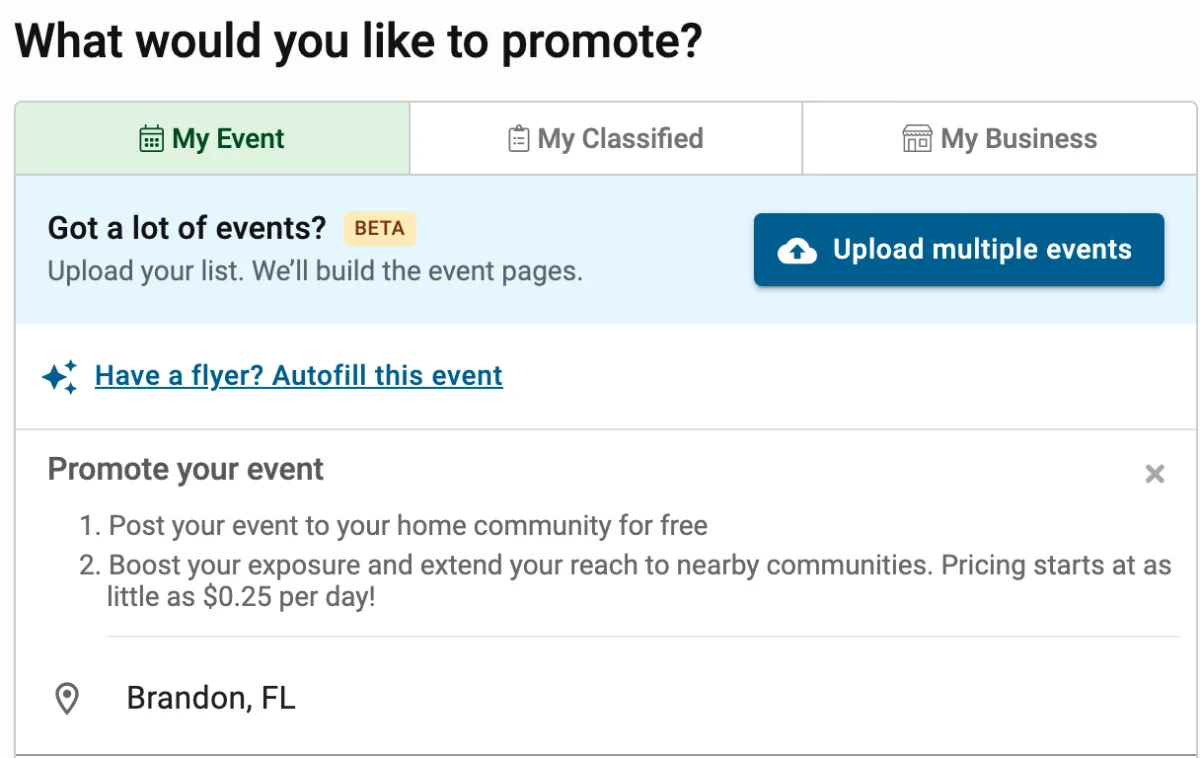
Screenshot of Patch's event form. Posting needs a free Patch account.
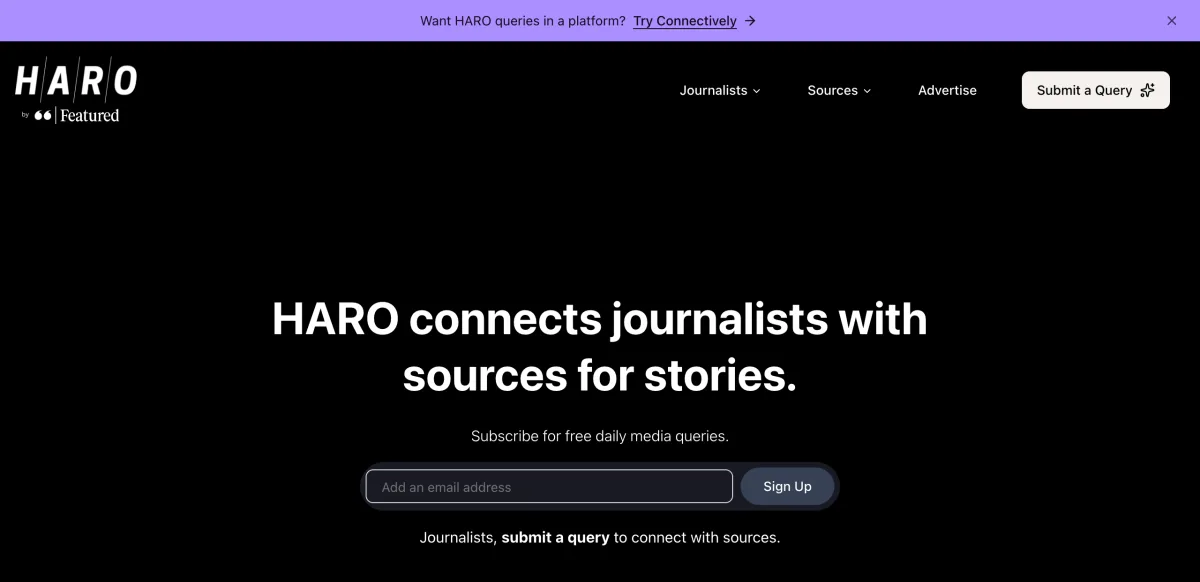
Screenshot of helpareporter.com, run by Featured.
Find the right reporter in ten minutes
A pitch to "the editor" goes nowhere. A pitch to the person who covered something like your story last month gets read. Here's how to find her:
- Search Google News for your city plus "newborn", "family", "small business" or "photographer". Note the names on stories that fit.
- Open the outlet's staff or contact page and confirm what each person covers. Muck Rack's free journalist profiles also list a reporter's recent stories.
- Follow those reporters on Facebook. In Cision's 2026 survey of more than 1,800 journalists, Facebook was the top platform for local and regional reporters, above 70%.
- Keep a simple list: name, outlet, what she covers, the last story of hers you read, the date you pitched and what happened.
Then introduce yourself before you need anything. In the same survey, 84% of journalists ranked an email introducing yourself and why you want to connect as their favorite way to meet a source. Two lines is enough: who you are, what you know about, and that you're happy to help when a story needs a photographer's view.
Write a pitch editors read
Journalists tell you exactly what they want. In Muck Rack's State of Journalism 2026 survey, 86% said at least some of their stories began with a PR pitch, 62% prefer a one-to-one email, 69% want pitches under 200 words and 78% prefer them before noon. Send it in the morning in her time zone.
So: one person, one story, short. The subject line should say what the story is and where, in plain words; skip the puns. Four angles work for portrait studios again and again:
- Community: something you're doing for people in your city, like free portraits for families of NICU graduates or headshots for job seekers at the library.
- Seasonal: a tip that's useful right now, like getting family photos done before holiday cards go out.
- Expert: a question your clients ask you every week, answered for a wider audience.
- Milestone: a real number from your own studio, like your hundredth newborn.
Build yours here. Pick what you shoot, an angle and where you're pitching, then replace every bracket with a fact only you know.
A pitch that works: a subject line with the story and the place, one sentence on who you are, the story in one sentence, why this outlet's audience would care, what you can offer (photos, a guest, a quick call), and your contact details. Keep it under 200 words and send it to one person in the morning.
Follow up once
About two-thirds of journalists in Cision's survey say one follow-up is enough. Wait about a week, then reply in the same email thread so she has your original pitch right there:
Hi [first name], following up in case this got buried. Happy to send photos or hop on a quick call if it's a fit for [outlet]. If not, no worries at all. [Your name]
If she doesn't answer that, it wasn't a fit this time. Move on to the next outlet on your list, and pitch her again only when you have a new story.
A reporter said yes. Now what?
Move fast. In Cision's survey, 52% of journalists expect a reply within 24 hours when they reach out to you. Then:
- Ask for her deadline and the angle, so you send exactly what the story needs.
- Send a link to a photo folder, not a stack of attachments. 37% of journalists in Muck Rack's survey said high-resolution images make a pitch more valuable, and 58% said access to people they can interview does. That's your advantage: you have both.
- Make the photos ready to run: horizontal and vertical versions, a one-line caption for each, how to credit you, and a signed release from everyone pictured. For minors, get a parent's written consent first; that's our rule, not legal advice.
- Prepare three points you want to make, in plain words, and one short story from a real session (with your client's permission).
- Ask for a link to your website in the online version. That link is what helps your Google ranking and gives AI tools a source to cite.
Partners are PR you can start today
Not every feature comes from the media. Some of the best come from people who already have your clients' attention.
Early on, a business coach asked me what had actually made me the most money so far. Not the ads or the funnels. One Facebook message to a photographer named Tara Lesher. So I sent twenty more. One of them reached Jenn Bruno Smith, who replied, "That's exactly what we've been looking for. Draft it up." Her group grew to over 16,000 photographers, and that partnership became the High Rollers Club, which has now reached over a thousand photographers.
That's PR too: borrowing an audience someone else already built. For a portrait studio, that audience belongs to ultrasound clinics, baby boutiques, bridal shops, gyms and realtors. When Kristina and Katelyn of SteinArt Studio moved their newborn studio from California to Florida with almost no clients, one of the things they did was partner with ultrasound companies and baby boutiques for cross-referrals and local links. They built a $300K+ first year and nearly $500K in their second.
Our Dream 100 guide shows how to build that list, and our referral guide shows how to keep partners sending people.
Build a press page before you need one
When a reporter googles you, she should find everything in one place. Make it a page on your website, not a PDF. For layouts to borrow, see HubSpot's press page examples and Shopify's press kit guide. For a portrait studio, include:
- Two sentences on what your studio does and who it serves
- A headshot of you and how to pronounce your name
- Six to ten images you have permission to share, with credit lines
- Quick facts: city, year you opened, what you shoot
- Every earned feature, with the outlet's name, date and a link
- A press email and how fast you reply
"As seen in" logos belong here only for features you earned. If you ever bought a placement, leave it off. A badge only means something if it was earned.
Turn one feature into bookings
A feature is a moment. What you do the week it runs decides whether it books anyone. Work through this list each time something lands.
Before it runs: ask for the date and a link to your website, and send photos you have permission to share. The day it runs: share it, post it on your Google Business Profile and email your list. That week: add it to your press page, thank the reporter and save it for your ads. Every month: ask every inquiry how she heard about you and count bookings by source.
Free tools for doing your own PR
You don't need a media database or an agency's contact list. These cover almost everything a portrait studio needs:
- Google Alerts: an email whenever your studio, your city's parenting news or your genre is mentioned. It's also how you find features you didn't know about.
- Google News: find the reporters who cover family, lifestyle and small business in your town.
- Muck Rack: free journalist profiles show what a reporter covers before you pitch her.
- HARO, Featured, Qwoted and Source of Sources: journalists' requests for sources, delivered to you. HARO and Source of Sources are free; Featured and Qwoted have free plans with limits.
- Podchaser and MatchMaker.fm: find podcasts that take guests and see who's been on.
- Patch: post your community events to your town's page for free.
- Google Business Profile posts: share every feature where people already search for you by name.
The one-hour weekly PR routine
PR works when it's a habit, not a campaign. Here's the hour we recommend, in five short blocks.
List: add three outlets your clients follow (15 minutes). Pitch: send two pitches, and answer any HARO request that truly fits what you shoot (20 minutes). Follow up once (5 minutes). Reuse anything that runs on your press page, Google Business Profile, email and ads (15 minutes). Track how every inquiry heard about you (5 minutes).
After a few months you'll know which outlets book and which only bring compliments. Do more of the first.
Rather have clients find you on Google and in ChatGPT while you work on press? That's what we do for portrait studios.
See AEO for photographers →Check your understanding
Four questions. Each one tells you right away whether you got it. Your answers stay on this page.
Four questions on earned versus paid press, whose audience to pitch, how to write a pitch and what to ask for when a feature runs. The quiz needs JavaScript.
Frequently Asked Questions
Do photographers need a PR agency?
Not at first. Most portrait studios get more from an hour a week of their own pitching than from a retainer. Consider an agency once bookings come in reliably and you want press for something bigger, like a book, a second location or a national story. One PR agency for photographers quotes retainers from $1,000 to $5,000+ a month, so make sure your lead flow works first.
How much does PR cost for a photographer?
Doing it yourself costs about an hour a week. Services that send you journalists' requests, like HARO, are free. One agency that serves photographers quotes campaigns from $897 and retainers from $1,000 to $5,000+ a month. Pay-to-publish magazines, sponsored TV segments and awards that charge winners cost money too, but they're ads, not press.
How do I get featured in my local newspaper?
Pitch a story, not your studio. Find the reporter who covers family, lifestyle or business, and send a one-to-one email under 200 words in the morning with a community story, a timely tip or a real milestone. Offer photos from clients who've agreed to share them. If you don't hear back, follow up once about a week later, then pitch the next outlet.
Is it worth paying to be featured in a photography magazine?
Usually not for bookings. If you pay to appear, it's an ad, and photography magazines are written for photographers, not your clients. AI tools rarely cite paid content: in Muck Rack's May 2026 study, paid and advertorial content was 0.3% of the links ChatGPT, Claude and Gemini cited. Spend that money where you can count bookings.
How do I get on podcasts as a photographer?
Pick shows your clients listen to, not photography shows. Search Apple Podcasts or Spotify for your city plus words like "moms", "wellness" or "business", check that the show has guests, then email the host two or three practical topics, like what to wear for family photos. Hosts care most about a relevant topic, not your audience size.
What is HARO, and is it still free?
HARO, short for Help a Reporter Out, emails free daily requests from journalists who need sources. It's run by Featured and was still free to join in 2026. Answer only the requests that truly fit what you shoot, reply fast with a short, specific answer, and include your name, studio and website so the reporter can quote and link you.
What should be on a photographer's press page?
Everything a reporter needs without emailing you: two sentences on what your studio does, a headshot and how to say your name, six to ten images you have permission to share with credit lines, quick facts, every earned feature with a link, and a press email with how fast you reply. Make it a web page, not a PDF.
How do I find the right reporter to pitch?
Search Google News for your city plus words like "newborn", "family" or "small business", and note who wrote the stories that fit. Confirm what each person covers on the outlet's staff page or her Muck Rack profile, then pitch her directly. In Cision's 2026 survey, 84% of journalists said an email introducing yourself is their favorite way to meet a new source.
Do I need a press release to get local press?
Usually not. For most local stories, a short one-to-one email to the right reporter works better than a release: in Muck Rack's 2026 survey, 62% of journalists preferred a one-to-one email. Save a formal release for real news, like a new studio opening or an award you earned, and still send it to a named person.
Does PR help my SEO and AI search?
Yes, when it's earned. A link from a local news site or a business that serves your clients helps your Google ranking, and AI tools lean on earned media: in Muck Rack's study, 84% of the links ChatGPT, Claude and Gemini cited were earned media. Ask every outlet that features you for a link to your website.