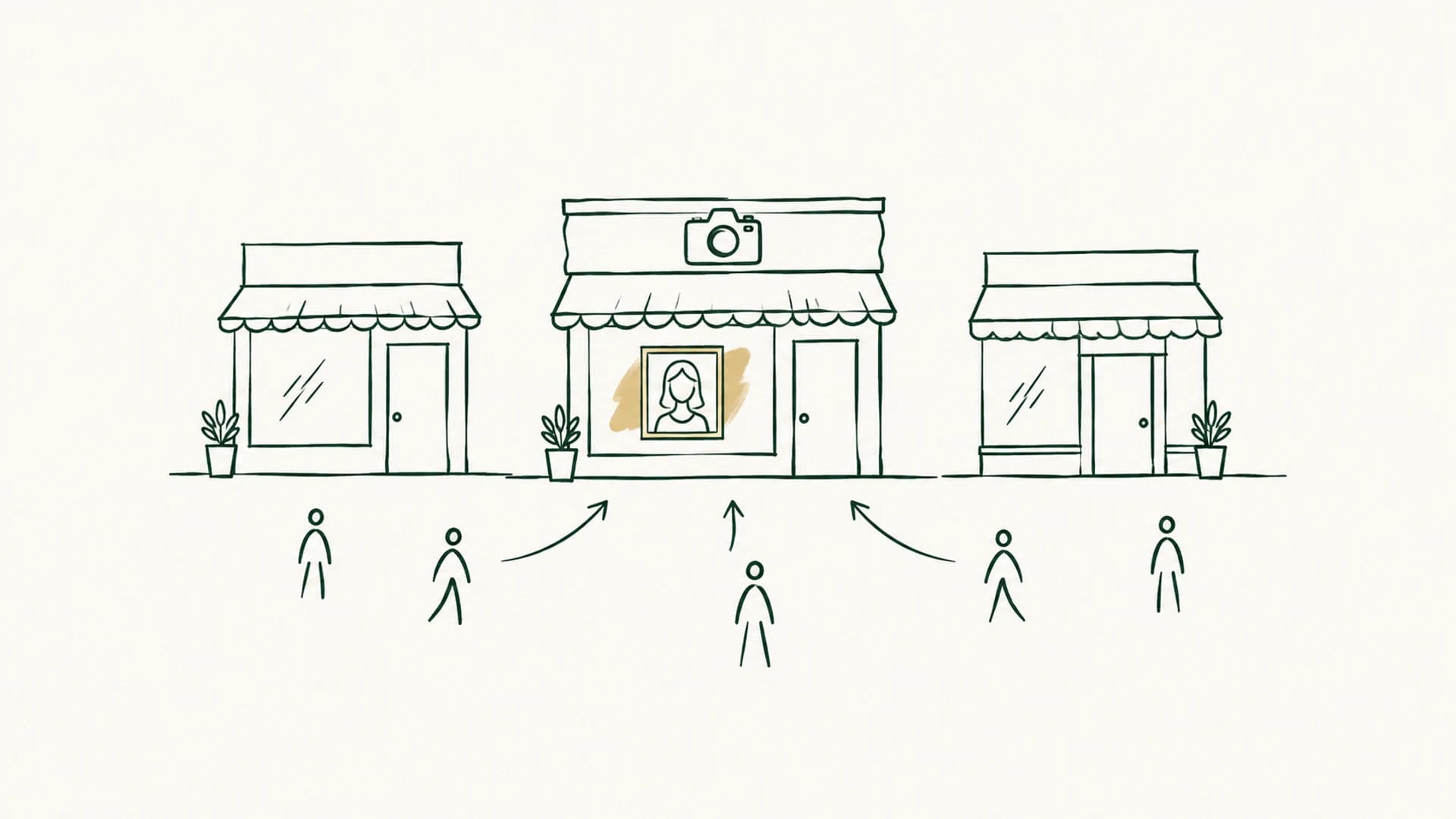
The top photography studio in your city makes people want the experience, makes it easy to book, and knows how to turn the photographs into a serious sale.
I call that the Alpha Studio. Beautiful work. A compelling offer. Enough of the right people seeing it. Then a studio that delivers on the promise.
Yet photographers keep mistaking a high session fee for a strong business. They raise the price of entry, call it luxury, and wait for clients to appreciate the difference. Meanwhile, another studio makes the first yes easier and earns far more when the client sees her photographs.
I have seen this work in small towns and big cities. Population changes the scale of the opportunity. It does not write your copy, answer your phone, or sell your wall art. Before you decide your town cannot support your prices, look at what you are asking people to buy.
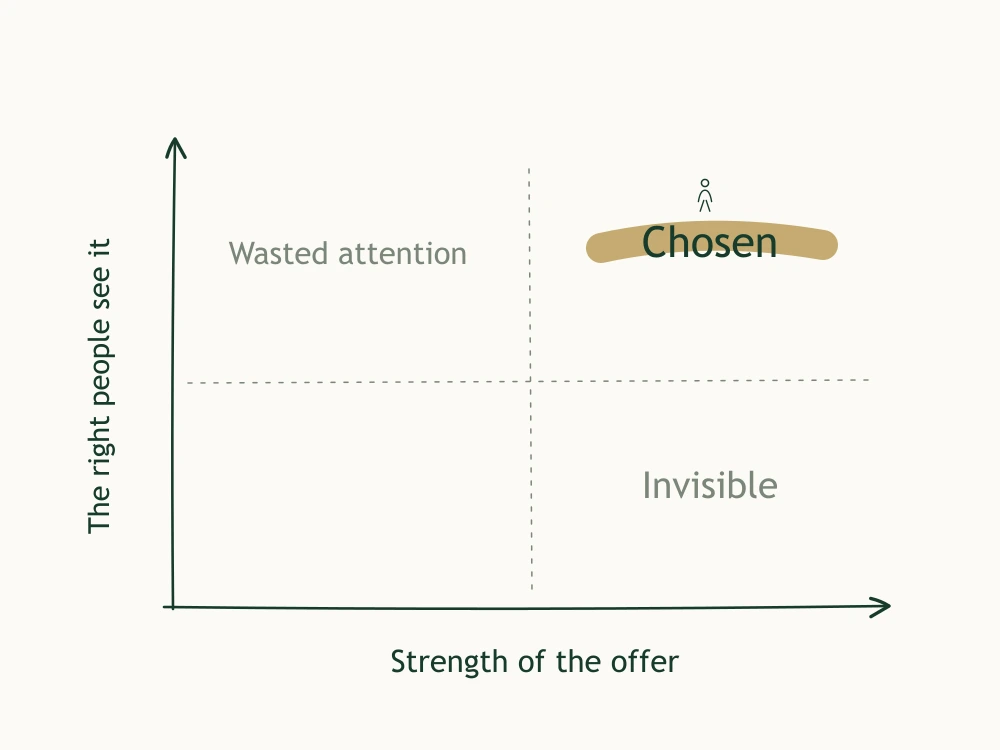
A compelling offer and relevant reach work together. Conceptual illustration, not measured campaign results.
Your portfolio is the product. Your offer is the invitation. Competent photography gets you into the market. Work that makes a particular person want to be photographed by you gives you an advantage. Pair that work with a clear, generous invitation and you give her a reason to act. Free will not rescue photographs she does not want.
A strong offer gives you something worth campaigning for. Women over 40. Women and their dogs. A magical children's portrait experience. A family photographed around the relationships that matter to them. The right work and message make someone recognize that this experience is for her.
Staying on top requires getting better while things are working. New creative. Better copy. More client stories. Faster follow-up. Stronger consultations, photographs, and ordering appointments. The advantage grows when improvements at one step strengthen what happens next.
At Photography to Profits, we call the connected business behind this the Client Machine. Here is how I would build one to compete for the top spot in your market.
TL;DR
- Build a portfolio and story that make a specific person want the experience.
- Lower the upfront barrier while pricing the finished artwork to support the business.
- Keep putting the offer in front of people through fresh creative, copy, and proof.
- Improve the whole Client Machine: inquiries, bookings, the shoot, and the sale. A full calendar is only one part of the business.
Part 1: Build an offer your market wants
When every studio advertises beautiful portraits, personal attention, and a passion for photography, the client has to figure out the difference herself. Most photographers make that decision even harder by talking almost entirely about themselves.
Your next client should recognize herself in your marketing before she has to admire you.
A woman over 40 sees women her age looking extraordinary. A woman with a dog sees the relationship she wants to remember. An expectant mother sees a family portrait that includes her partner and children, with the father photographed as a protector. The photographs carry the story. The copy helps her understand what it could mean for her.
I learned this in my own photography. I photographed a military friend walking with his children and began presenting that work around the idea of fathers as protectors. When I later photographed another family with that same intention, they bought predominantly from that theme. The meaning in the images shaped what they wanted on their wall.
That is why I am hard on portfolios. Audit the posing. Audit the lighting. Audit which images you choose to show. A generic promise attached to forgettable work is a weak product, however generously you price the session.
Study the people who already value your work. What prompted the inquiry? Which photographs did they respond to? What did they buy? What helped them feel comfortable enough to be photographed? Start there, and build an offer around something you can deliver exceptionally well.
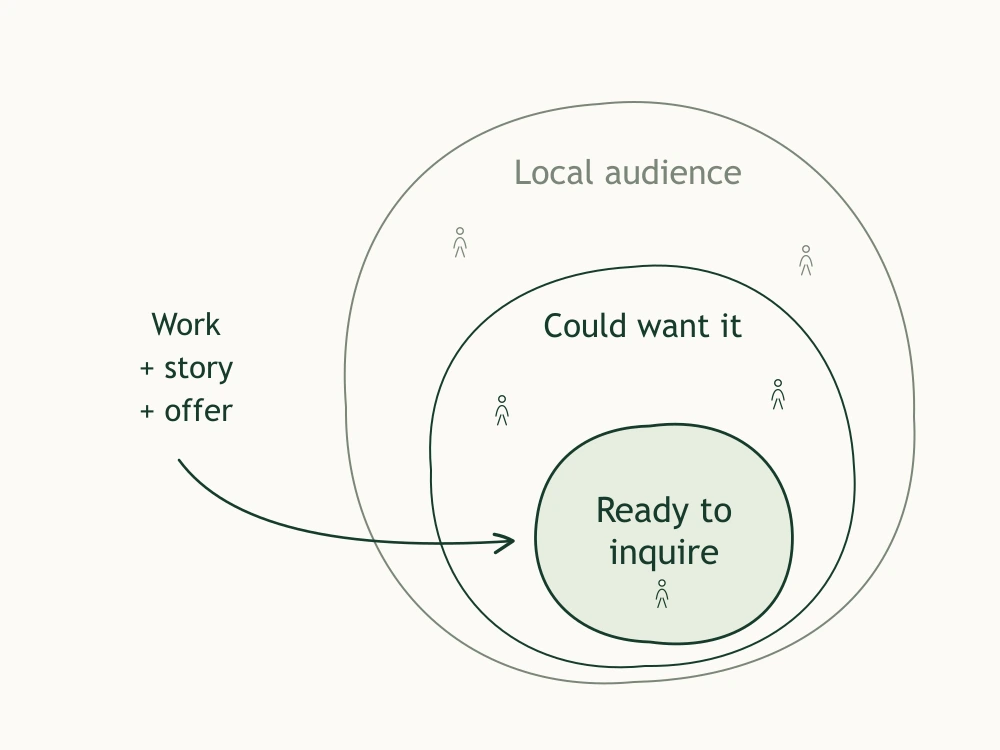
Your market includes people who could want the experience but have not yet recognized it as something for them. Circle sizes are illustrative.
A campaign for women over 40 does not require a new population. It gives part of the population a more relevant invitation. A small-town studio can make that invitation just as deliberately as a studio in a major city. Your reachable audience, competition, and capacity still matter. “My town is too small” is a conclusion to investigate, not an excuse to stop improving the offer.
Then make the first yes easier.
Among the seven-figure and multiple-seven-figure studios I have worked with, complimentary sessions and offers below $100 are common. The serious money is earned through albums, collections, and wall art. A low session fee can be the entry point to a substantial purchase.
Your session fee is not a trophy.
The client has not experienced your guidance yet. She has not seen the photographs you will make of her. A large fee asks her to commit more before those things become tangible. A generous offer lets the right person experience the difference.
That might include the shoot, hair and makeup, preparation, posing guidance, and a product credit. A project can have a genuine participant limit. A seasonal experience has a natural deadline. Show exactly what is included, explain what she can purchase afterward, and make the collection prices clear before the shoot. A complimentary session should never become a surprise bill.
The Client Machine book calls this “Give Away the Shoot, Keep the Money.” The point is to make entry accessible while building a finished product worth buying. You can raise your artwork prices, improve your collections, and make the first yes easier at the same time.
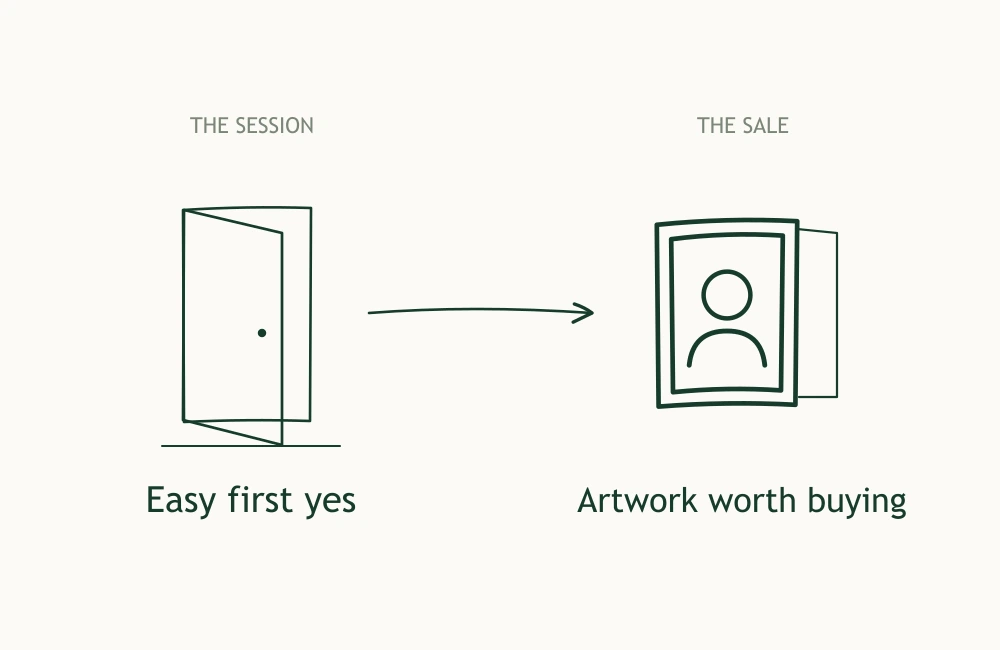
Design the entry point and the artwork purchase as two connected decisions.
Part 2: Run campaigns that keep getting better
A great offer sitting on your website is still an offer too few people may see. Once the work and invitation are strong, put them in front of people. Use the audience you already have, and use paid campaigns to reach beyond it.
Your campaign should give that audience a specific experience to respond to. Depending on the studio, that could look like:
- Women over 40: a portrait or boudoir project featuring women in that stage of life, with work that makes the experience feel attainable and desirable.
- Women and their dogs: portraits built around the relationship, with finished artwork showing what the client could bring home.
- Magical children's portraits: fairy, fantasy, or composite work that turns the child's session into the world the family wants to see.
- Santa experiences: a distinctive set, interaction, and photographic style, with a real seasonal booking window.
- Family and maternity: photographs that tell the family's story through connection, character, and the role each person plays.
Those themes are starting points. A campaign name alone will not distinguish you. Your portfolio, story, offer, and the way you speak to the person reading determine whether the invitation feels compelling.
Write to one person. Stop announcing how wonderful your studio is.
Show her the experience. Answer the questions she needs answered. Use the work to make the promise believable. Carry that same invitation through the ad, the page, the opt-in, and the consultation.
In one project, a studio had roughly 150 leads and essentially no bookings. We changed the copy, opt-in flow, and visitor experience around the offer. It booked about six of its next twelve leads. In another, a compelling campaign built over a weekend took inquiries from around one a week to three to six a day, with inquiries continuing for months.
Those were outliers I observed, not typical results or controlled tests. They are why I examine what people experience before deciding the answer is more traffic.
When a campaign works, keep developing it. Film another video. Show another client. Try a different opening line. Add a testimonial that answers a question you keep hearing on the phone. Show the preparation, the shoot, the reveal, and the finished artwork.
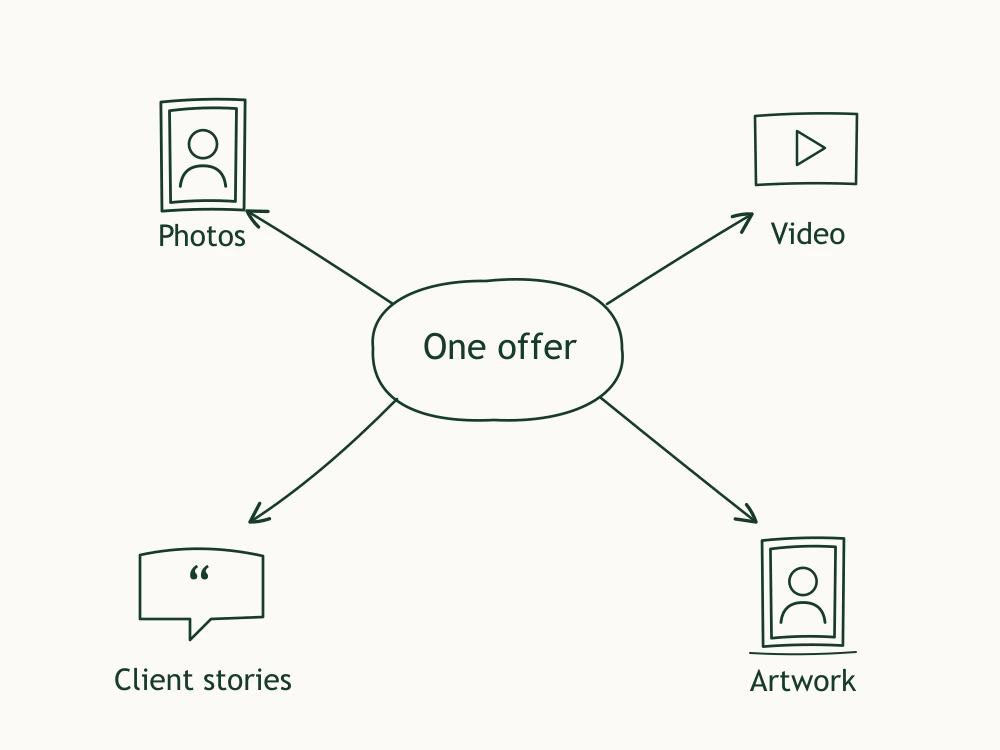
Keep the offer coherent while giving people fresh ways to understand and want it.
A variation can teach you something without requiring a new business model. Keep track of what you changed and follow the resulting inquiries through to bookings and sales. If you change the offer, audience, copy, and follow-up at once, you can evaluate the new campaign, but you cannot confidently credit one change.
A busy month gives you clients to learn from, work to show, and proof to collect with permission. Use it. Waiting until the calendar empties to create the next ad turns marketing into an emergency.
Part 3: Build a studio that improves as it runs
A campaign can make the phone ring. Your studio still has to answer, connect, book, photograph, and sell. Treat those as unrelated tasks and you will spend a lot of time blaming one part of the business for a problem in another.
The Client Machine connects the message and offer, traffic, consultation, shoot, and artwork sale. What you learn at the end must improve what happens at the beginning.
Listen to your phone calls. Notice where the conversation loses energy or clarity. Improve the questions and the explanation. Respond while the person still remembers why she inquired. Build follow-up and reminders that help you keep commitments while you are photographing someone else.
Then be just as demanding about the shoot. Better posing. Better expressions. Better selection. More images that deserve to be shown. You are improving the product people will buy and the material the next campaign can use.
At the ordering appointment, lead. Show what the photographs can become. Explain the collections. Review where digitals sit in your price list. Audit the product presentation and the prices themselves.
You are there to guide the purchase. Stop being an assistant shopper.
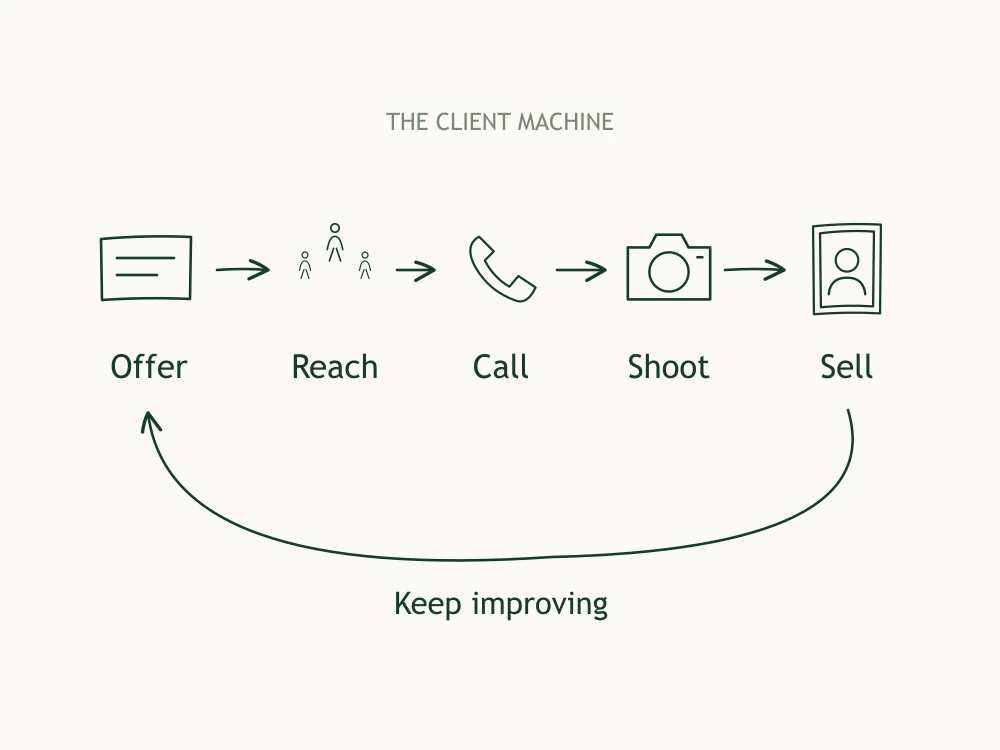
Every step delivers the promise. Every step can also teach the studio what to improve.
This matters even when the studio is already successful. Some high-volume studios average around $2,000 per client. Others work closer to $5,000. Neither number tells the whole story. But a packed calendar can blind an owner to the opportunity in the average sale.
Consider a studio doing $1.5 million from 750 sessions at a $2,000 average. Another 20% in sessions means finding room for 150 more shoots, plus the consultations, editing, ordering, and fulfillment. A 20% improvement in average sale produces the same additional $300,000 at the original session count, if volume holds.
Before you squeeze another session into a full studio, examine what you earn from the sessions already there.
The three numbers are simple: Revenue = Leads × Booking Rate × Average Sale. Use the same inquiry group and buying period, including cancellations and zero-sale bookings. Calculate the sale after refunds and excluding sales tax; revenue still has to cover advertising, products, labor, and overhead.
Improvements multiply. Twenty percent more leads, a booking rate that improves by 20% relative to its starting point, and a 20% higher average sale produce 72.8% more revenue in the model. That requires capacity for the extra bookings. It is arithmetic, not a forecast.
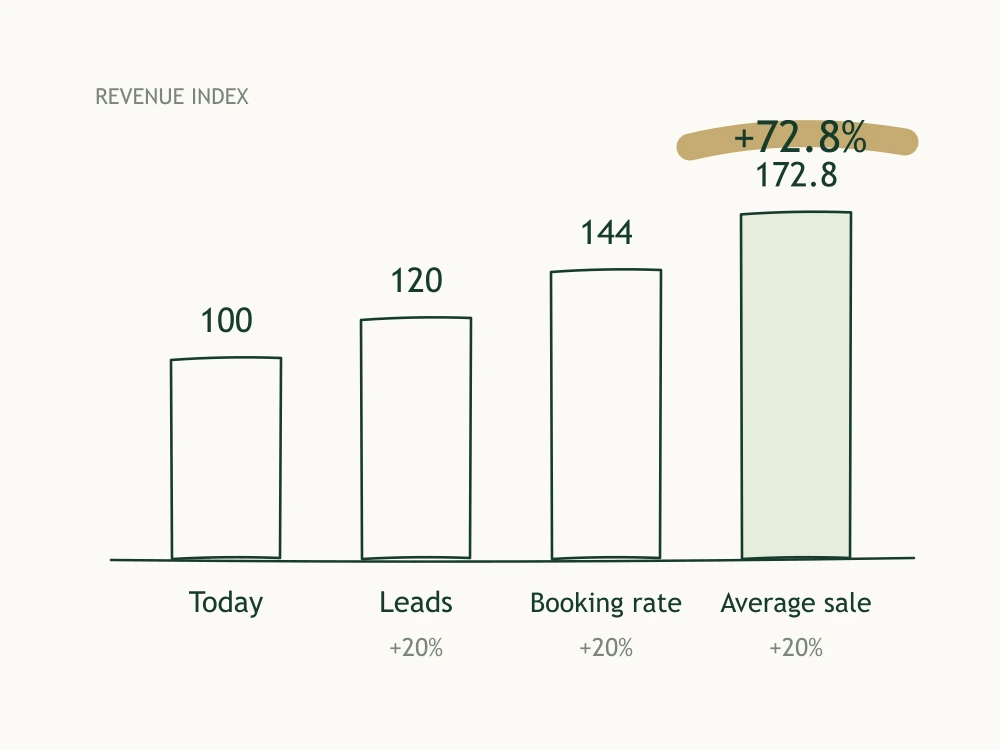
Illustrative arithmetic: 1.2 × 1.2 × 1.2 = 1.728. Additional bookings require capacity; revenue is not profit.
Twenty percent more photographs does not automatically mean a 20% higher sale. Faster follow-up does not guarantee a particular booking rate. Improve the work, then measure whether the business improved with it.
And when results weaken, investigate before you change the offer. Imagine your salesperson has a difficult month and the conversations suffer. You never listen to the calls. You decide the market has changed, raise the session fee to attract “better clients,” and get fewer bookings. You have made entry harder while leaving the sales problem untouched.
Now there are fewer opportunities to recover, and the next decision comes from even more fear. Audit the step that is failing. Fix that step. The market should not get blamed for a conversation you have never listened to.
The continuous pursuit of the top spot
The top studio in a town or city keeps earning its position. Its photographs improve. Its offers become more compelling. Its campaigns get more persuasive. Its people become better at helping clients buy.
You can do that work in a small town. You can do it in a crowded city. Start with a product people want, make a generous invitation, and put it in front of them. Then keep improving every step that turns interest into finished artwork.
A full calendar is a reason to raise your standards.
If you want help finding your studio's next opportunity, book a studio growth call. Bring the offer, the portfolio, the price list, and the numbers. We will look at what deserves your attention next.
Frequently asked questions
Can this work for a photography studio in a small town?
I have seen this model work in small towns and major cities. The reachable audience sets limits on scale, but relevant work, a compelling offer, consistent visibility, and strong sales still matter. Assess your actual audience and results before assuming the town is the problem.
Does a top studio need a high session fee?
A session fee is the entry price, not the total value of a client. Many high-revenue studios I have worked with use complimentary or sub-$100 sessions and earn their revenue from collections and artwork. The full model needs clear expectations, strong work, confident sales, and sound fulfillment economics.
What should I improve when my calendar is already full?
Examine average sale, product presentation, collection structure, pricing, and capacity. You may be able to grow revenue from existing sessions before adding more work. Measure the effect on bookings, sales, costs, and client experience.
How do I keep a successful campaign working?
Keep improving the creative, copy, videos, testimonials, and follow-up around the offer. Audit consultations and ordering appointments too. A campaign's results depend on the experience after the inquiry as well as the ad that generated it.
How do I make my photography offer stand out from other studios in my city?
Build it around a specific person who will recognize herself in your work. When every studio promises beautiful portraits and personal attention, clients cannot tell you apart. Themes like women over 40, women and their dogs, or families photographed around the relationships that matter to them give part of your market a more relevant invitation. Study who already values your work, and audit your posing, lighting and image selection.
What formula shows where my photography studio's revenue comes from?
Revenue equals leads times booking rate times average sale. Measure all three from the same inquiry group and buying period, count cancellations and zero-sale bookings, and use sales after refunds, excluding sales tax. Because the numbers multiply, 20% gains in all three produce 72.8% more revenue in the model. That is arithmetic, not a forecast. Extra bookings need capacity, and revenue is not profit.
What should I do when my photography bookings drop?
Find the step that is failing before you change the offer. Listen to your phone calls and follow inquiries through to bookings and sales. A common mistake is deciding the market has changed and raising the session fee to attract better clients. That makes entry harder and leaves the real problem, such as a sales conversation you never listened to, untouched. Fix the weak step, then measure whether the business improved.
How should I run an ordering appointment with my photography clients?
Lead it. Show the client what her photographs can become, explain your collections clearly, and guide the purchase instead of acting as an assistant shopper. Review where digitals sit in your price list, and audit your product presentation and your prices. What you learn in the ordering appointment should feed back into better shoots and your next campaign.