
The Monday after the system went live, one studio had 27 calls from the weekend. By 4pm they'd booked nine sessions, with time left in the day.
A few months earlier, that same studio was drowning. Some days they saw close to 100 inquiries across Instagram, Facebook, text, and email. Then the team got smaller, and nobody could cover every thread. Leads were dying overnight.
They didn't hire. They set up an AI triage system in under an hour that reads every inbox, sorts every inquiry, answers the easy ones, and hands the hot ones to a human.
That's one studio, not a promise. But it's the clearest picture I have of what an AI-native studio is, and why we're opening a small cohort to install it.
The short version
- The chatbot inside your CRM isn't AI-native. It drafts inside one app, and you still do the work at 11pm.
- AI-native means finished jobs: inquiries answered, follow-up sent, ads refreshed, across the tools you already pay for.
- This wasn't reliable two years ago. It is now.
- You keep the shoot, the consult, and the sale. The system handles everything around them.
- We're installing this inside a small first cohort of studios. Ask about a seat.
Bolt-on AI vs. AI-native
Your CRM added a chatbot. Your email tool suggests subject lines. Your ad platform offers "AI insights."
That's bolt-on AI: old software with a chat box glued on. It helps a little. It still leaves you hopping between tabs at 11pm.
AI-native is different. It's an assistant (Claude is the one I use most) connected to the tools you already pay for: your inboxes, your ad account, your calendar, your website. It doesn't draft inside one app and wait for you. It moves between them and finishes the job.
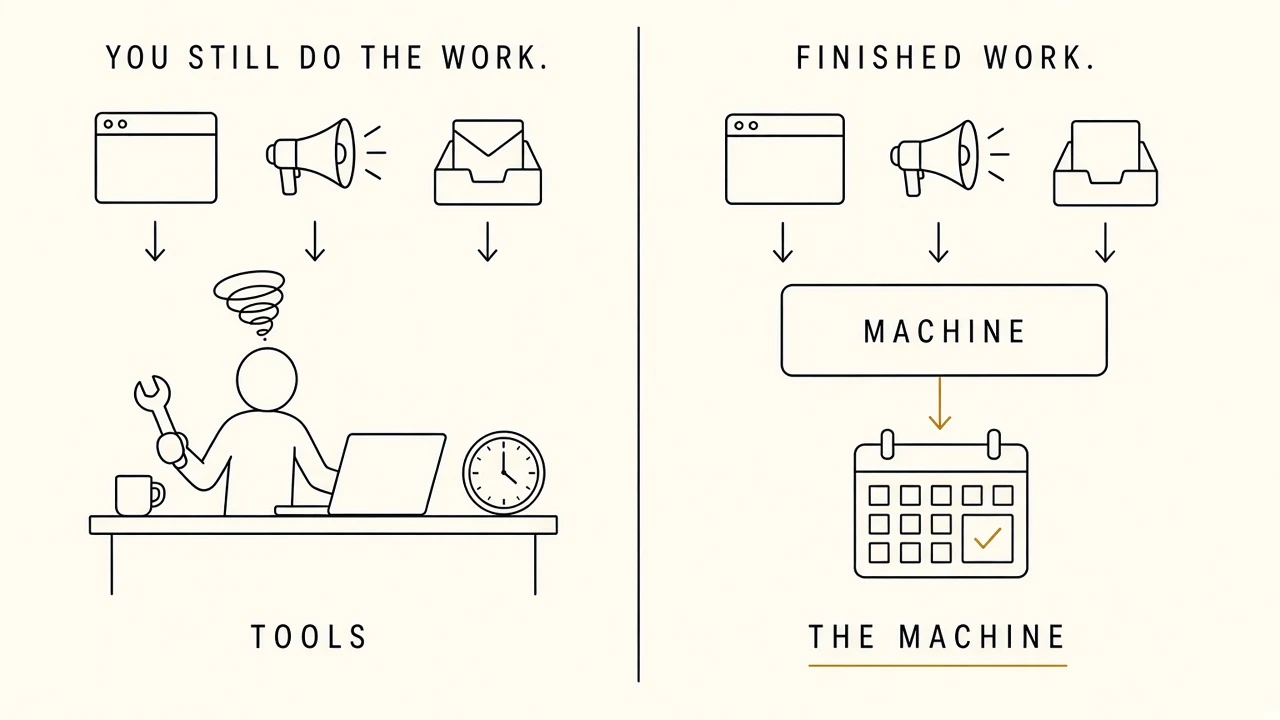
Old tools still dump the work on you. A real system takes the same inputs and aims at a booked calendar.
Here's the difference in one line: bolt-on AI helps you do the work. AI-native does the work, and you approve it.
Your clients don't want "AI features." They want a booked session and a calm path to get there. You don't want another writing app. You want inquiries handled and campaigns that don't die while you're on a shoot.
If your plan is "I'll just work harder on marketing," you're building a job with better lighting.
Where this fits in The Client Machine
Every studio's revenue comes down to three numbers: Leads × Booking Rate × Average Sale. AI-native ops pushes the first two and protects the third.
- Leads: ads built, launched, and refreshed in a fraction of the time, plus a site ChatGPT can actually recommend.
- Booking Rate: every inquiry answered in minutes, followed up on schedule, and sorted so the hot ones reach a human fast. This is where most studios leak the most money.
- Average Sale: stays human. The consult, the reveal, and the sale are yours. The system's job is to get more of the right people into that room.
That's the whole idea. Speed the machine. Keep the art.
Why now, and not two years ago
A lot of photographers tried AI in 2023 and 2024 and walked away. Fair. It forgot the brief halfway through. It broke on anything with more than a couple of steps. It couldn't touch the tools you actually use. You spent more time fixing the helper than doing the work.
That changed:
- It's more reliable. Ad variants, follow-up replies, inquiry sorting, first-pass page copy: good enough to approve, not just rewrite.
- It connects. It plugs into your inbox, ad account, and calendar instead of living in a separate chat window.
- It remembers more. It can hold your brand, your offer, and your rules through a whole job.
- It costs far less to run than it did even a year ago.
And the budget already exists. You're already paying for this work: in ad spend, freelancers, software, and nights stolen from your family. This isn't a new cost. It's spending less of your life on the same problem.
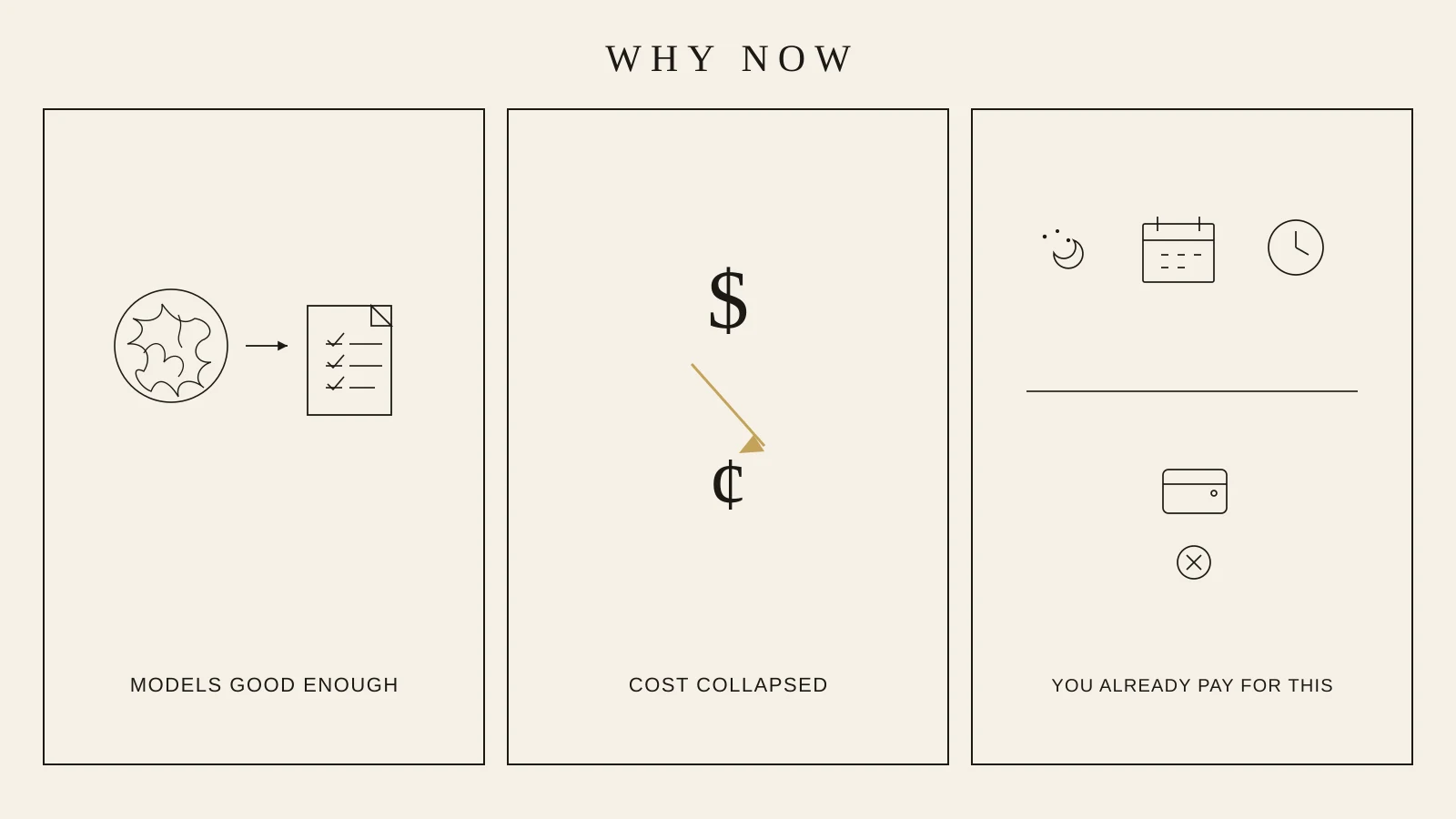
Smarter models. Cheaper runs. You already pay for this in nights and ad spend.
Portrait studios are early here. That's your opening in your genre.
What we already run inside studios
I don't teach this from a slide deck. It's how Photography to Profits runs every day, and it's what we install for studios. Every mistake we catch becomes part of the playbook.
The 200-hour website
A photographer poured about 200 hours into rebuilding "the most beautiful website."
We built one they liked more, and that converted better, in a couple of business days.
Pretty is nice. Bookings from the page are the scoreboard.
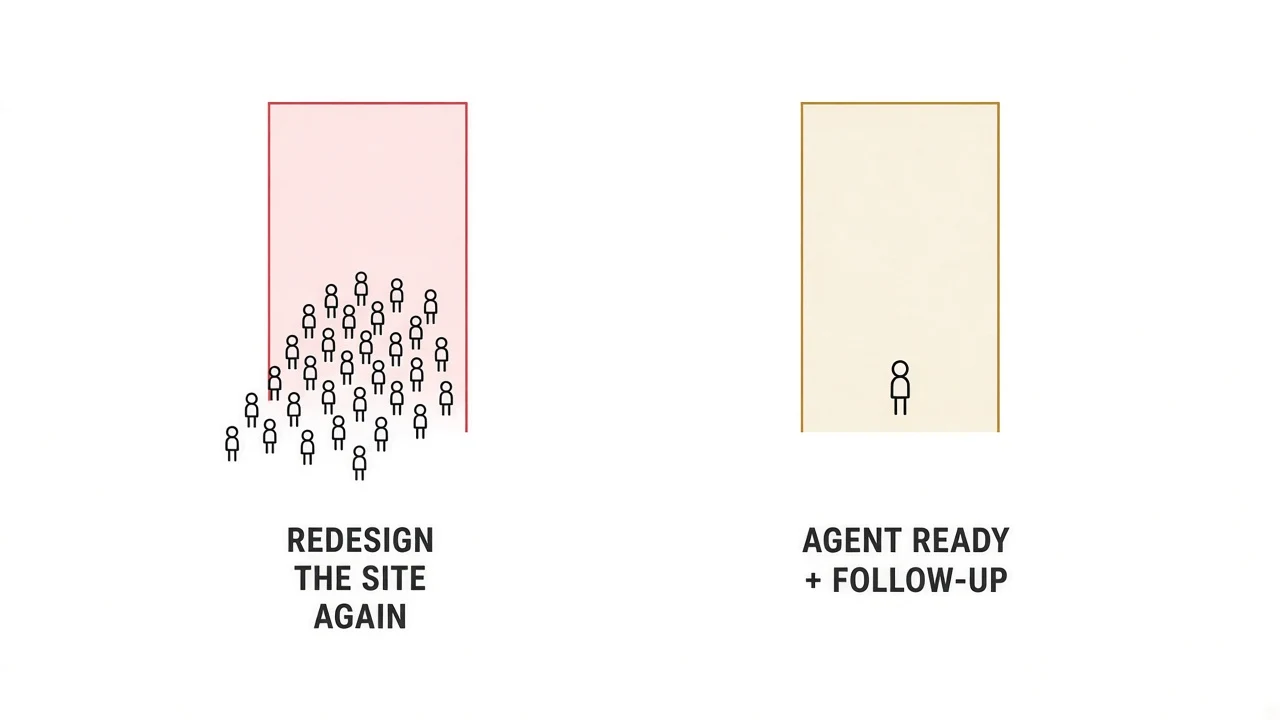
Wrong door: another redesign. Useful door: a site AI can recommend, plus follow-up that books.
Design still matters. But romanticizing a 200-hour rebuild while inquiries die in the inbox is how studios stay busy and broke.
Studio sites built with AI in the loop
I'm not a designer. We still build custom studio sites and campaign pages with AI. The system drafts the layout, copy, and pages. I steer the taste and the offer. Once a studio's system is set up, a new genre page or holiday campaign page takes minutes, not weeks.
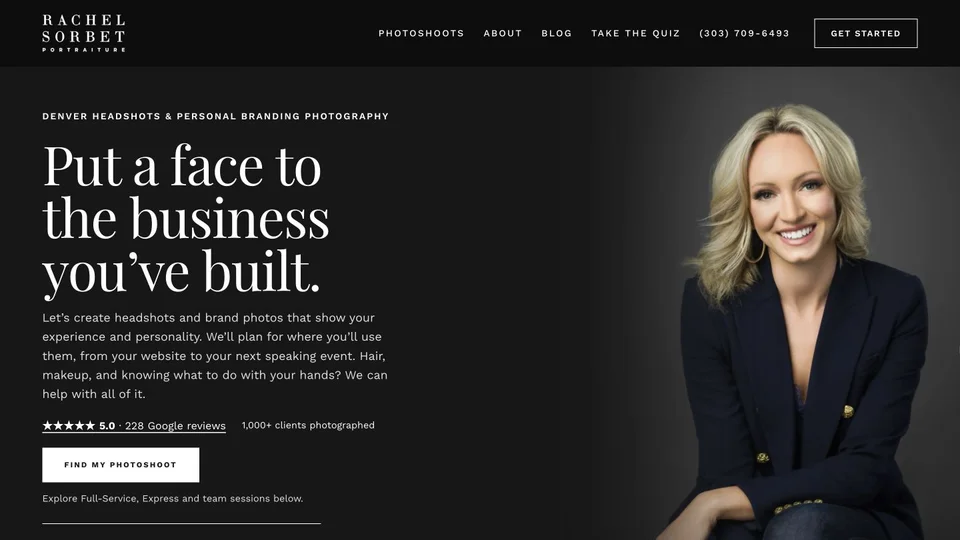
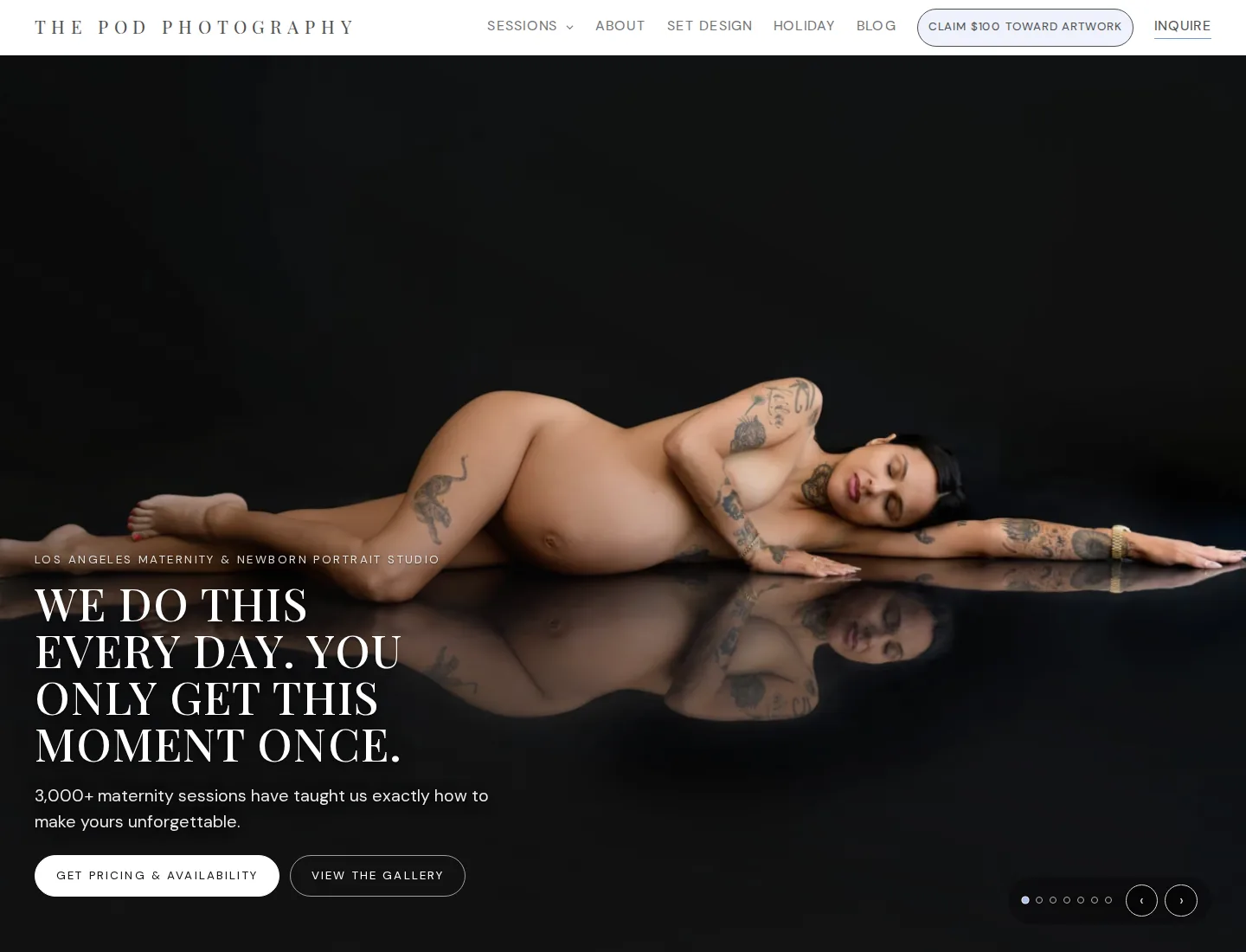
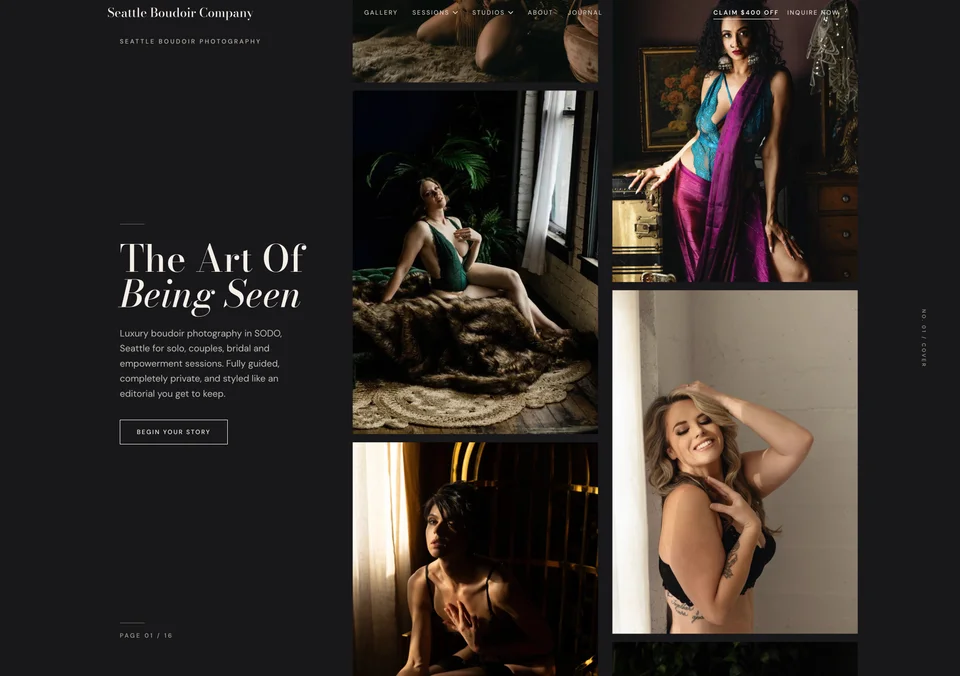
Built with AI in the loop: Rachel Sorbet, The Pod Photography, and Seattle Boudoir Company.
Full campaigns in under an hour
When the accounts are connected, we can spot an angle, build the creative, and launch a full campaign package in under an hour. That used to eat half a week.
But the ad is rarely the bottleneck. The bottleneck is whether your follow-up deserves the traffic. Scale ads into a broken inbox and you waste money faster.
Tracking in minutes, not a month
Knowing which ad actually booked which session used to mean weeks of tracking setup. The first time I built it properly, it took about a month. Now, with templates and an assistant working through the setup, it takes 5–10 minutes on a stack we know.
That's the difference between knowing what books and guessing.
One job, built all the way through
Here's what an install actually looks like. Example: inquiry triage for a busy portrait studio.
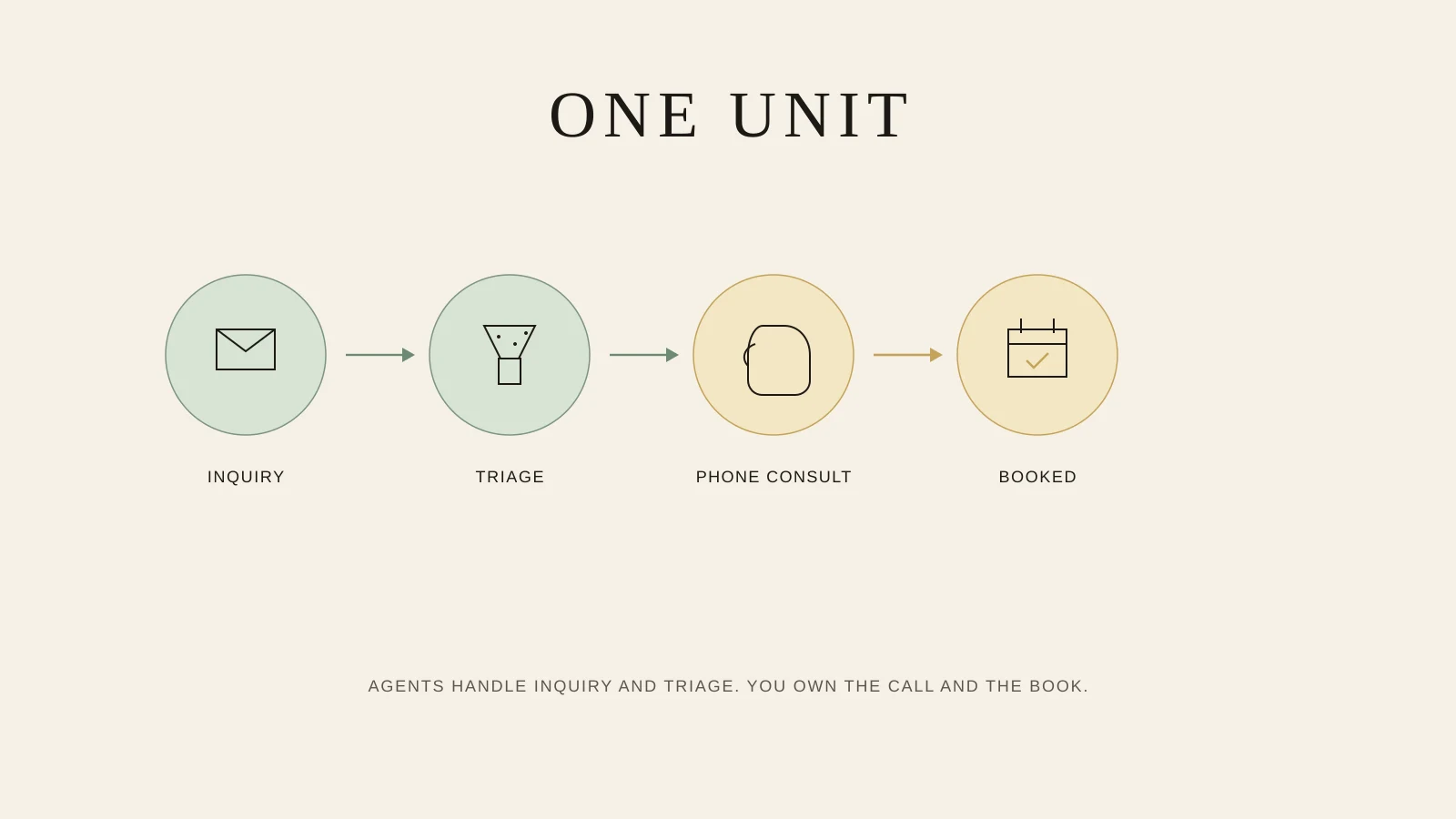
The system handles inquiry and triage. You own the phone consult and the booking.
Every install has four parts:
- One job with a finish line. Every inquiry tagged, answered, booked, or parked on purpose. Not "do marketing."
- A simple intake. The inboxes and forms you already have: Instagram, Facebook, your site, text. No new software to learn.
- A written playbook. Which inquiries are Cheetahs, Hares, or Tortoises. Who gets a same-day reply. What counts as a price shopper. When to offer a consult. When to stop chasing. It's written for your genre and gets sharper every week.
- A human stop. Hot, clean threads go straight toward a booked consult. Anything weird wakes up a person. You own the phone consult, the money decisions, and your reputation.
The same four parts work for every other job we install: ads, follow-up, site fixes, tracking. Different job. Same skeleton.
Creativity doesn't get crushed. Busywork does.
I hear this a lot: "If I use AI, my work will look like everyone else's."
That fear is aimed at the wrong layer. AI that makes generic portraits can flatten your art. I'm not talking about that. I'm talking about triage, follow-up, ad variants, tracking, and the glue between your tools, so you have oxygen on set.
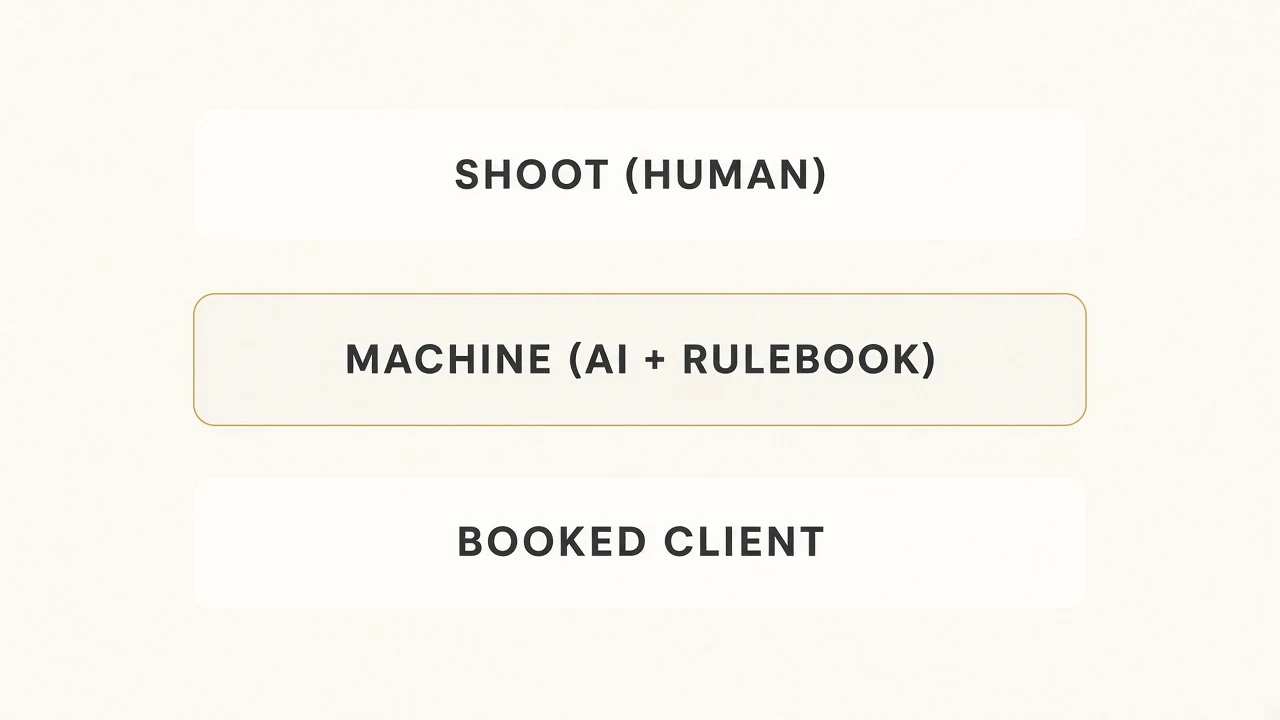
You keep the shoot. The system sits in the middle. The output is a booked client.
You keep: taste, posing, lighting, the consult, reading the room, the reveal, and saying no to bad-fit clients.
The system handles:
- Inquiry triage: every inbox read, sorted, and answered
- Follow-up: scheduled replies across Messenger, Instagram, text, and email, so leads don't die overnight
- Ads: campaigns built, launched, and refreshed without you living in Ads Manager
- Your numbers: ask "what's working?" and get a plain-English answer about what moved, what broke, and what to fix
- Pages: new genre and holiday campaign pages, on-brand, built fast
- Agent Ready: site fixes so ChatGPT recommends you when a parent asks for a photographer nearby
- Dead lead reactivation: The $20K Friday, run on a system instead of your weekend
- Video: first cuts assembled for you instead of a blank timeline
You still approve anything that reaches a client or spends money.
If it needs a soul, it's you. If it needs a checklist, it's the system.
Why "I'll just use ChatGPT" isn't the same
You can open ChatGPT today. You should. But you'll still be the one stitching together Ads Manager, five inboxes, and your calendar at 11pm unless something owns the loop.
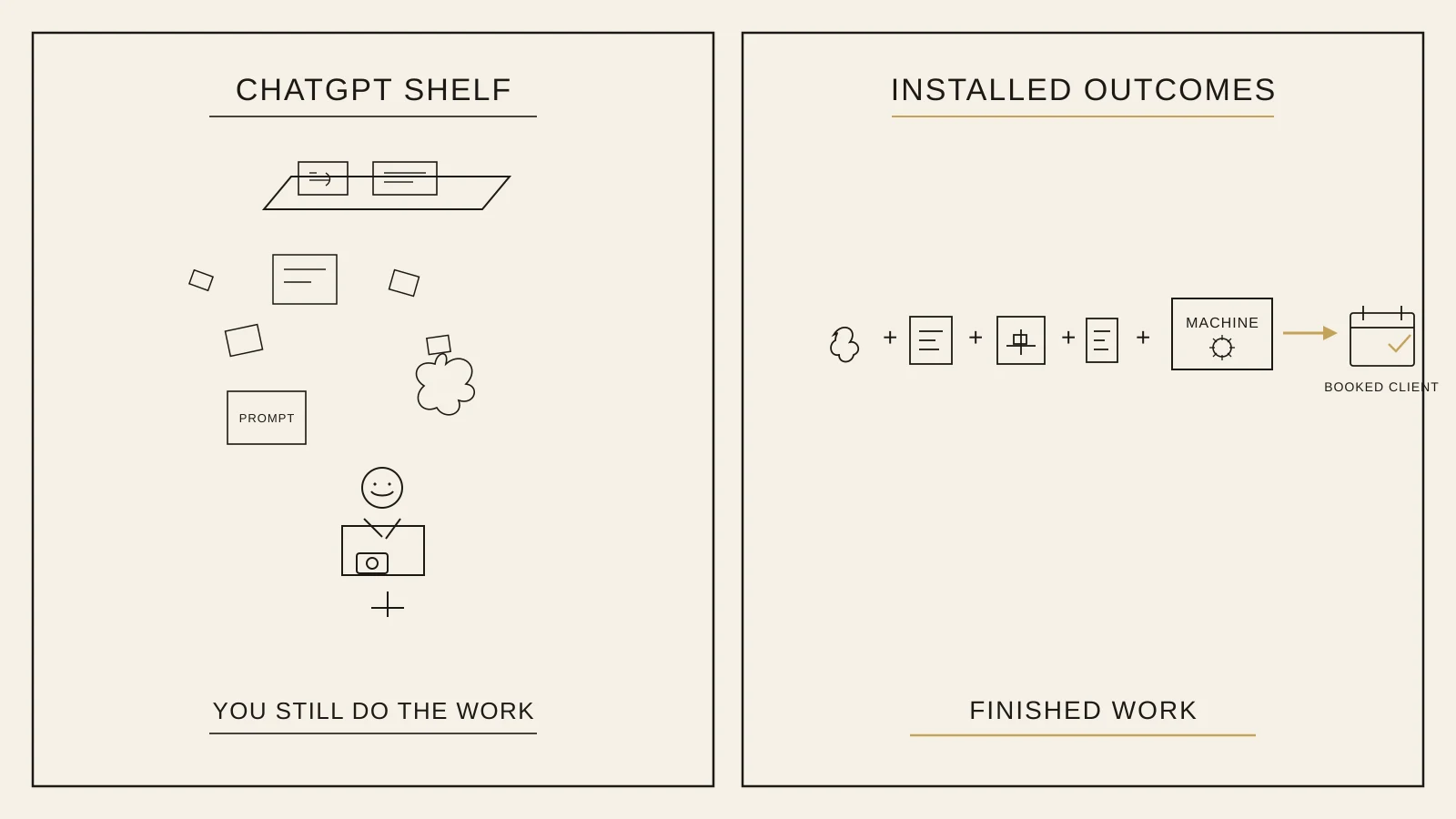
A shelf of chat tools still leaves you holding the work. A system aims at a booked client.
A studio with real lead flow can't paste five inboxes into a chatbot and hope. "Remember to follow up" isn't a system.
Everyone has access to the same models. What makes them work is the playbook (your genre's mistakes, written down) and someone accountable for running it. That's what we install.
How to start
Not sure which job comes first? Ask two questions:
- Is it already costing you money or nights?
- Can you check whether the output is right?
If both answers are yes, a system can own most of it. If it's pure taste, keep it.
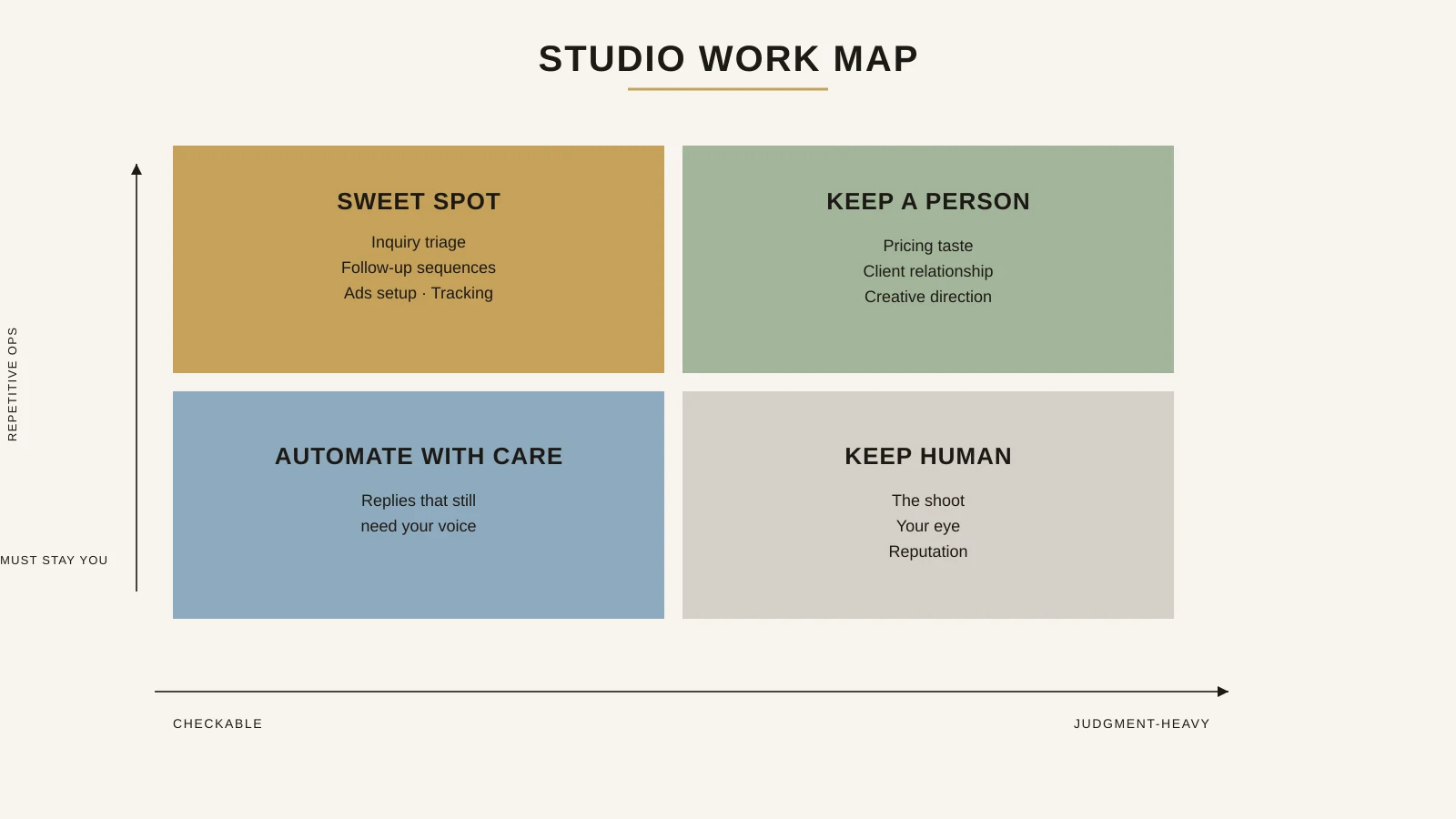
Build where the work is checkable and already eating your nights. Keep the shoot human.
For most studios, follow-up wins. Then you have two paths.
Do it yourself. Pick that one job. Run it with Claude. Read everything before it reaches a client. Every mistake you catch goes into your playbook. If you like to tinker, here's how I use Grok Bot as a studio teammate.
Or install it with us. That's the cohort.
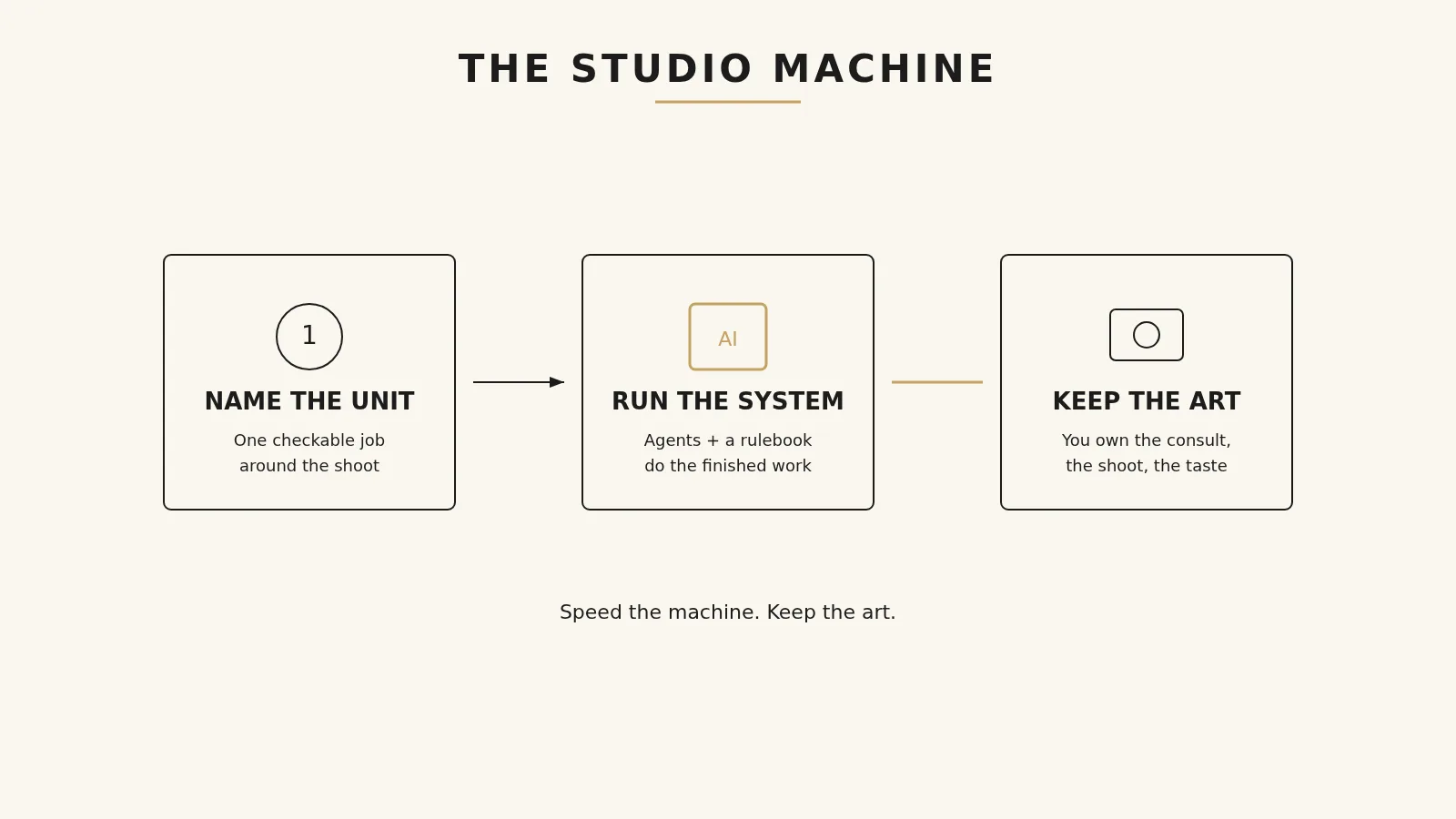
Name one job. Run the system. Keep the consult, the shoot, and the taste.
First cohort: AI-native studios
We're opening a small first cohort of portrait studios to install this with us.
Who it's for: studios already getting inquiries, even inconsistently, who are losing bookings to slow replies and 11pm follow-up.
What we install first: inquiry triage and follow-up, because that's where most studios leak the most bookings. Then the next job that moves your numbers: ads, pages, tracking, or reactivation.
Two ways in:
- Done-for-you: we build it, connect it to your tools, and run it with you.
- DIY with review: you build it with our playbook, and we review your setup and outputs on a tight loop.
Not for you if: you want AI to edit your photos, or you want another course to watch instead of a system to install.
What happens on the call: we look at where your inquiries are leaking, pick the first job to install, and tell you whether done-for-you or DIY fits. If it's not a fit, we'll say so.
Humberto Garcia
Photography to Profits
P.S. If you like to build things yourself, leave your email and I'll send you the free Watch Video skill. Paste any YouTube or Instagram link, and your assistant watches it and tells you what matters. Send me the skill →
Questions I get when I say this out loud
Will AI make my portraits look like everyone else's?
Only if you point it at the art. Use it on triage, follow-up, tracking, and ad variants. Keep posing, lighting, the consult, and the sale human.
Can't I just use the AI inside my CRM?
You can. That's bolt-on AI inside one app. AI-native means the assistant works across all your tools, with your playbook, not just inside one chat panel.
Why not just hire someone?
You can. A good person still gets tired and can't scale when leads spike. The system handles the checkable busywork so the people you have spend their time on consults and sales.
Isn't this too technical for me?
Building it from scratch is technical. That's why the cohort exists. You bring the studio, the taste, and the phone consults. We bring the system.
What if the AI gets it wrong?
That's what the human stop is for. The system triages and drafts. You own the phone consult, creative calls, and anything that can hurt your reputation. And every mistake it makes goes into the playbook so it doesn't repeat.
How do I know it's working?
Watch two numbers: response time and bookings. You don't need a theory deck. The studio in this essay booked from the lead flow it already had, with no new hire. That's one studio, not a guarantee.
Will ChatGPT recommend someone else?
Maybe. Agent Ready fixes how AI tools see your studio when parents ask for a photographer nearby. It's a useful first step, not the whole system. The system is still triage, follow-up, ads, and tracking.
How is this different from a course or an agency?
A course gives you the playbook, and you still run it alone. A traditional agency runs your ads, but your inbox and follow-up are still on you. The cohort installs the system that runs the work every day, with your playbook, and doesn't forget.
What does the cohort cost?
We cover investment on the call, once we know which job you need installed first.