
There's a line from Jean-Paul Sartre's The Age of Reason that I can't shake: "I have led a toothless life, he thought. A toothless life. I have never bitten into anything. I was waiting. I was reserving myself for later on, and I have just noticed that my teeth have gone."
A couple of months after I left the Marines, I woke up at 9am. After a decade of being up early with somewhere I was expected to be, I remember lying there thinking nobody knew where I was. For a minute, that felt like freedom.

I thought getting out would feel like breathing
For ten years I had a rank, a culture, and a lot of responsibility. I also felt like I had almost no freedom. Hair a certain way. Shave. Be at formation. Make the training. Meet the qualification. Go to whatever country they pointed at. There was always a standard. And if I missed it, someone noticed.
I thought getting out would feel like finally breathing. It didn't.
Before I got out, I had even started studying for the LSAT because law school felt like the safe fallback. I was also building the photography business. There were several different lives I could imagine living. Law. Pictures. Some version of "I'll decide when I get there." Then suddenly none of them came with a schedule.
Nobody knows where I am
I remember lying there and thinking:
Nobody knows where I am.
Nobody cares.
There's no formation to go to.
Then it started to feel like the opposite.
I had followed a career track for so long. I knew what "good" looked like. I knew what I had to do before noon, what qualification came next, and what happened if I didn't show up. Now I had the freedom to do almost anything, and I felt more lost than I ever had in uniform.
I had freedom from the military. I hadn't built any structure around what I wanted to do with that freedom.
I wrote about the other half of this years ago: walking away from ten years in the Marines even though people told me I was throwing away a retirement. That was the sunk cost problem. Leaving was the right call.
This is what nobody tells you about the day after you leave. Leaving is not the same as arriving.
The first way I learned to fight it was crude. The photography business had become an agency, and I wanted to reach photographers who could not pay for full-service marketing. I sat on that idea for months. I was convinced I wasn't ready. Then one day I was sitting in my apartment parking lot, and I was done waiting. I went live on Facebook, announced a webinar, and set the date about two weeks out. I did not have the thing built yet. That was the point. Once I said it in public, people were going to show up on a date I had already given them. The work had somewhere to be. I had recreated a formation for myself.
The two weeks after that were the first time since I got out that a date on the calendar belonged to me. I had to write the webinar. I had to show up. That is still how I get myself to do the work I would otherwise keep in Notes.
Private freedom, then a war
Sartre started that book in 1938, before the war. The line belongs to Mathieu Delarue, a thirty-four-year-old philosophy teacher in Paris who treats freedom as never getting trapped. In September 1939 Sartre was mobilized as a meteorological observer. He finished the first volume in uniform. In June 1940 he was captured. He later said the war divided his life in two.
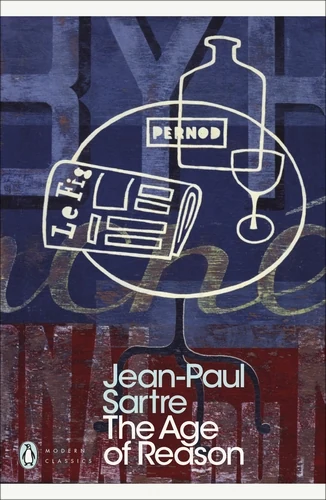
The way I read it, Mathieu is what happens when keeping every option open becomes the whole life. He is not lazy. He is in motion the entire time. He just never lets a choice close a door.
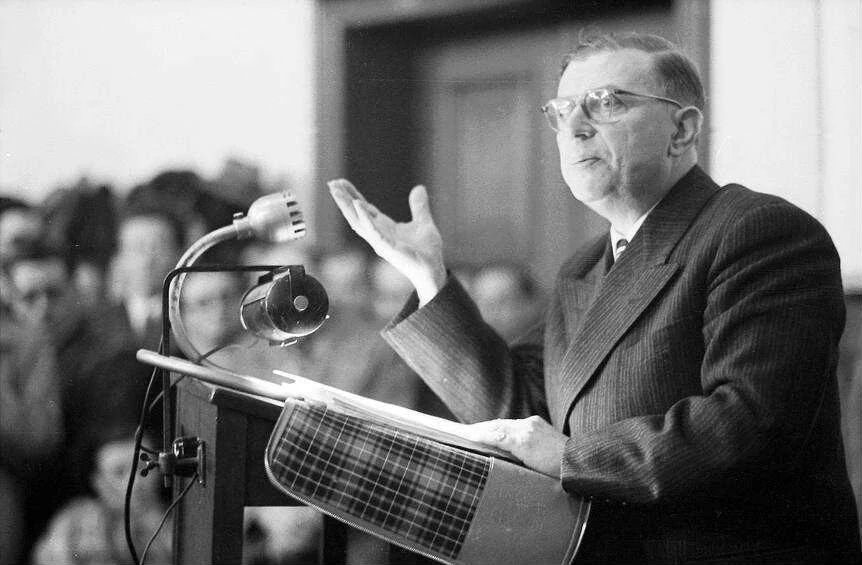
Sartre thought we lie to ourselves in two directions. We say we have no choice. Or we act like every option can stay open forever. Both skip the choice sitting in front of us. After I got out, nobody was telling me I had no choice. I had the other lie. Every life still possible. Law school. Photography. Later.
That's the studio
That is why I understand one of the strangest parts of owning your own studio. You leave the job because you don't want anyone telling you what to do. You want your own hours, your own clients, your own taste on the wall. Then you wake up with a hundred things you could do, and nobody who will notice if you don't.
Mathieu walked around Paris keeping every future open. Studio owners do it with browser tabs. Lightroom is open. A half-built offer is sitting in Canva. Three course tabs are still loading. An unfinished campaign is in Notes, waiting until it feels ready. The phone is full of leads nobody called.
Because nothing is forcing you to choose one, you keep all of them alive. Or you do a little of everything, which feels like movement and still isn't a bite. You post. You tweak the gallery. You move things around on your website. You put something up with your eyes closed and your nose held, like taking a vitamin you already decided you hate. You'll even make a little progress that way. And you'll still feel behind.
Once you choose something, it can fail. An offer can't fail while it's still in your notes. An ad can't disappoint you if you never turn it on. A phone script can't make you uncomfortable if you never make the call. That is also why procrastination rarely feels like laziness in the moment. Researchers describe it as short-term mood repair. You leave the offer in Notes because Notes cannot reject you. You leave the lead uncalled because an unanswered phone cannot tell you no. It feels better today. Tomorrow gets the bill.
As long as everything stays possible, none of it has to be tested. But waiting is still a choice. You can suffer twice. Once while you argue with the action in your head. Again when the month ends and you realize you still didn't do it.
The follow-up, the phone calls, the one offer, and the ads that actually ask someone to book aren't the things taking away your freedom. They're the work that creates it.
I don't miss getting told to shave. But I do miss knowing what I was supposed to do before noon.
I'll be the formation for a while.
Humberto
If you already have a studio and want someone who actually cares where you showed up this week, book a short call at photographytoprofits.com/schedule.
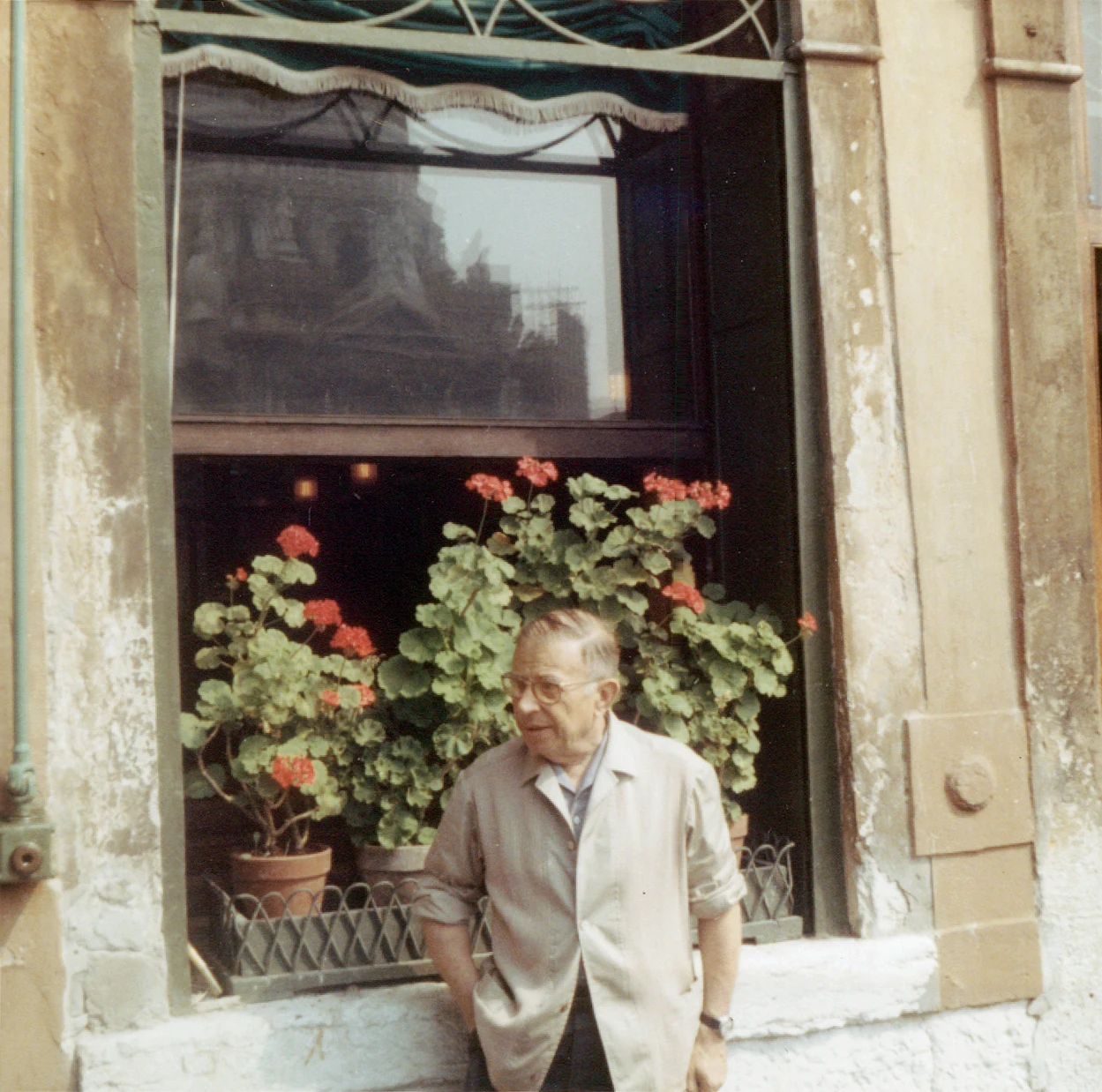
The quoted line is from Jean-Paul Sartre, The Age of Reason, translated by Eric Sutton. Book cover: Penguin Modern Classics. Photographs: Leilani Garcia; Sartre at the University of Freiburg, 11 February 1953, Willy Pragher / Landesarchiv Baden-Württemberg, CC BY 3.0 DE; Sartre in Venice, August 1967, Wikimedia Commons, CC BY 3.0.