
How much should a photographer spend on advertising? For an established portrait studio, a practical monthly ad budget is usually $1,000 to $2,500. Studios still proving their offer may start around $500. Studios with strong sales systems and more capacity may invest $3,000 to $5,000.
Those are planning ranges, not a promise. The right number depends on what one booked client is worth, how consistently you convert inquiries, and whether you can track a lead all the way to collected revenue.
Photography to Profits' Key Takeaways
- Humberto Garcia's starting rule: Most established studios should plan around $1,000 to $2,500 per month in direct platform spend.
- Meta cold prospecting: Budget $1,000 to $1,500 per month to give a real campaign enough room to operate.
- Google Search: Plan on at least $1,500 per month when you want to capture active local demand.
- Retargeting: A smaller warm-audience campaign can run at $5 to $15 per day when the audience is large enough.
- The deciding metric: Judge the budget by cost per booked session and return on ad spend, not clicks or cheap leads.
Photography Ad Budget Ranges
The simplest starting point is to match the budget to the maturity of the studio and the job the campaign needs to do.
| Studio situation | Practical ad spend | Best use |
|---|---|---|
| Offer still being proven | $500 per month | Warm retargeting or one narrow validation campaign, not broad multi-platform scale |
| Established portrait studio | $1,000 to $2,500 per month | One primary acquisition channel with enough budget to learn |
| Studio with strong capacity and sales | $3,000 to $5,000 per month | Scaling a proven channel or operating a deliberate multi-channel plan |
The common mistake is dividing a modest budget across Meta, Google, boosted posts, and several offers. Each campaign receives too little signal, nothing becomes conclusive, and the photographer concludes that ads do not work. A focused budget teaches you more than a scattered one.
Calculate the Budget From Studio Economics
Your ad budget should begin with four numbers:
- Average order value: the revenue collected from an average booked client, including products.
- Lead-to-consultation rate: the percentage of leads who reach a real sales conversation.
- Consultation booking rate: the percentage of consultations that become paid sessions.
- Cost per lead: direct platform spend divided by leads generated.
Photography to Profits uses these operating benchmarks for established portrait studios: $8 to $45 per lead, 25% to 45% lead-to-consultation, 30% to 60% consultation-to-booking, and an $1,800 to $5,000+ average order value. They are diagnostic ranges, not guarantees.
Here is the math using a $2,000 monthly ad budget, a $30 cost per lead, a 20% lead-to-booking rate, and a $1,800 average order value:
- $2,000 ÷ $30 cost per lead = about 67 leads.
- 67 leads × 20% = about 13 bookings.
- 13 bookings × $1,800 average order value = $24,120 in projected revenue.
- $24,120 ÷ $2,000 = about 12.1x return on ad spend.
The real question is not “Can I afford $2,000 in ads?” It is “Can my offer, follow-up, consultation, and fulfillment turn those leads into profitable sessions?” If one of those links is weak, increasing the budget only buys a larger version of the same problem.
Where Should Photographers Spend Their Ad Budget?
Choose the platform based on the kind of demand you need to capture. Meta, Google, and retargeting solve different problems.
| Channel | Starting budget | Use it when | Main risk |
|---|---|---|---|
| Meta Ads | $1,000 to $1,500 per month for cold prospecting | You have a visual, emotionally specific portrait offer and need to create demand before someone searches | Broad creative can attract curiosity without purchase intent |
| Google Ads | $1,500 per month minimum | People already search for your service in your market and your landing page closely matches that intent | Loose keywords or geography can pay for irrelevant clicks |
| Retargeting | $5 to $15 per day | You already have meaningful website traffic, video viewers, or engaged prospects who need another touch | A tiny audience becomes saturated quickly |
If your total budget cannot support the minimum for both cold channels, pick one. Use Google when there is enough high-intent local search demand. Use Meta when the offer is easier to understand through visual storytelling than through an existing search. Add retargeting after you have a real warm audience, not simply because it is inexpensive.
Most established studios eventually use both Meta and Google, but sequence matters. Prove one acquisition path, connect it to booked-session revenue, and then add the second channel.
Paid ads work best as one part of a larger acquisition system. The photography marketing guide shows how they fit with search, email, referrals, and conversion.
A Daily Budget Is an Average, Not a Daily Cap
Photographers often set a daily budget and expect the same charge every day. That is not how either major platform describes its pacing.
How Google Ads spends a daily budget
Google defines the campaign setting as an average daily budget. For most campaigns, Google says a campaign may spend up to two times that average on a particular day, while the monthly spending limit is 30.4 times the average daily budget.
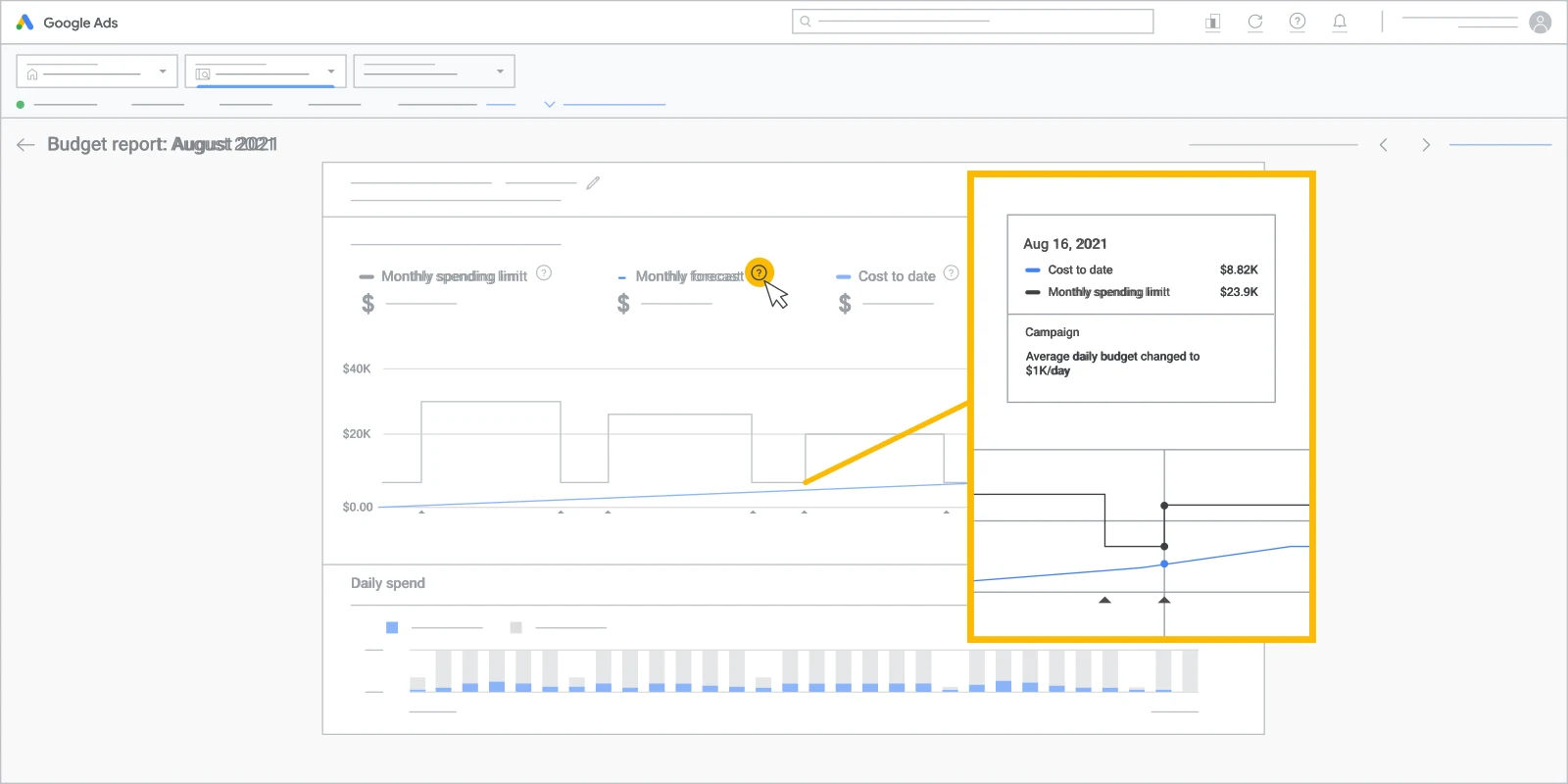
Google's Budget Report illustrates the monthly spending limit, forecast, cost to date, and daily pacing. This is a generic Google interface example, not a P2P client account. Source: Google Ads Help.
That is why a campaign can appear to run hot on one day without exceeding its monthly charging limit. Judge pacing against the month and the actual conversion cycle, not one isolated morning.
How Meta spends a daily budget
Meta also treats a daily budget as an average. Its current help documentation says daily spend may go as much as 75% over the set amount on some days, but weekly spend will not exceed seven times the daily budget.
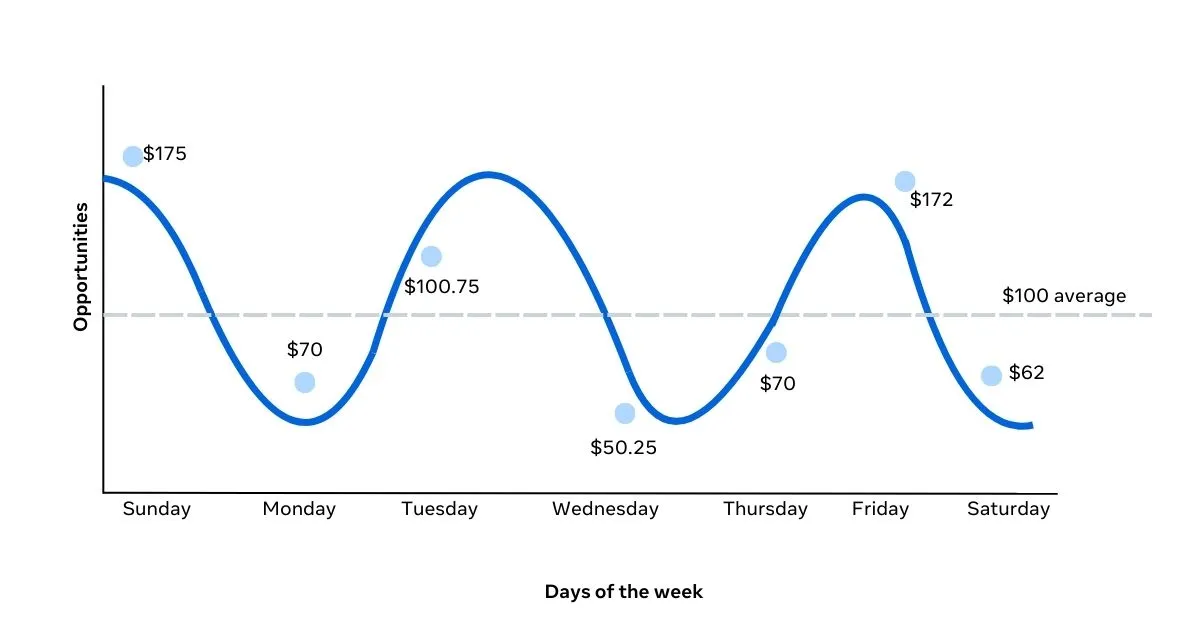
Meta's own example shows daily spend moving above and below the average while the week stays within the stated limit. Source: Meta Business Help Center.
In other words, do not pause a healthy campaign solely because Tuesday spent more than Monday. Watch qualified leads, booked consultations, revenue, and the platform's full pacing window.
Track Cost per Booked Session, Not Just Cost per Lead
A low cost per lead can hide a weak campaign. If the leads do not answer, do not qualify, or never book, cheap volume is still expensive.
Use this calculation:
Cost per booked session = total ad spend ÷ sessions booked from those ads
Then compare that number with the average order value and the cost of fulfilling the session. P2P's target operating range is 10x to 30x return on ad spend for established portrait studios. That range assumes a complete system, including a strong offer, fast follow-up, a real consultation process, and an average sale that can carry acquisition cost.
Clicks and platform leads are early signals. Collected revenue is the business result.
A Real First-Campaign Example
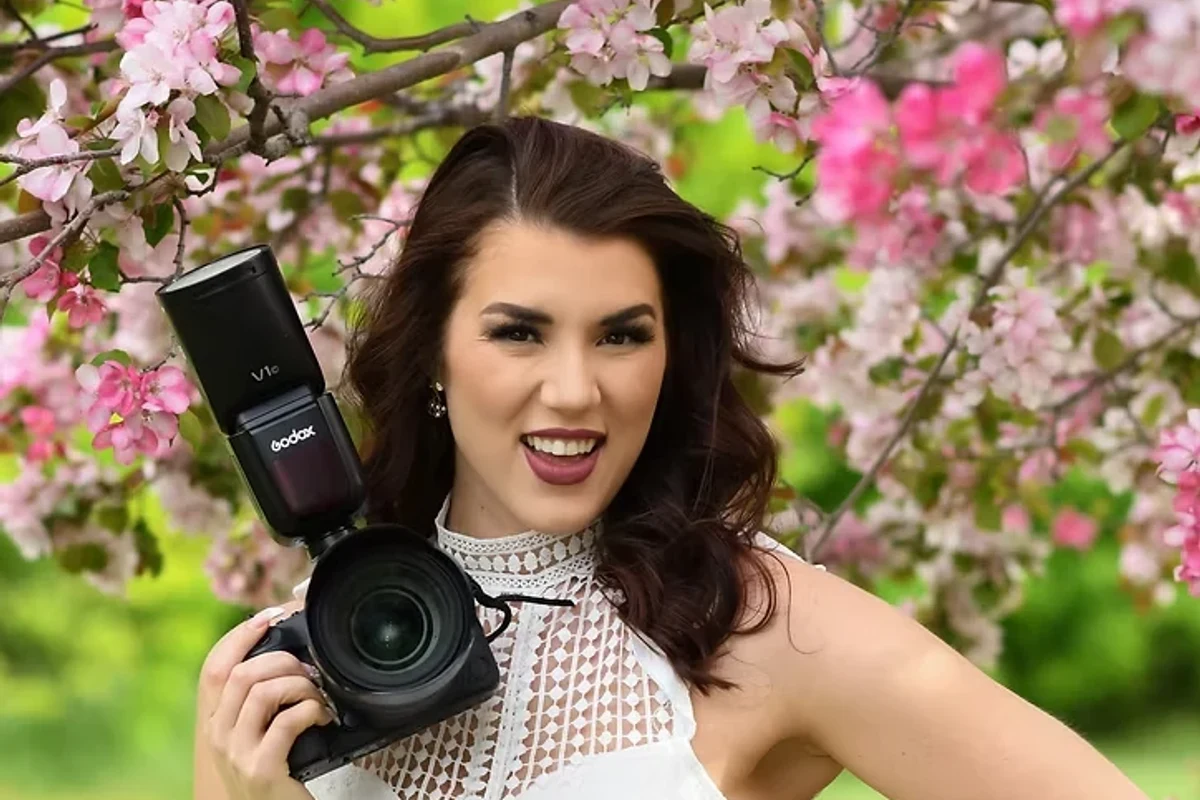
Quinn Teechma, a real Photography to Profits client.
Quinn Teechma had never run a paid ad. Her first Meta campaign spent $115, generated 500+ leads, booked 30 sessions, and produced $29,540 in revenue from the first seven sessions.
Quinn is a freak of nature. I mean that as praise, not as a benchmark. She was offering a free model call, and this kind of result does not happen for most studios. Its value is showing what can change when the offer, creative, booking process, and sale work together, not setting a budget expectation.
For a more useful planning example, a portrait photographer in North Carolina spent approximately $1,622 on Meta, generated 208 leads, held 52 calls, and received 37 deposits. That is about $7.80 per lead, $31.19 per held call, and $43.84 in ad spend per deposit. These were the studio's working campaign totals, so treat them as directional rather than audited financials.
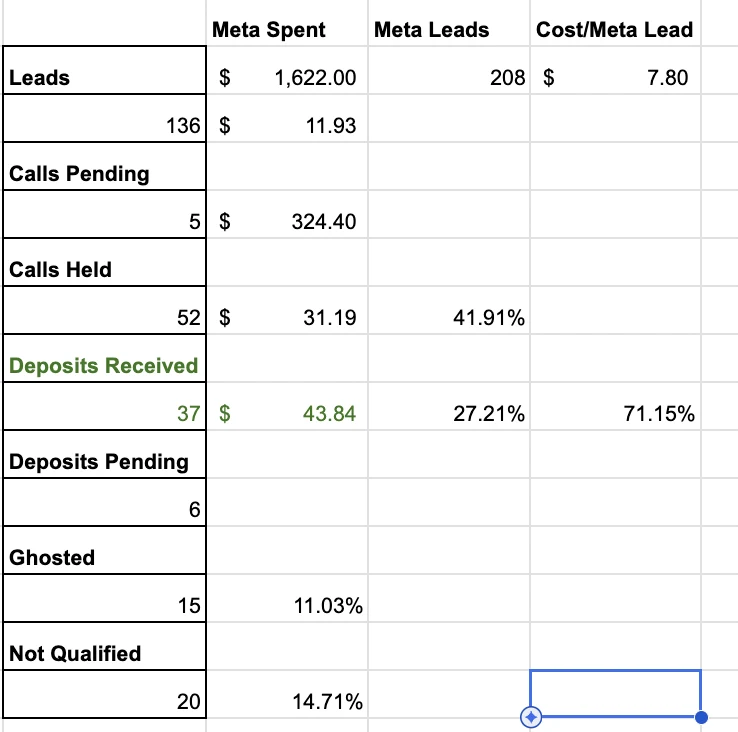
An anonymized working campaign tally from a North Carolina portrait studio. The photographer described the figures as close rather than final.
Do not build a forecast that assumes either studio's outcome. Build one from your own cost per lead, booking rate, and average sale, then compare it with P2P's operating ranges.
You can see Quinn and other documented studio outcomes on Why Photographers Recommend Photography to Profits.
When Should You Increase the Budget?
Increase ad spend only after the current campaign produces enough qualified demand and your downstream system can absorb more of it.
- Increase: booked-session cost is profitable, lead quality is stable, follow-up is fast, and the calendar has capacity.
- Repair first: leads arrive but consultations do not happen. Fix response speed, qualification, and contact attempts.
- Repair first: consultations happen but bookings do not. Fix the offer, pricing presentation, and sales conversation.
- Do not increase: conversion tracking stops at a platform form and cannot connect a lead to a booking.
A profitable campaign limited by budget may deserve more money. An unmeasured campaign does not.
Does Ad Spend Include Agency Fees?
No. Direct ad spend and management fees are different costs.
- Ad spend is paid to Meta, Google, or another media platform for delivery.
- Management pays for strategy, creative, campaign setup, landing pages, tracking, optimization, and reporting.
- Sales infrastructure may also include a CRM, phone or SMS follow-up, and appointment tools.
Photography to Profits engagements generally run $2,000 to $5,000 per month depending on scope, plus the ad budget paid to the platforms. Keep those lines separate when you calculate marketing cost and return.
Frequently Asked Questions
Can a photographer start advertising with $500 per month?
Yes, but keep the job narrow. A $500 monthly budget is better suited to warm retargeting or one focused validation campaign than to running cold Meta and Google campaigns at the same time. P2P's practical minimum is $1,000 to $1,500 per month for cold Meta prospecting and $1,500 per month for Google Ads.
Should a photographer use Facebook Ads or Google Ads first?
Use Meta first when a visual, emotionally specific offer needs to create demand. Use Google first when people already search for that service in your market and your landing page matches their intent. If the budget cannot properly fund both, choose one and prove it before splitting spend.
How much do photography leads cost?
P2P's working range is $8 to $45 per lead for established portrait studios. Lead cost changes by market, offer, platform, creative, and qualification. A higher-priced qualified lead can be more valuable than a cheap lead who never books.
What return should a photography studio expect from ads?
P2P targets 10x to 30x return on ad spend for established portrait studios with a strong offer and sales system. It is a target range, not a guarantee. Forecast from your own lead cost, booking rate, average sale, capacity, and fulfillment cost.
Should marketing spend be a percentage of studio revenue?
A percentage can be a guardrail, but it should not choose the campaign. Start with unit economics: cost per lead, cost per booked session, average order value, capacity, and collected revenue. Those numbers tell you whether the next dollar is productive.
How often should a photographer change the ad budget?
Change it when the business evidence supports the move, not because one day looks unusually high or low. Both Google and Meta describe daily budgets as averages. Review performance across the platform's pacing window and through the studio's normal booking cycle.