
A newborn studio doing $500,000 a year hit a wall. Bookings dried up. The owner couldn't figure out why. The leads were still coming in, the inquiries looked the same, the ads were still running. What changed? The person answering the phone.
She had drifted from the script. Added her own flair. Softened the discovery questions. Stopped anchoring pricing with urgency. And in 60 days, the booking rate fell off a cliff.
I flew in, sat next to her during calls, and ran them back through the 5-stage system, and in 7 days, they booked 9 sessions. Nothing else changed. Same leads. Same market. Same studio. Just the conversation on the phone.
That story is not an outlier. It is the rule. The phone is where photography businesses are won or lost, and most photographers either ignore it, wing it, or give up after one unanswered call. This post walks you through the complete system: how to structure the call, how to warm leads before you dial, how many times to follow up, and how to build the machine that converts inquiries into clients on autopilot.
This is the system.
Key Takeaways
- Phone consultations, not email quotes, are what separate studios doing $100K from studios doing $500K+.
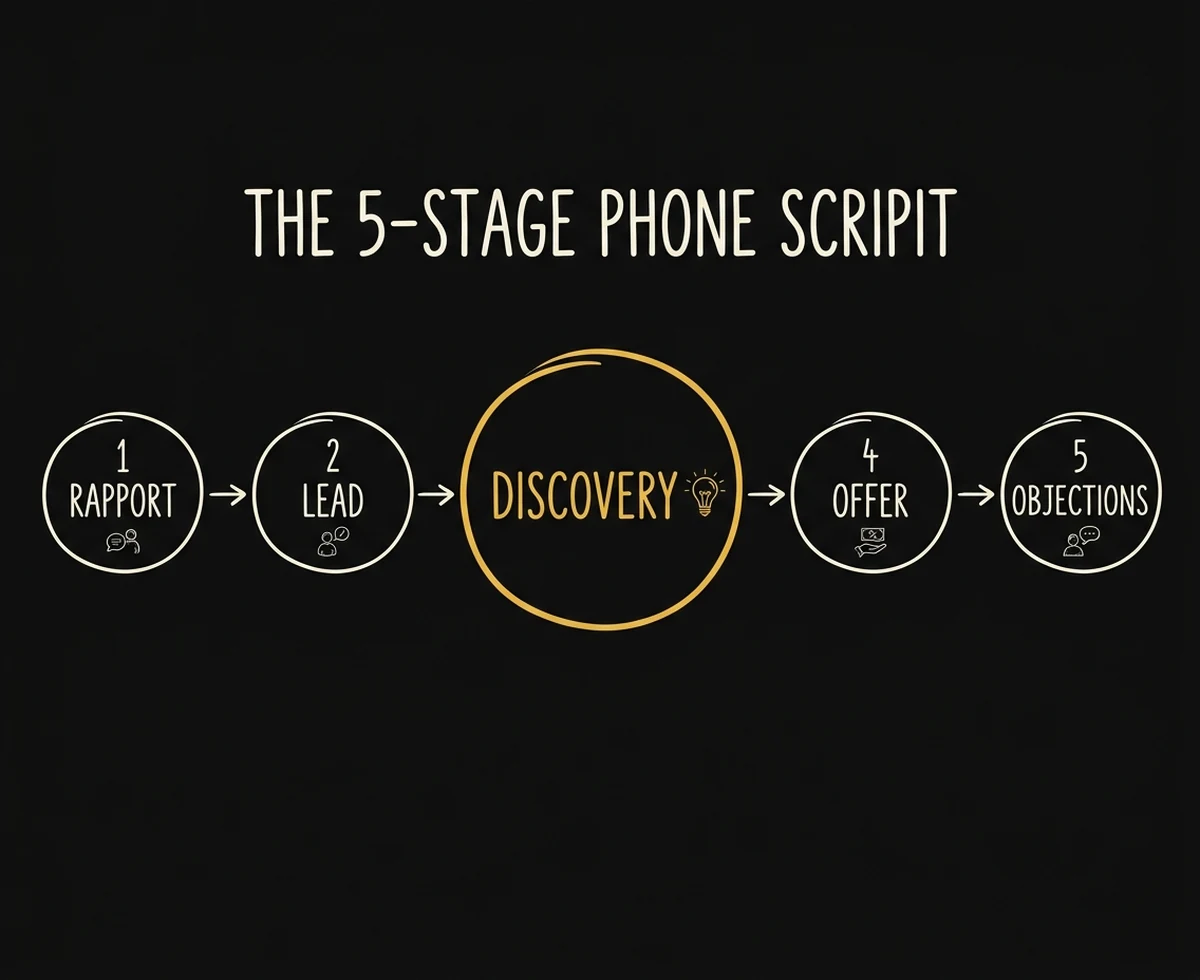
- The 5-stage script (Rapport → Agenda → Discovery → Offer → Objections) is a learnable skill, not a personality trait.
- Speed-to-lead is decisive: responding within 5 minutes makes you 7x more likely to book the client than waiting an hour.
- The 5x7 Rule: follow up 5 times in 7 days before you consider a lead dead. Most photographers quit after one attempt.
- Warming a lead before you call (through your thank-you page, email nurture, and retargeting) makes every conversation easier and shorter.
- Recording and reviewing your calls is the fastest way to improve your booking rate without spending a dollar on ads.
Why the Phone Still Beats Everything Else
Photographers love email. It feels safe. You can craft the perfect response, attach your pricing guide, and avoid the awkward silence when someone says "we'll think about it." But that comfort is costing you bookings.
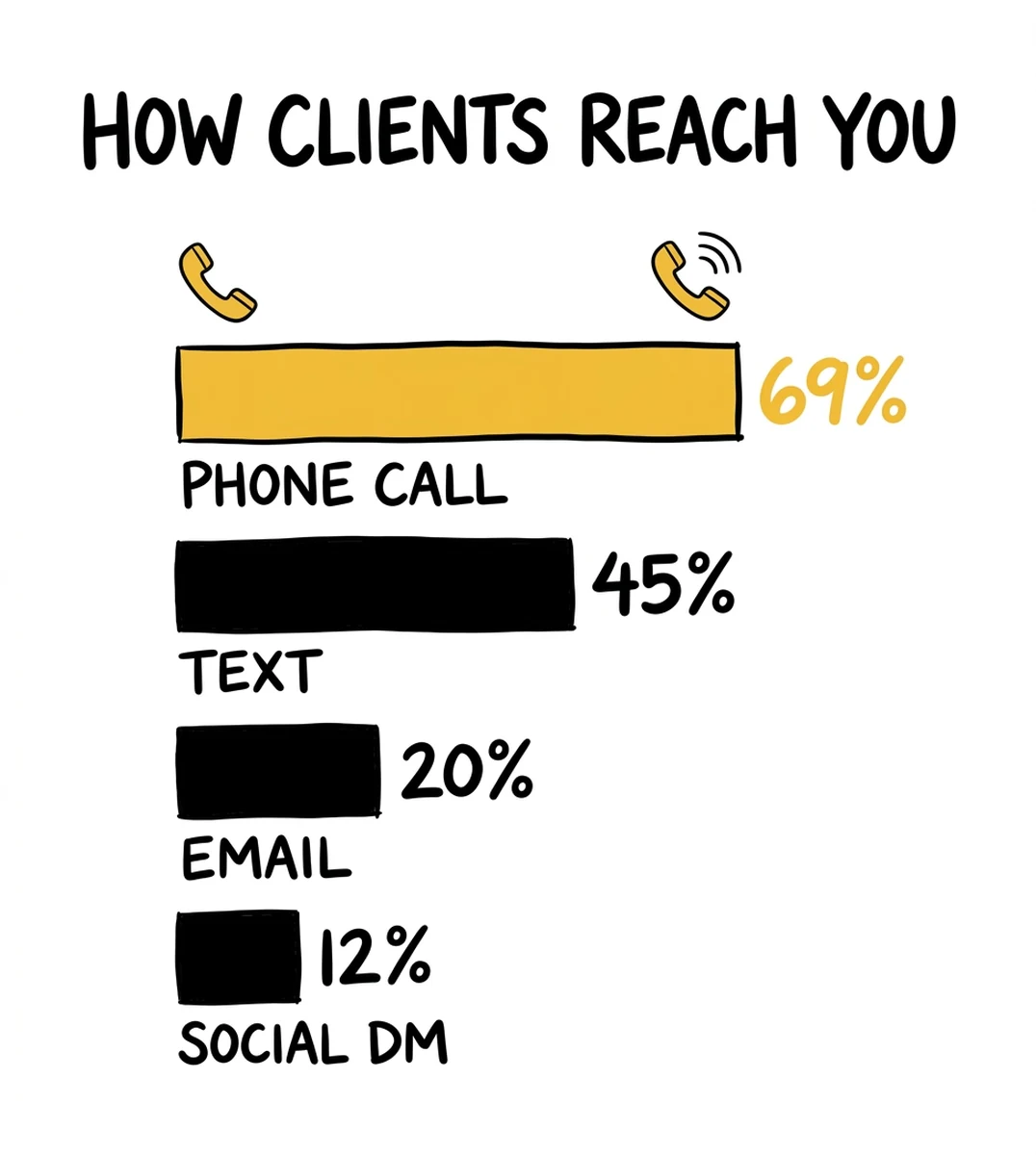
Phone calls drive 69% of all business inquiries, yet only 38% of small businesses actually answer when a lead calls. That gap is your opportunity. Your competitors are routing people to a PDF. You pick up the phone.
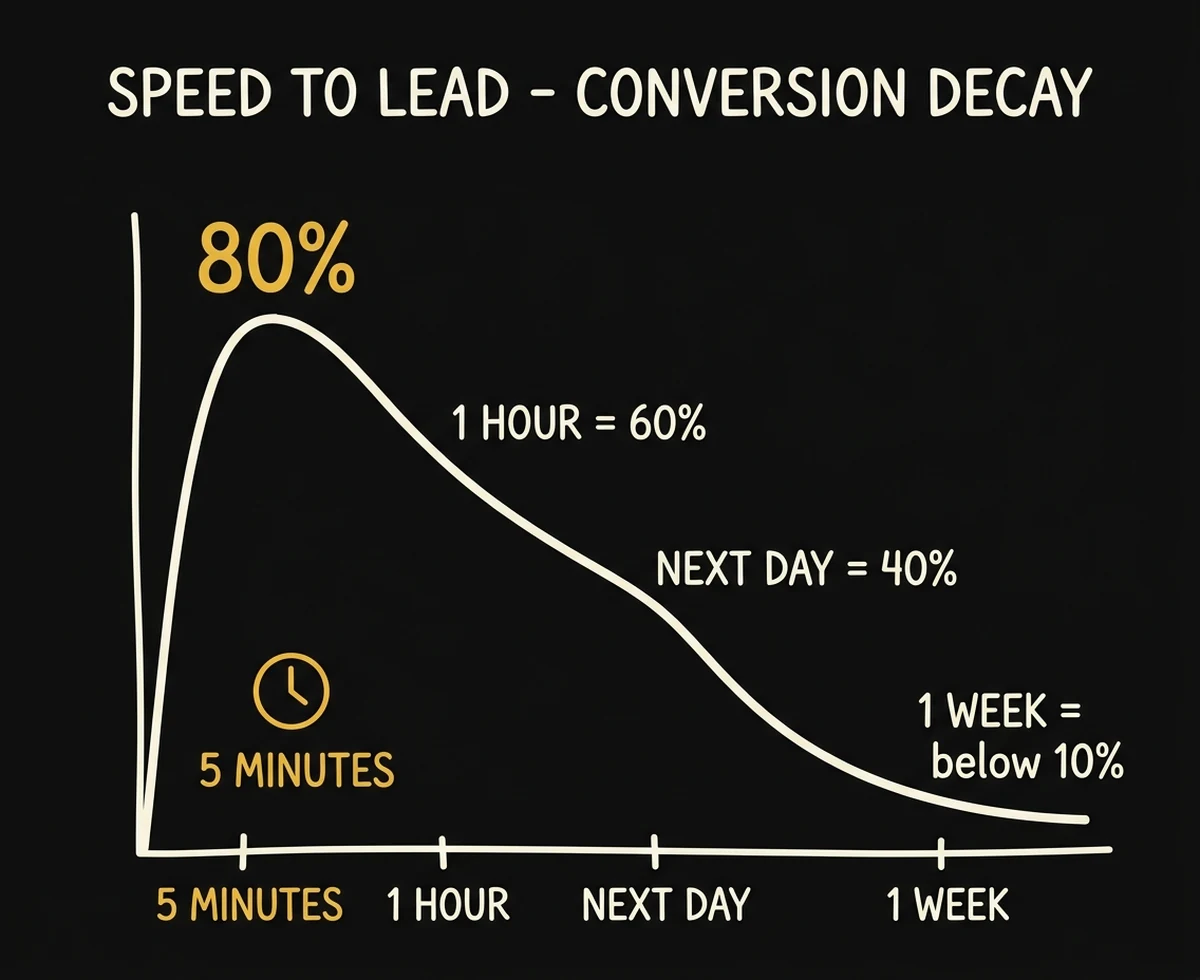
The speed component is even more damning. Companies that respond to inquiries within one hour are 7 times more likely to qualify the lead than those who wait longer. Within the first minute, your conversion probability sits around 80%. After one hour, it drops to 60%. By the next day, you're below 40%. The lead didn't go cold because they found someone cheaper. They went cold because someone else called them first.
What kills the "just email them" assumption: 71% of Gen Z, the generation everyone claims only communicates by text, prefers phone calls for important service decisions. When they're spending $3,000 to $10,000 on photography, they want to talk to a person. They want to feel the energy. They want to know you care enough to pick up the phone.
Text messages have a 98% open rate versus 20% for email. Multi-channel follow-up (phone, text, email in sequence) achieves 90% response rates compared to 8% for a single channel. That's the average response rate for studios that send one email and wait.
The phone is not old-fashioned. It is the highest-converting tool in your business, and most photographers are leaving it on the counter while they type another follow-up email into the void.
The 5-Stage Phone Script
There is a structure to a booking call that works. It is not complicated. But it requires discipline, because the instinct, especially when you're nervous or excited about a prospect, is to skip straight to pricing and hope they say yes.
The 5 stages are: Rapport, Agenda and Lead, Discovery, Offer, and Handle Objections. Each stage has a job. Skip one, and the whole call falls apart.
Stage 1: Rapport. This is not small talk for the sake of it. Rapport builds the emotional safety that makes everything else possible. You are not trying to make a friend. You are trying to make the prospect feel comfortable enough to be honest with you. If they're guarded, they won't tell you the real reason they're calling. They'll just ask for pricing and ghost.
Stage 2: Agenda and Lead. You set the frame for the call. You tell them what's going to happen. This does two things: it positions you as the expert running the conversation, and it eliminates the awkward drift that happens when neither person knows who's supposed to be talking. Lead the call. Don't follow it.
Stage 3: Discovery. This is where the sale happens. Not in the offer. Not in the close. Here. Discovery is where you find the emotional "why": why this session matters to them, what they're afraid of losing if they don't book it, what they've tried before that didn't work. Most photographers rush through this because they want to get to the good part (presenting their work and pricing). That instinct is backwards. The person who asks the best questions wins the sale.
When I trained the newborn studio owner, we spent 45 minutes just on discovery questions, not on one call, but in the coaching session where we rewrote her script. What is it about capturing your newborn that matters to you right now? When your child is 18 and looking at these images, what do you want them to feel? Have you ever worked with a photographer and felt like they didn't really see you? Those questions change the energy of the call. The prospect is no longer comparing prices. They're telling you their story.
Stage 4: Offer. By the time you present your offer, the prospect already wants to book. Discovery built the desire. The offer just gives them the vehicle. This is where stepped pricing with on-call urgency lives: a specific discount for booking on the call, structured in a way that feels like a gift, not a pressure tactic. The full script for how to present this, including the exact language, is available in the book resources at photographytoprofits.com/book-resources.
Stage 5: Handle Objections. "I need to think about it." "It's a lot of money." "My husband needs to be involved." These are not rejections. They are requests for more information, delivered in the language of hesitation. Every objection has a script. Every script is learnable. The photographers who panic at objections (who immediately discount, over-explain, or back off) are the ones who lose the sale at the last inch.
The full 5-stage system, with word-for-word scripts for each stage, is in the 7-Figure Photography Studio book. For now, the principle is this: structure your calls deliberately. Stop winging it. The newborn studio didn't fail because the market changed. She failed because she abandoned the structure that built the business in the first place.
Name Your Experience: The Secret Sauce That Makes You Unbookable
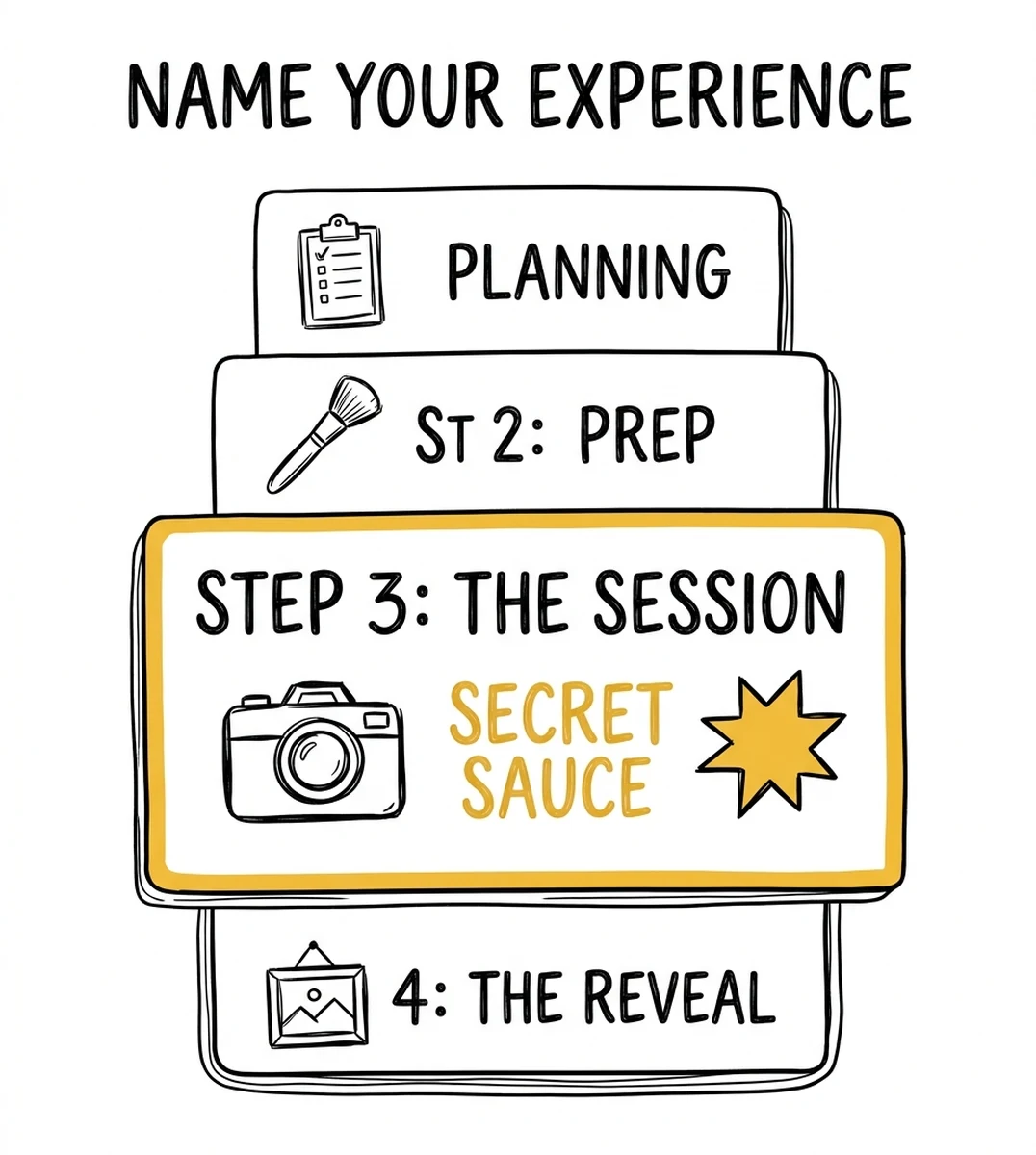
Pricing is not your differentiator. Every photographer in your market has a price. What they don't have is a named, branded experience with a step so distinctive it can't be replicated, what I call the Secret Sauce.
The concept: you take your existing process (consultation, shoot day, reveal, delivery) and you name each step. Three to five stages, each with a specific name that belongs only to you. Then you identify one step that is different from everyone else and you give it serious real estate on the call. You slow down. You lean in. You describe it like it's the thing they've been waiting for their entire life. Because for the right client, it is.
The "Bombshell Boudoir Experience" is a name. The "Forever Session Experience" is a name. These are not marketing exercises. They are positioning tools that make the comparison shopping stop. When a client is deciding between you and three other photographers and you're the only one who has a named, structured experience with a clearly articulated secret sauce, you are no longer competing on price. You are in a category of one.
On the phone, this lands differently than it does in print. When you read it on a website, it's content. When you hear a photographer pause, say "Let me tell you about the one thing we do that no one else does," and then walk you through it with genuine passion, you feel it. That's the phone's superpower. Emotion transfers over voice in a way it never does over email.
Jenn Bruno Smith has built this into her entire business model. She runs one of the highest-grossing boudoir studios in the country at boudoirbyjennifersmith.com, with average sales above $5,000 per client. She co-hosts the High Rollers Club podcast with me, and she has written the In-Person Sales (IPS) chapter for the 7-Figure Photography Studio book. Her experience framework (how she names it, presents it, and uses it to anchor value long before pricing comes up) is one of the clearest examples of this principle working at scale.
If you don't have a named experience yet, start simple. What do you do on shoot day that no one else does? Name it. Give it three sentences. Practice saying those three sentences on the phone until they sound natural. That's your Secret Sauce.
Ready to build your own named experience and phone script? The full template is in the book.
Join the book waitlist →Speed-to-Lead: Why 5 Minutes Is Already Too Slow
I was looking for math tutoring for my daughter once. She was seven, doing well, but I wanted her to excel. I heard an ad on a podcast, went to the landing page, and filled out the form as I was walking out the door to dinner. Zero intention of buying anything that night.
They called in two minutes. I tried to shut it down: "I'm literally walking out the door." The woman on the phone didn't flinch. She said, "No worries at all, I just want to find out a little more about your daughter." Three minutes later I was telling her how much I wanted my daughter to have an advantage in math. I bought a 50-hour package before my food got cold.
If she had called an hour later, I would have sent her to voicemail. If she had called the next day, the emotional urgency would have been gone. She caught me in the exact moment of intent.
The research confirms it. Within the first minute of responding, your conversion probability is around 80%. Wait one hour and it drops to 60%. Wait until the next business day and you're below 40%. The lead didn't decide they don't want photography. They decided someone else cares more.
Here's what most photographers miss: even if the client scheduled a consultation for tomorrow at 2pm, you should still call them now. Not to replace the scheduled call. To warm it. "Hey, I just saw your inquiry come in. I'm looking forward to our call tomorrow. I wanted to make sure you got my email with the prep info." That 90-second call transforms tomorrow's cold ring into a warm conversation with someone who already trusts you.
The challenge is that photographers are solo operators with shoot days, editing sessions, client calls, and seventeen other things happening simultaneously. You cannot be watching your inbox at all hours. That's where automation fills the gap.
Casey Quist built MeetNikki for exactly this reason. It's an AI-powered text bot that responds to inquiries instantly, engages the lead with qualifying questions, and gets them scheduled before a human even sees the notification. It doesn't replace the phone call. It holds the lead warm until you're ready to make it. If you're losing leads because you can't respond in five minutes, this is what you wire in first.
For a deeper look at what happens when leads go quiet after the first inquiry, read When a Photography Client Ghosts You. The patterns and the recoveries are there.
Speed-to-lead is not a nice-to-have. It is the single biggest variable in your entire booking system. Fix this before you touch your portfolio, your pricing, or your ads.
The 5x7 Rule and Call-Text-Call Cadence
Most photographers follow up once. Maybe twice. Then they move on because they don't want to be annoying. That instinct is costing them thousands of dollars a month.
The data is unambiguous: 80% of sales require five or more follow-up contacts. Forty-four percent of salespeople give up after one attempt. That means nearly half of your competitors are handing you their leads after the first unanswered call. The 5x7 Rule codifies what the data already shows: make 5 contact attempts in 7 days before you consider a lead dead.
But the sequence matters as much as the volume. Here is the cadence that works:
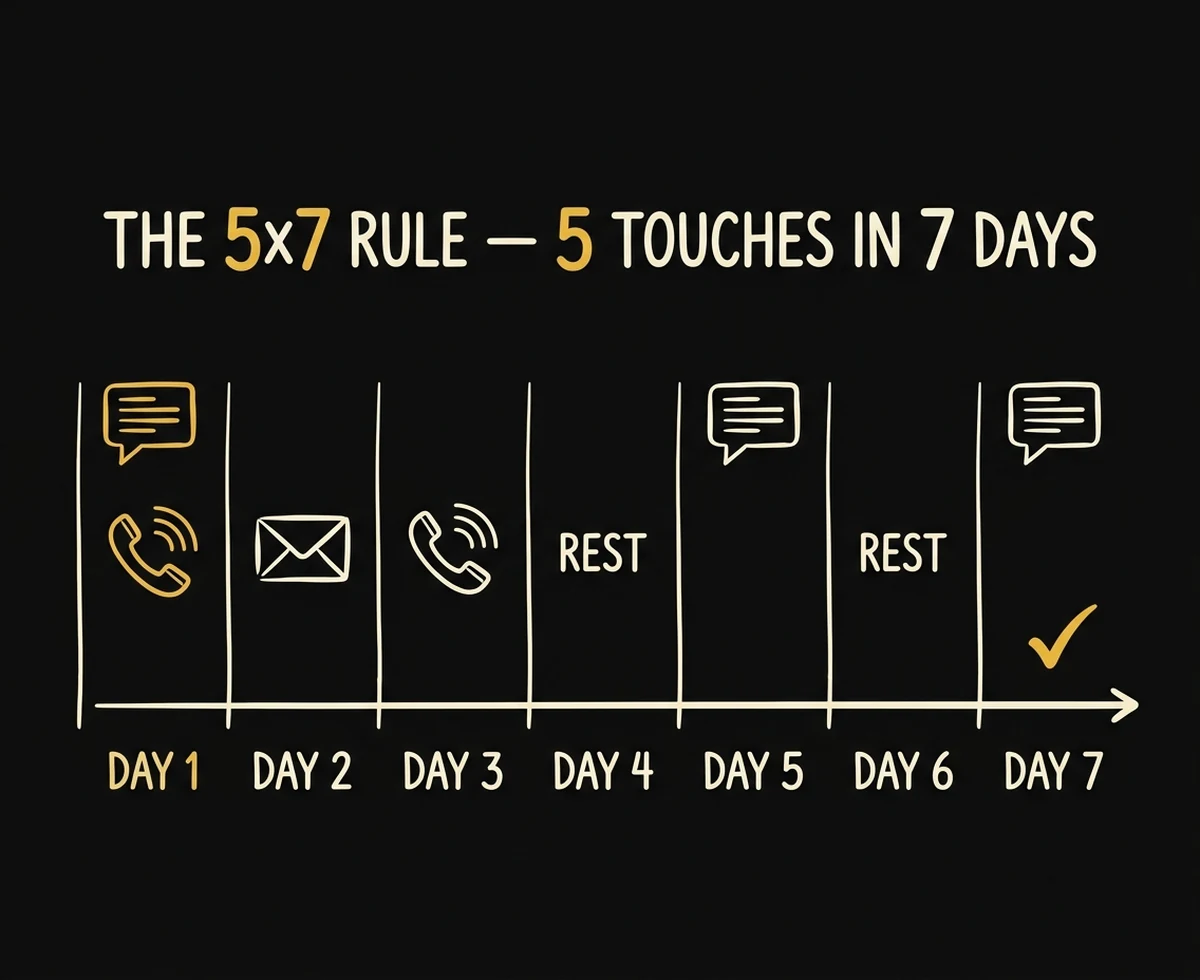
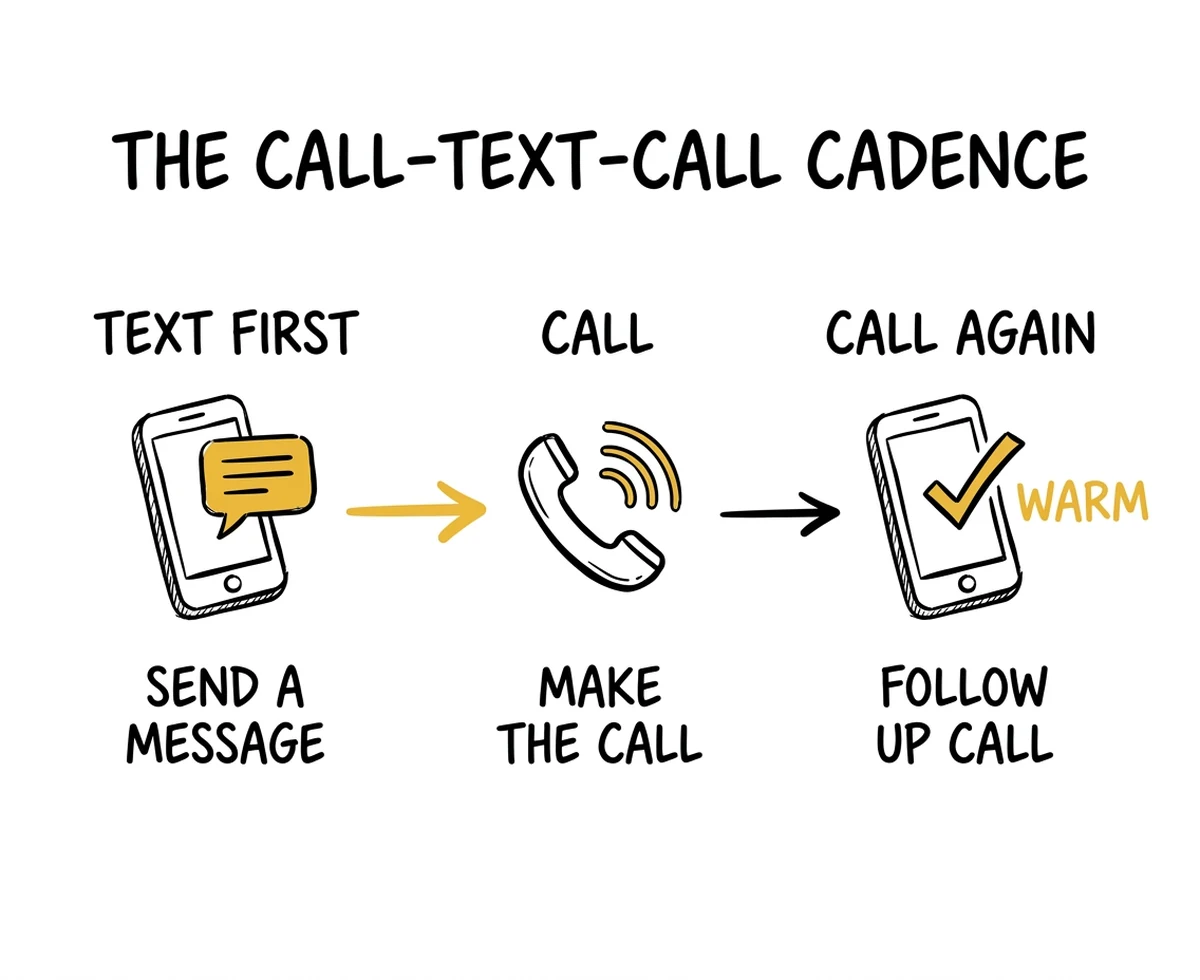
- Day 1, immediately: Text first. "Hey [Name], I just saw your inquiry. Looking forward to connecting. I'll give you a call in a few minutes." That text turns a cold ring into a warm pickup. Response rates jump when people know who's calling and why.
- Day 1, 3 minutes later: Call. If they answer, you're in the script. If they don't, leave a short voicemail: 20 to 30 seconds, warm, specific, with a clear call back number.
- Day 2: Email with your studio overview and a link to schedule. Keep it under 150 words. Include one line of social proof.
- Day 3: Call again. No voicemail this time.
- Day 5: Text with a value add: a link to a blog post, a before/after image, a client result. Not a sales message. A reason to respond.
- Day 7: The "last contact" message. Text or email. "I'm going to assume the timing isn't right. Completely understand. If anything changes, the door's open." This message alone books clients who weren't ready on Day 1.
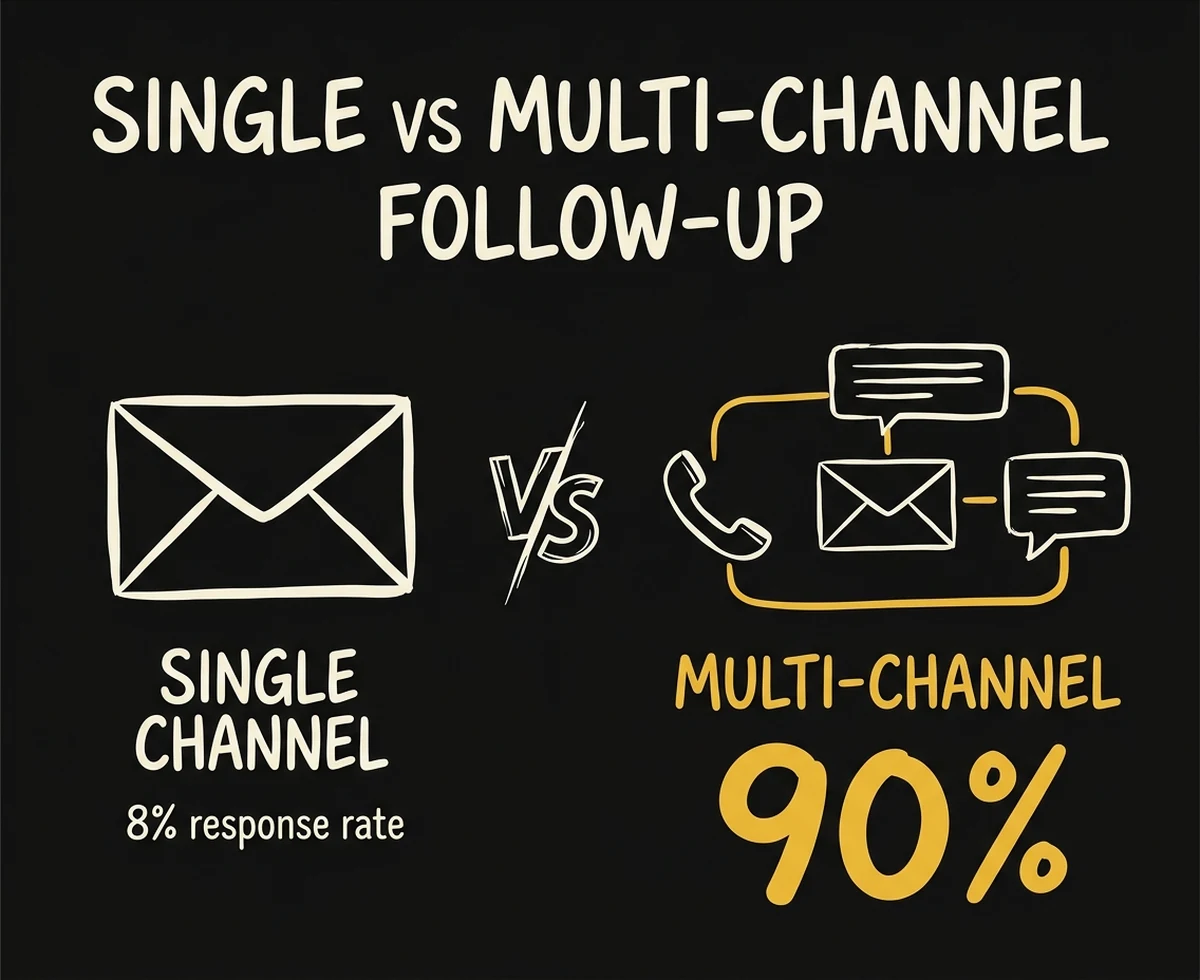
Multi-channel follow-up (combining phone, text, and email) achieves 90% response rates compared to 8% for single-channel outreach. That is not a small difference. That is the difference between a struggling studio and a thriving one.
Kristin Milito implemented this cadence as part of a full pre-call system and booked 9 consults in her first 11 days. The full breakdown of how she went from zero consistent leads to a predictable pipeline is at this post on the blog.
The Pre-Call Warming System (Win Before You Dial)
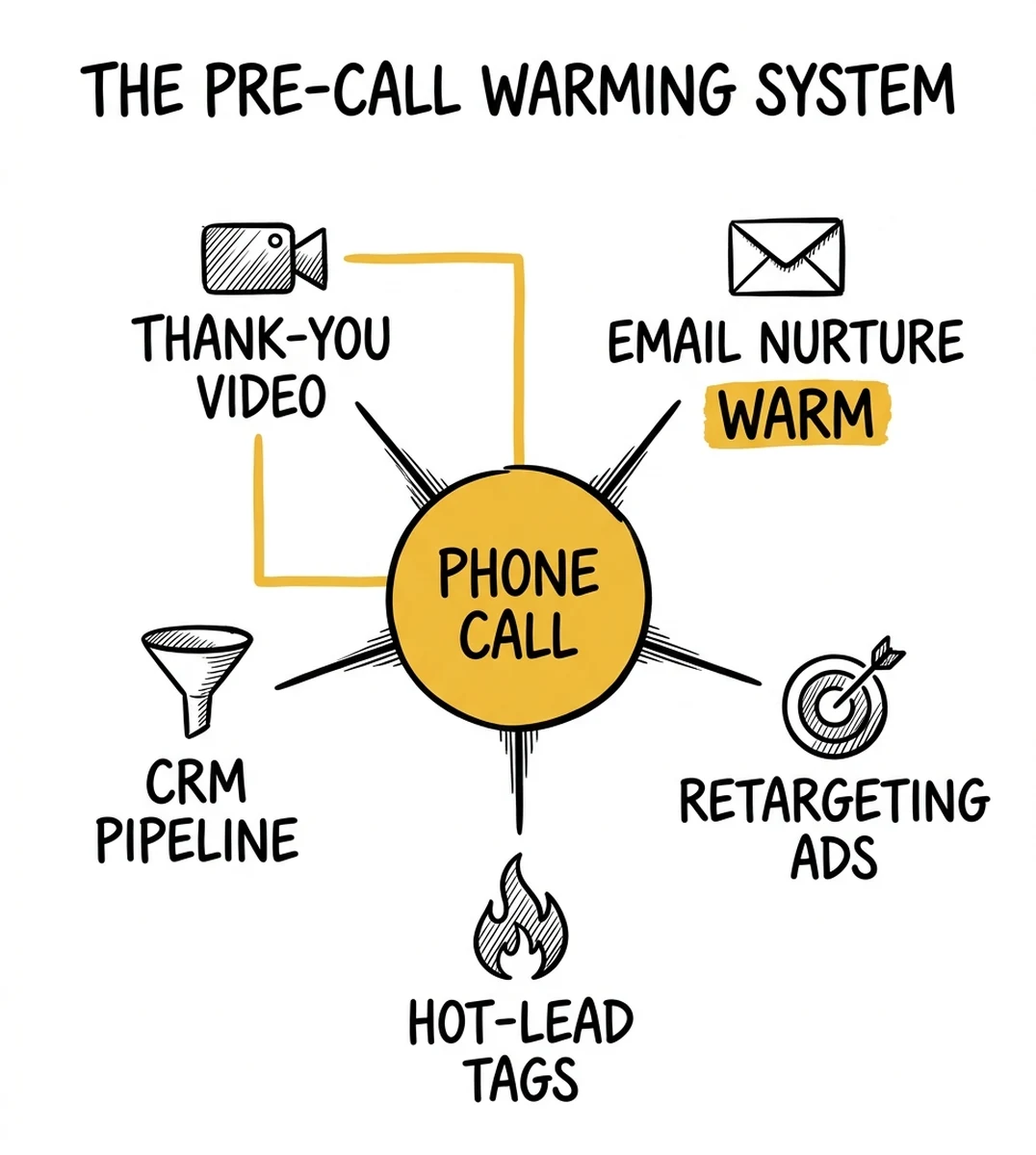
The best phone consultation is one where the prospect already trusts you before you say hello. That trust is built in the 24 to 72 hours between inquiry and call, and most photographers do nothing with that window.
Here's what the "Invisible Machine" looks like when it's running correctly.
The thank-you page. The moment someone submits an inquiry form, they land on a thank-you page. That page should have three things: a short video from you (60 to 90 seconds, face-to-camera, warm and specific to the genre), a Calendly or scheduling link in case they want to lock in a time immediately, and a piece of social proof: a client quote, a real result, a before/after. That page is doing selling work before you've made a single call. Instant scheduling converts 78% of qualified leads who use it, versus 62% for those who don't. The difference is compounding.
The 5-day email nurture sequence. Not a newsletter. Not a portfolio dump. A deliberately sequenced five-email series that does one job each day:
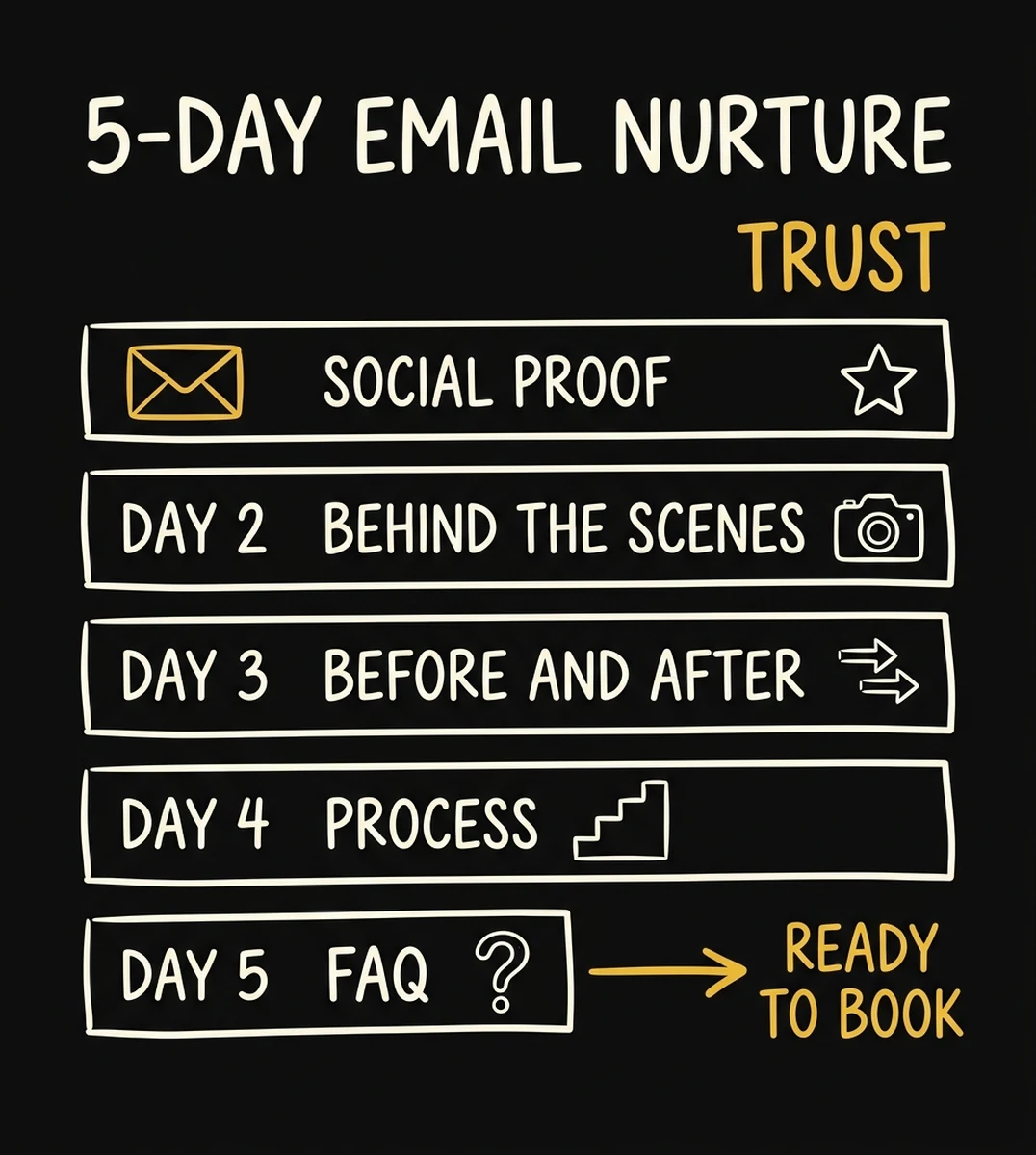
- Day 1: Social proof, a specific client result or testimonial relevant to their genre
- Day 2: Behind-the-scenes, what a session with you actually looks like
- Day 3: Before and after, the transformation you deliver, not just the images
- Day 4: Process walkthrough, what happens from booking to delivery
- Day 5: FAQ, answering the real objections before they come up on the call
By the time you call on Day 3 or Day 5, you're not a stranger. You're the photographer whose emails they've been reading. The resistance drops. The call is shorter. The booking rate climbs.
For more on building this kind of email system, the full breakdown is at Email Marketing for Photographers, including the specific sequences that drive 34% repeat booking rates for studios running them correctly.
Retargeting. Between the inquiry and the call, run a simple retargeting ad that shows the prospect a client result, a testimonial, or a behind-the-scenes clip. You don't need a big budget. Even $5 a day of retargeting on Meta keeps your name in front of warm leads. By the time you call, they've seen your face three times and read two emails. The call feels like a continuation, not a cold start.
Hot-lead tagging in your CRM (Customer Relationship Management software). The moment a lead enters your pipeline, tag them as hot. Set a follow-up reminder for five minutes out. If they open your email within the first hour, tag them again. They're showing buying intent. Your CRM should be surfacing your most engaged leads, not burying them alphabetically. Casey Quist's MeetNikki handles a lot of this automatically for photographers who don't have the time to manage manual tagging.
Kristin Milito built this exact system: her full case study is here. Zero change to her lead volume. Just a machine that warmed every lead before she ever picked up the phone.
Record, Review, Improve: Sales Is a Skill
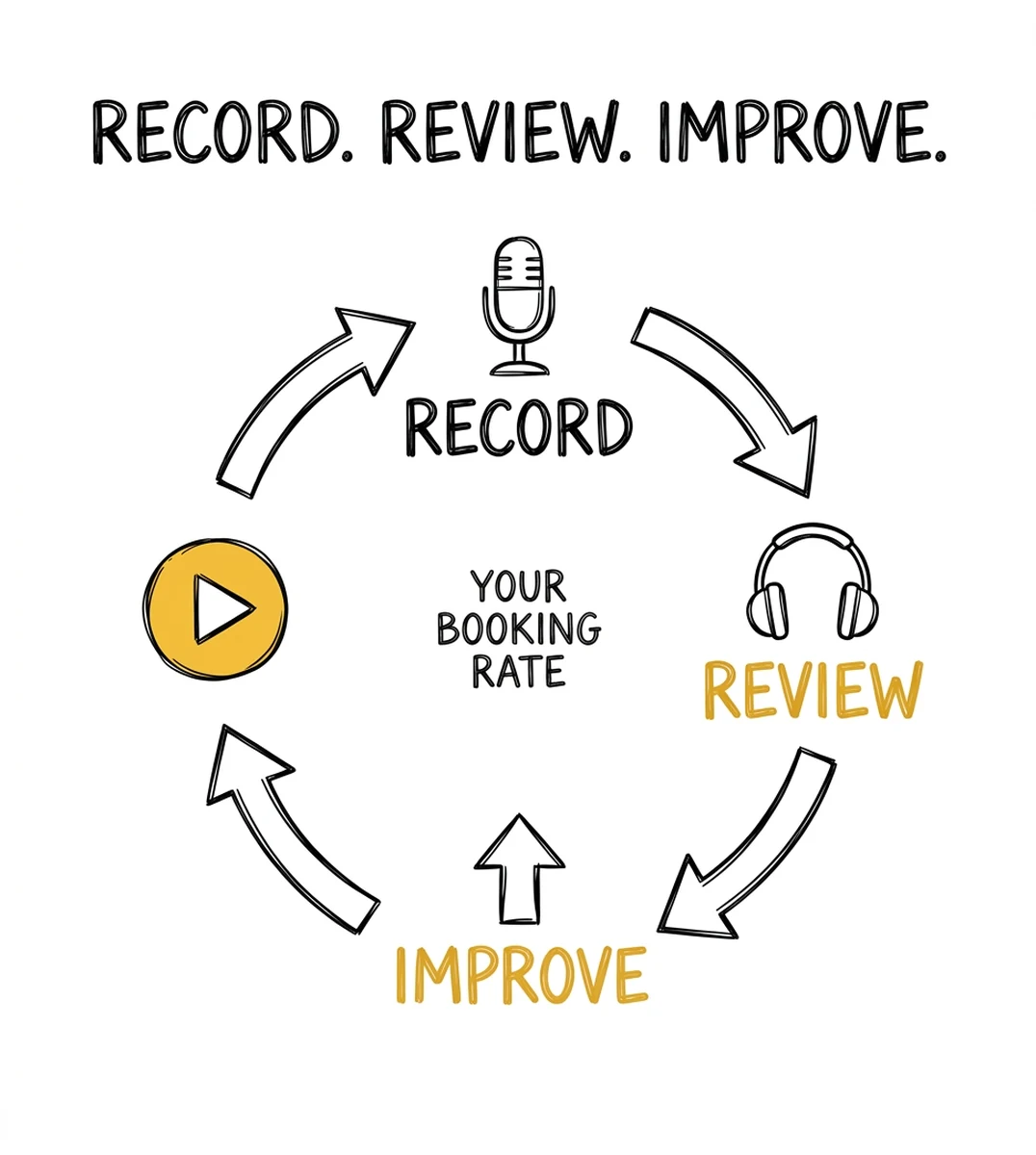
The uncomfortable truth: if you're not recording your calls, you have no idea what's actually happening on them.
The newborn studio owner I mentioned at the start of this post thought she was following the script. She was not. She had softened it so gradually, over so many calls, that she couldn't see the drift. The recording showed it immediately. Within 10 minutes of listening, she identified three places where she was handing control back to the prospect: letting them steer toward price before discovery was finished, rushing through objection handling, missing the urgency anchor entirely.
Recording a call takes one click. Reviewing it takes 20 minutes. The ROI on that 20 minutes is higher than almost anything else you could do to grow your booking rate.
When you review a call, listen for these things: Did you complete all five stages, or did you skip ahead? Did you find the emotional "why" in discovery, or did you accept the surface answer? Did you present the offer with confidence, or did you apologize for the price? Did you handle objections with a script, or did you improvise and lose the thread?
This is also where the delegation question becomes real. Some photographers should master the phone themselves. It's a core competency that shapes how they run every client relationship. Others, who genuinely loathe sales calls and will never do them well, should consider bringing in someone trained on the system. But here's the rule: you cannot delegate what you don't understand. Master it first. Then, if it makes sense to hand it off, you'll know exactly what you're handing off, and you'll be able to catch the drift when it starts.
Want help building the lead-to-booking system for your studio?
Book a free strategy call →The Photography Client Machine Applied to Consults
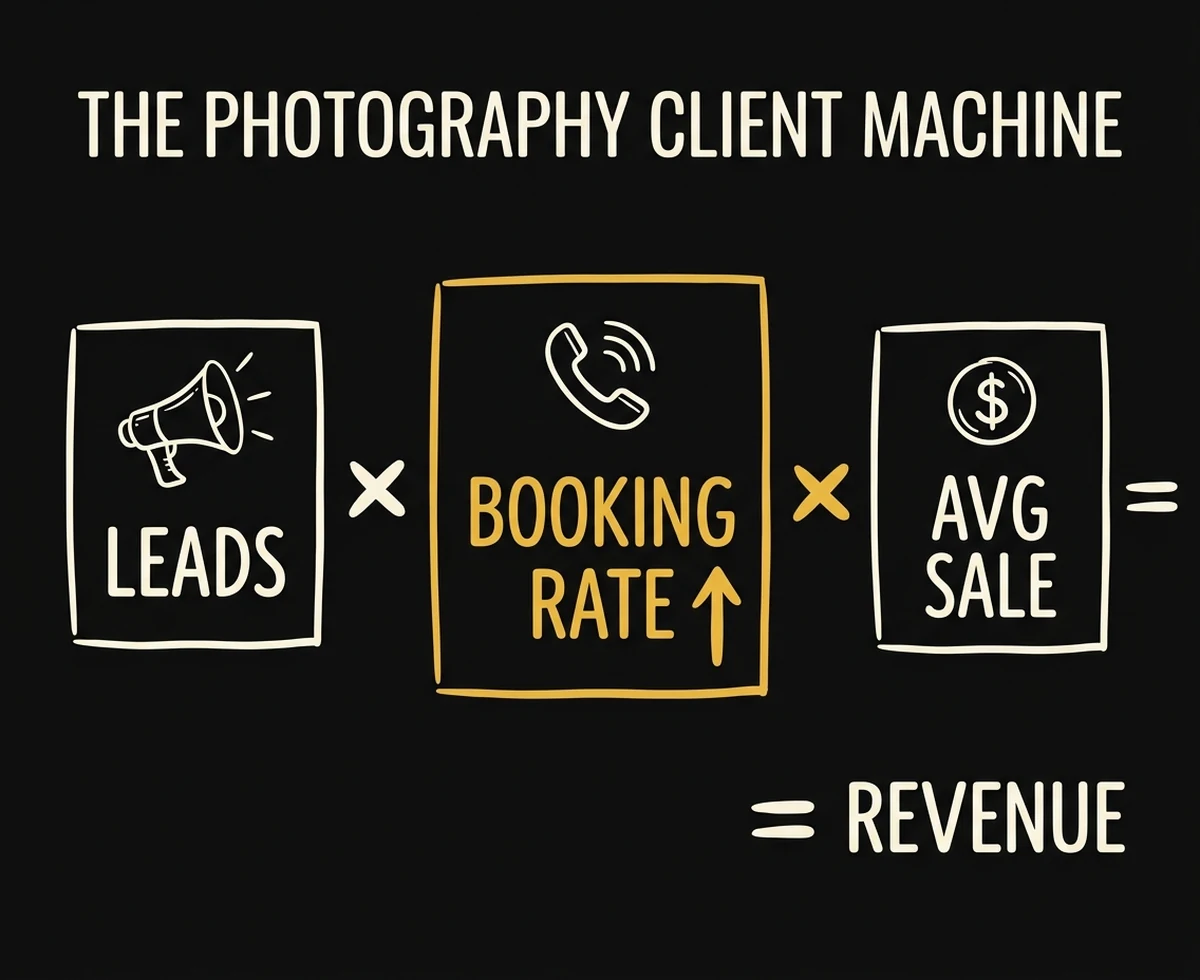
Every photography business runs on three numbers: Leads × Booking Rate × Average Sale = Revenue. Most photographers obsess over leads because ads are visible and measurable. But the middle number, Booking Rate, is where the phone consultation lives, and it is the highest-return variable in the formula.
Here's why: say you're generating 60 leads a month, a realistic number for a studio spending $1,500 to $2,500 on ads. At a 15% booking rate with a $4,000 average sale, that's 9 clients and $36,000 in monthly revenue. Now improve your booking rate to 25% (same ads, same leads, same studio) and you're at 15 clients and $60,000. That's an extra $24,000 a month, a 67% increase, without spending a single dollar more on marketing.
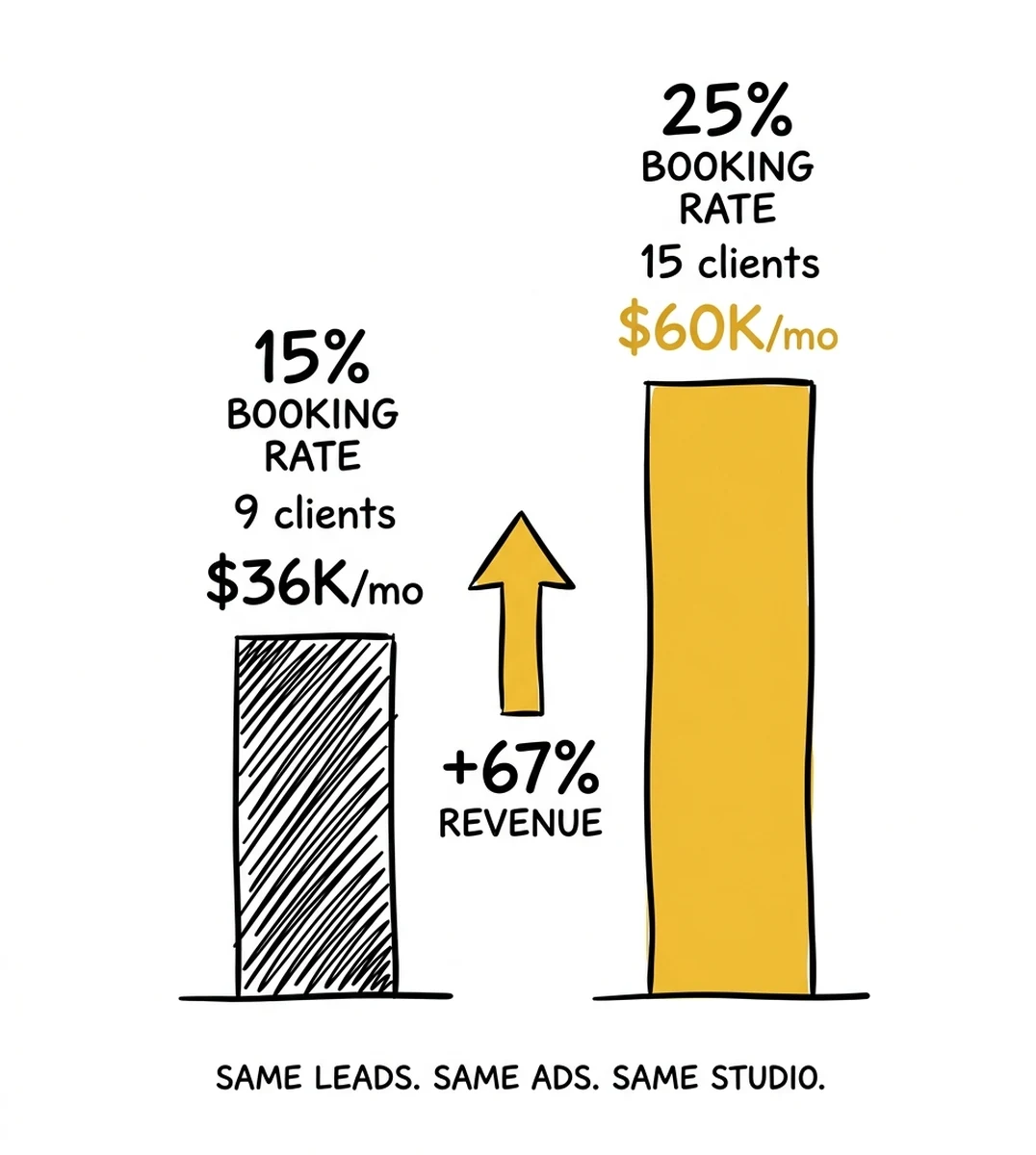
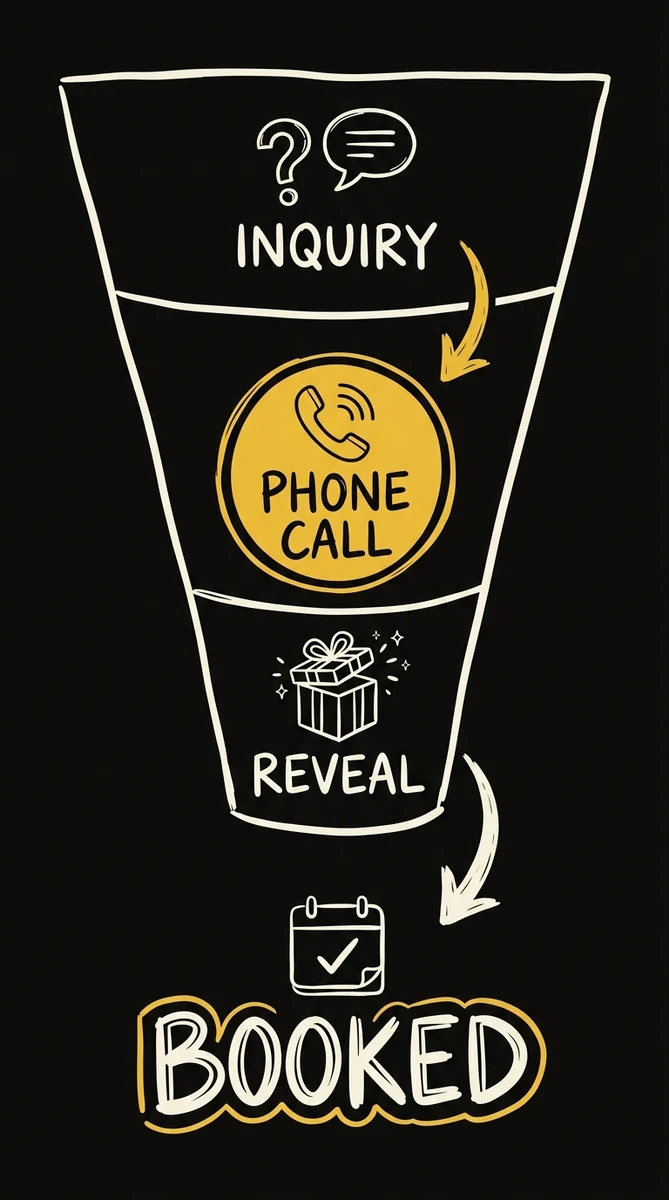
That's the compounding effect of the phone system. Every percentage point you gain on booking rate runs through the entire lead volume you're already generating. The newborn studio at $500K wasn't underinvesting in ads. She was underperforming on the call. Nine bookings in seven days didn't come from a new campaign. They came from a better conversation. And once they're booked, the phone script feeds directly into the reveal appointment, where the real revenue happens.
The IPS (In-Person Sales) model extends this logic beyond the phone. IPS is the practice of revealing and selling wall art, albums, and products in person (or via video) rather than sending a digital gallery and hoping for add-ons. The average IPS sale is dramatically higher than the average gallery delivery. Jenn Bruno Smith's $5,000+ average sale is built on IPS. Her education on how to run an IPS session, including how to transition from the phone consultation to the reveal appointment, is at boudoirbyjennifersmith.com. She also covers it in detail in the 7-Figure Photography Studio book.
If you want the full formula (every variable, every system, every script), the complete methodology is in the book. The waitlist and early access resources are at photographytoprofits.com/book-resources. The photographers building these systems now (CRM, automation, structured follow-up) are the ones booking consistently. The ones still winging phone calls and hoping for referrals are watching their competitors outpace them with the same leads.
For a deeper look at IPS and how it stacks on top of phone consultations, read In-Person Sales for Photographers: They Already Want to Say Yes.
Conclusion: Stop Sending Pricing and Start Having Conversations
Every photographer who sends a pricing PDF instead of making a phone call is choosing the comfortable option over the profitable one. The PDF doesn't ask discovery questions. It doesn't uncover the emotional why. It doesn't handle objections. It just sits in someone's inbox next to two identical PDFs from your competitors, waiting to be compared on price alone.
The phone is uncomfortable because it's real. The client can say no in real time. You can hear the hesitation. There's no buffer. But that discomfort is also why it works, because when a prospect hears your voice, your confidence, your genuine interest in their story, they make a decision that a PDF can never drive.
I'm Humberto Garcia, founder of Photography to Profits. Everything in this post comes from the same system that has helped studios add six figures in revenue without increasing their ad spend. The 5-stage script. The pre-call warming machine. The 5x7 follow-up rule. None of it is complicated. All of it requires discipline.
Pick up the phone. Learn the script. Record the calls. Review them. Get better. That's the job.