
Your clients walked into that ordering session already ready to spend $3,000. Most photographers send them home with $400. Here's why, and how to stop.
Key Takeaways
- Photographers who switch to in-person sales see average orders jump from $350–$800 (online gallery) to $4,500+, often in their very first ordering session.
- Humberto Garcia, founder of Photography to Profits, has helped hundreds of portrait and boudoir studios implement IPS, including studios hitting $940,000+ in a single year.
- The single biggest IPS mistake: letting clients see their images before the ordering session. Once the gallery link is sent, the reveal is gone.
- You don't need a studio to start. A Zoom call, a screen share, watermarked images, and a system that's been used to close $8,000–$24,000 single-session sales.
The data is hard to argue with: photographers who switch to in-person sales (IPS) average four times higher sales than those relying on online galleries. Julia Kelleher, one of the most-referenced IPS educators in the photography industry, documented her own studio's transformation, jumping from a $350 average order to $1,800 per session after fully committing to in-person sales. Studios that have mastered the process regularly close sessions at $5,000 and above. Inside the Photography to Profits network, portrait and boudoir studios using a structured IPS system regularly close sessions at $4,500–$10,000. Jenn Bruno Smith, who co-runs the High Rollers Club alongside Humberto, built her studio from a guest bedroom to $940,000 in a single year, entirely through the ordering appointment system described in this guide.
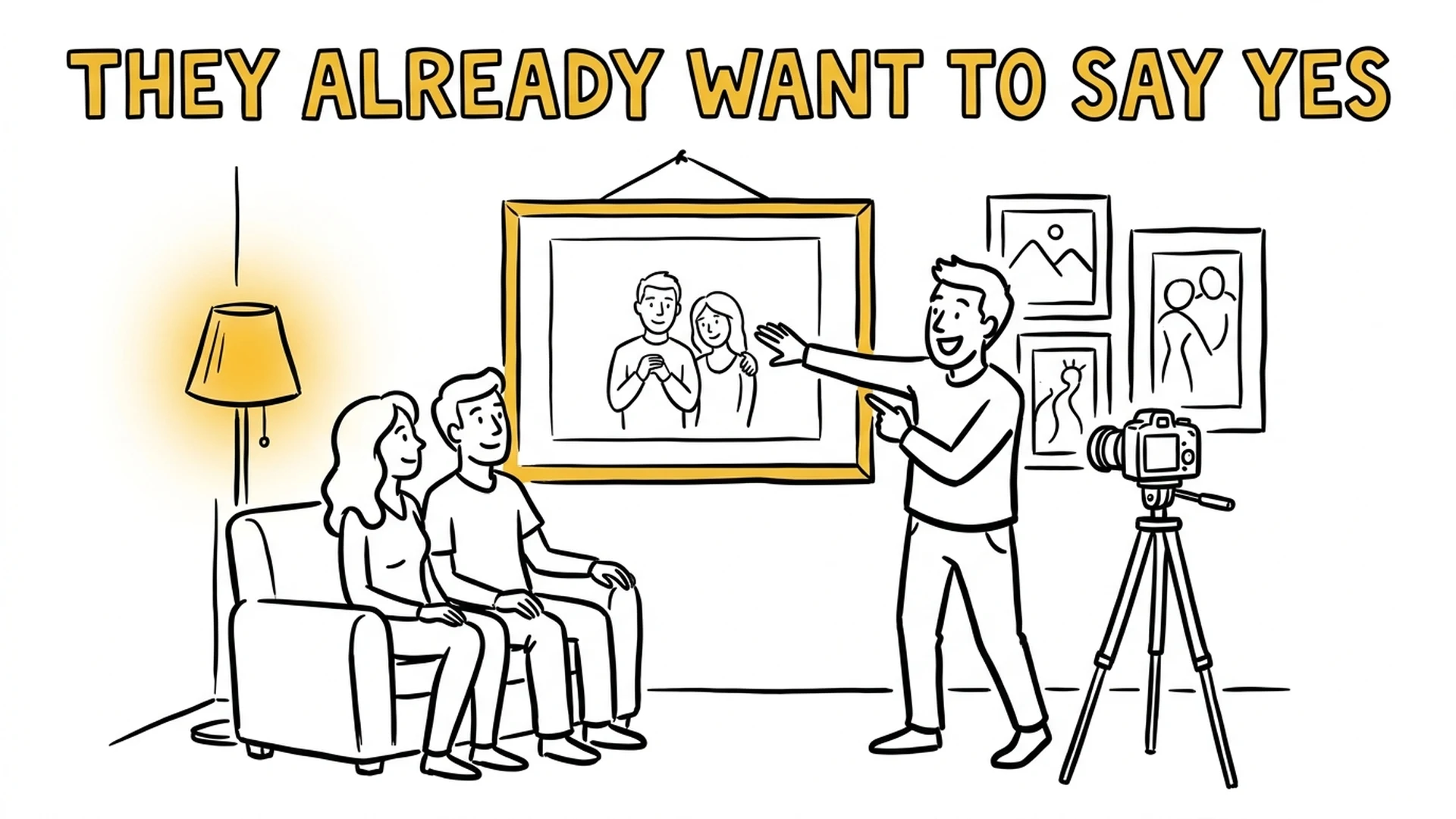
But here's the reframe that changes everything: this is not a sales problem. Your clients arrive emotionally primed from the shoot. They just spent an hour or more in a vulnerable, intimate moment with you. They felt beautiful. They felt seen. The emotional peak is already there. Your process either captures that energy or slowly bleeds it out.
Online galleries are the primary culprit. When you send a client a Pixieset link with 60, 80, or 100 images, you've handed them an overwhelming decision-making problem. Research on consumer behavior consistently shows that large selection sets reduce purchase rates, sometimes dramatically. One classic study found that shoppers were significantly more likely to purchase when offered fewer choices. Applied to photography: when clients browse 80 images alone on a laptop at 11pm, tired and distracted, they feel paralyzed. They favorite a few images, close the tab, and tell themselves they'll decide later. Later rarely comes with a $2,000 order.
The photographers closing five-figure months aren't better photographers. They've built a better process. This guide will show you exactly what that process looks like, including the same-day sales technique that some of the highest-grossing portrait studios in the country have built their entire model around.
What In-Person Sales Actually Is (and What It Isn't)
IPS gets a bad reputation because photographers conflate it with high-pressure selling. It's not. In-person sales is guided decision-making. You are a curator, not a closer. Your job is to sit alongside your client, understand what they love, and help them select the images and products that will actually make it into their home, instead of sitting in a digital folder they open twice a year.
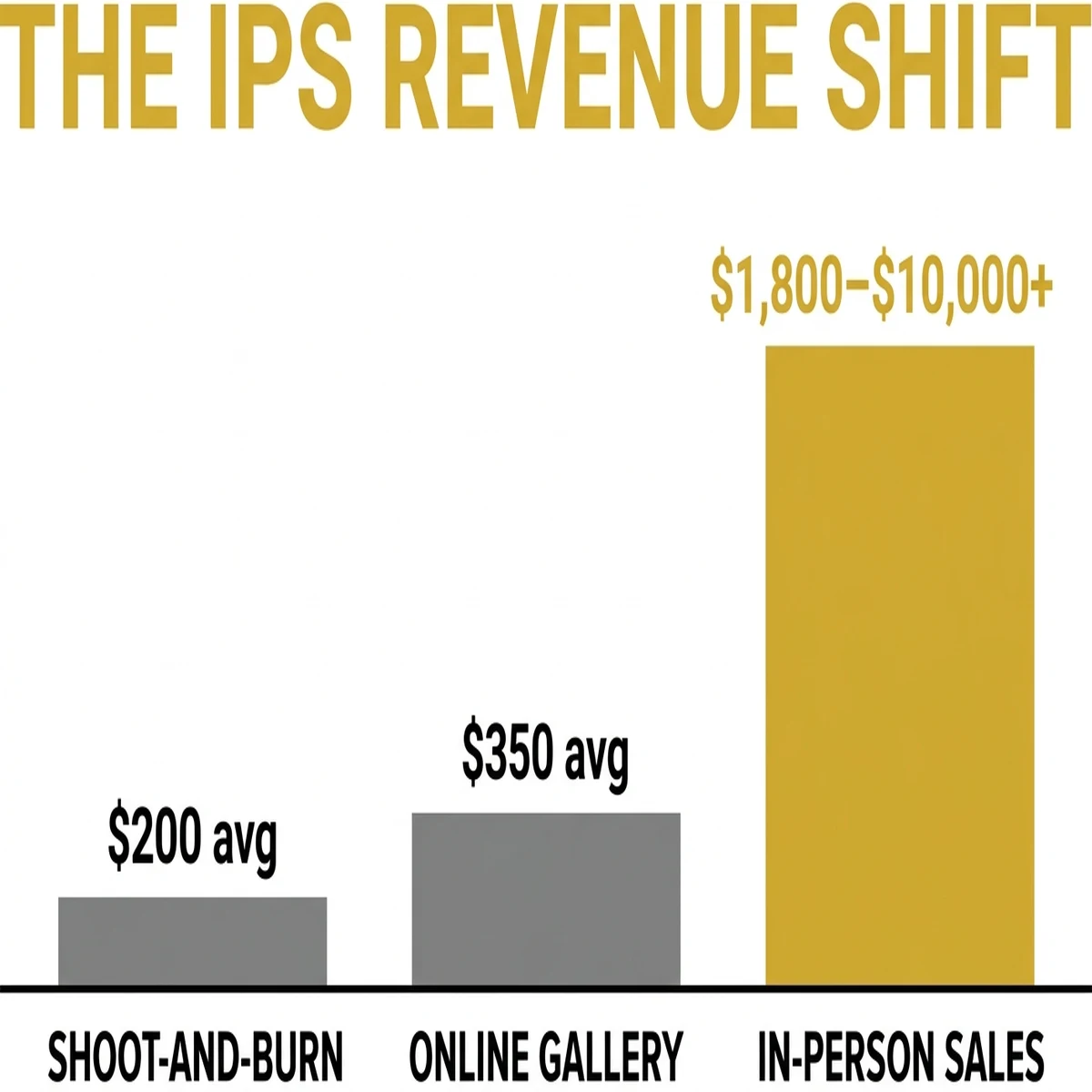
It's worth distinguishing the three main delivery models:
Studios using the P2P in-person sales system regularly hit $4,500–$10,000+ average orders. Want to see how it applies to your studio?
Book a Free Strategy Call →- Shoot-and-burn: Client receives all digital files, no guidance. Photographer trades time for a flat fee. Most images never get printed. Client satisfaction is lower than they expect because a hard drive full of JPEGs doesn't feel like an heirloom.
- Online gallery: Curated or full gallery delivered via a proofing platform. Client orders online, often days or weeks later. Emotional peak from the shoot has cooled. Average order values are the lowest of all three models.
- In-person sales: Photographer guides the client through a curated reveal in a dedicated session. Products are presented, context is given, and decisions happen while emotional connection to the images is at its peak. Average order values are the highest of all three models by a significant margin.
The client experience framing matters. You're not asking people to spend money. You're helping them decide which images of their children, their relationship, or their transformation become the art on their walls. That framing shift, from vendor to trusted guide, changes how you show up and how clients respond.
Same-Day Sales: The Fastest Path from Session to Revenue
If you take nothing else from this guide, take this: same-day sales (SDS) is the most powerful IPS model available to portrait photographers today. Studios that implement it see the highest average order values in the industry, because they've eliminated the single biggest enemy of photography sales: time.
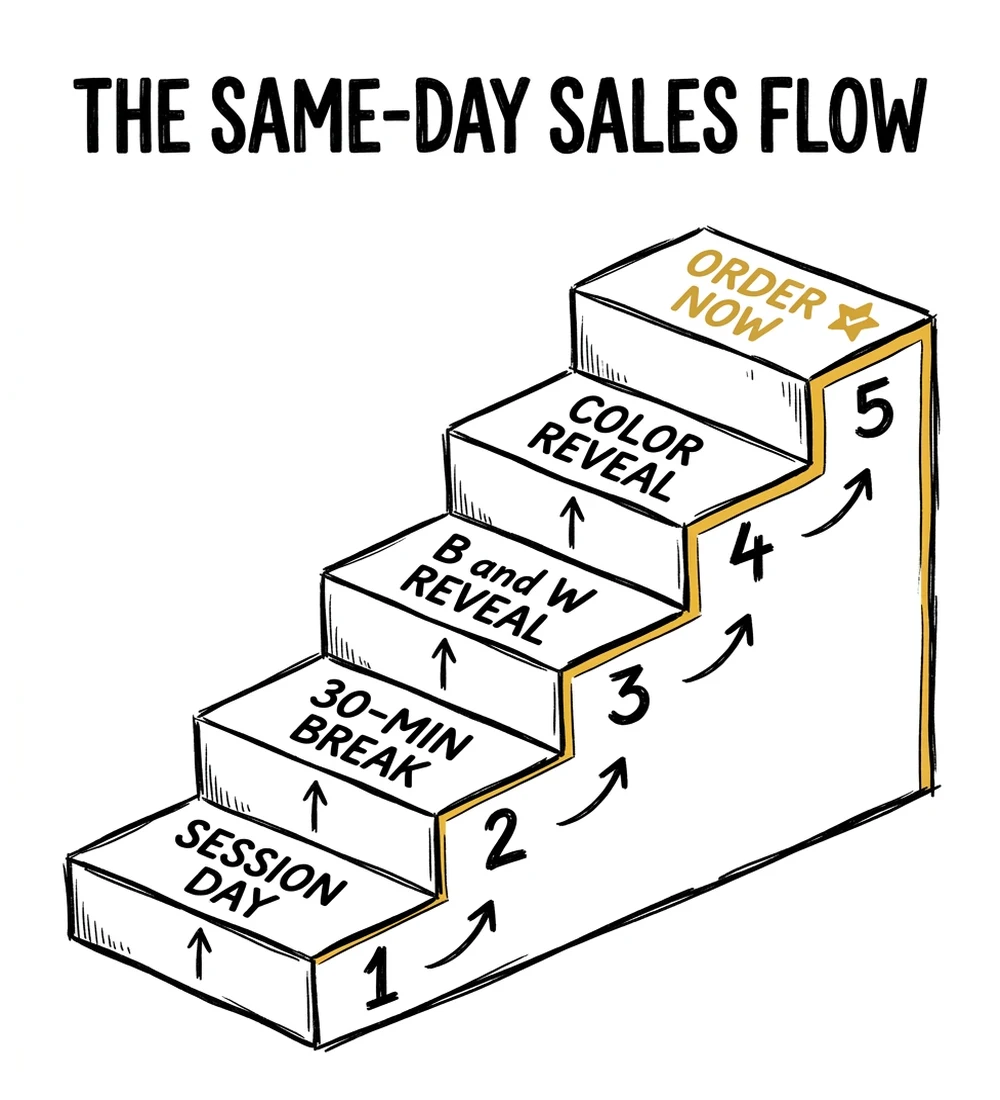
The SDS workflow has been refined and popularized by leading studio photographers in the photography business education community, particularly around the black-and-white reveal technique described below. Here's how it works:
Step 1: Shoot the Session
Your portrait, boudoir, or family session runs exactly as it always has. Nothing changes about how you shoot. The magic happens after the camera goes down.
Step 2: The 30-Minute Client Break
The moment the shoot wraps, you send the client out for a 30-minute break. Coffee. A snack. A walk around the block. If you have a waiting area or a neighboring café, direct them there. Having refreshments already waiting (water, a small snack, something warm) makes this feel hospitable rather than transactional. You're not sending them away; you're giving them a moment to settle while you do your work.
Step 3: AI-Assisted Rapid Processing
While the client is on their break, you move fast. Load the session images and run them through AI-assisted culling and editing tools: Lightroom's AI-powered masking and selection features, Luminar Neo's AI Portrait tools, or similar. The goal isn't a final polished edit. The goal is 30 to 60 selects that are exposure-corrected and ready to view, in under 30 minutes. Modern AI editing tools have made this completely achievable. You're not delivering final files. You're preparing a reveal gallery that shows the potential of each image.
Step 4: The Black-and-White Reveal
This is the technique that separates SDS from standard IPS, and it's the reason studios that use it consistently outperform those that don't.
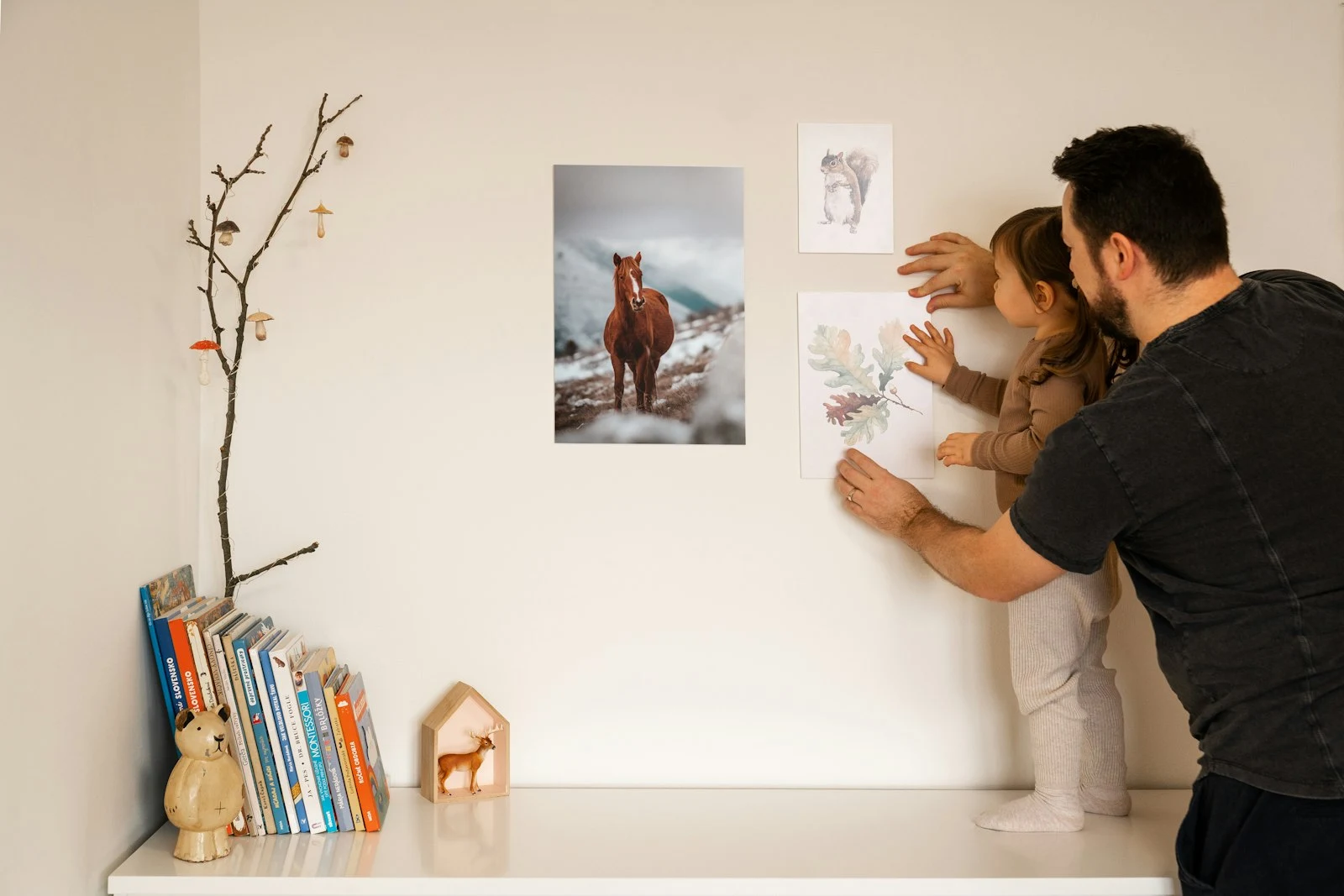
The ordering session reveal: clients experiencing their images for the first time.
Show all selects first in black and white.
Black-and-white removes color distraction. It forces the client's eye to evaluate what actually makes a photograph worth hanging on a wall: composition, light direction, expression, emotion, connection. Without the distraction of whether a dress color is flattering or whether skin tones are perfect, clients naturally gravitate toward images where the feeling is undeniable. They fall in love with images during the black-and-white pass.
Have the client mark their favorites as you work through the gallery. These become the foundation of the ordering session.
Step 5: The Color Reveal
After the client has selected their favorites in black and white, you switch to full color. This moment, the color reveal, reliably produces audible reactions. Gasps. Tears. "Oh my god." The images they already love suddenly become even more beautiful. Color feels like a gift being given, not an image being evaluated. Studios that use this two-stage reveal consistently describe the color reveal as a reliable emotional trigger that leads to larger purchasing decisions.
Step 6: The Ordering Session
Immediately after the reveal, while emotional energy is at its absolute peak, you transition into product selection. No break, no "I'll send you pricing later." The ordering session follows the reveal directly. This is where your product samples, your IPS software, and your pricing collections come in, all covered in detail below.
Why SDS works at a deeper level: Every hour between the shoot and the ordering session is emotional decay. Clients go home. Life resumes. The grocery list, the work email, the mortgage payment: reality competes with the beautiful version of themselves they experienced during the shoot. Same-day sales eliminates that decay entirely. There's no "I need to think about it" because the session just happened. They're still in it. Studios implementing SDS report that the emotional peak of the shoot extends naturally into a purchasing decision made from a place of genuine desire rather than obligation.
When Same-Day Sales Isn't Possible: Zoom IPS
Not every photographer has a studio space or a local client base that makes same-day sales logistically feasible. That's not a deal-breaker. It's a setup problem, and it has a solution: Zoom IPS ordering sessions.
Photo: Unsplash
This isn't a compromise model. Jenn Bruno Smith, who averages over $5,000 per sale, has done every ordering appointment over Zoom since June 2020. Her words: "I'm never going back." Clients travel from across the country to her. Zoom makes it easy for everyone. The process is the same. The results are the same. The room doesn't matter. The system does.
How Zoom IPS Works
- Deliver watermarked previews before the call: Send low-resolution watermarked images to the client before the Zoom session. Do not send the full gallery, only watermarked previews. The watermarks create urgency: the client knows they're seeing their images for the first time and that purchasing decisions happen on this call. Once the call ends without a decision, the odds of a full-price sale drop sharply.
- Book the appointment before the shoot: The single most important rule in Zoom IPS: schedule the ordering appointment before the session, during the consultation. Do not wait until after the shoot. By that point, life resumes, and booking another appointment becomes friction. Pre-booked ordering sessions see dramatically fewer no-shows.
- Target 72 hours after the shoot: At 72 hours, the client still has vivid memories of how they felt during the session. At two weeks, they're making a financial decision disconnected from any emotional experience. You're fighting uphill.
- Screen share your IPS software: Share your screen and go image by image, same system as in-person. Yes/Maybe/No sort. Color and black-and-white for each image. One at a time, never a slideshow. The screen share creates a shared viewing experience that mimics the in-person reveal better than most photographers expect.
- Hold up physical products to the camera: Even on Zoom, holding up an album or acrylic block to the camera makes it tangible. A product on screen is a concept. A product someone sees you holding, even through a camera, is real.
- Secure payment before ending the call: This is non-negotiable. If a client uses Affirm, Klarna, or Afterpay, wait while they process it, even if it takes 30 minutes. The moment the call ends without payment, the odds of collecting the full order drop by about three-quarters. Sit with them through it.
- Deliver edited finals during the call: Once payment clears, deliver the final edited images while you're still on Zoom. Walk them through downloading. This nearly eliminates buyer's remorse: they already have their images, so asking for a refund becomes a much harder decision.
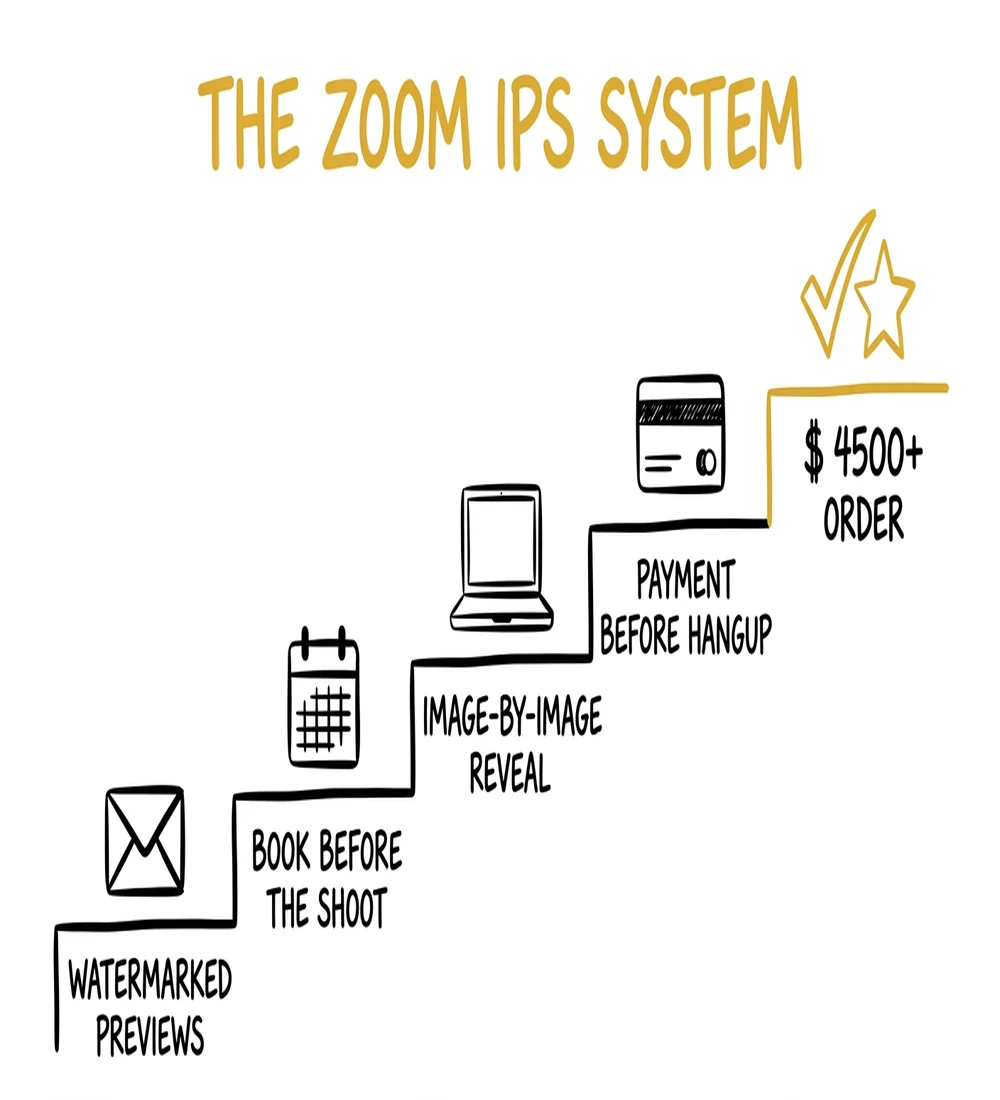
Most photographers running Zoom IPS hit $2,500–$4,000+ per session consistently. Studios that have refined the process (the watermarked delivery, the Yes/Maybe/No sort, the payment-before-hangup discipline) regularly close $6,000–$10,000+ Zoom sessions.
"You need a screen, a connection, and a system." – Jenn Bruno Smith
Want the exact Zoom IPS script, the watermark workflow, and the objection-handling playbook our studios use? It's all inside the Photography to Profits coaching program.
Book a Free Strategy Call →Before They Walk In: Setting Expectations That Prevent Sticker Shock
The ordering session is won or lost before it begins. The pre-session consultation is where you do the most important work in IPS: setting price expectations so there's no surprise in the room.
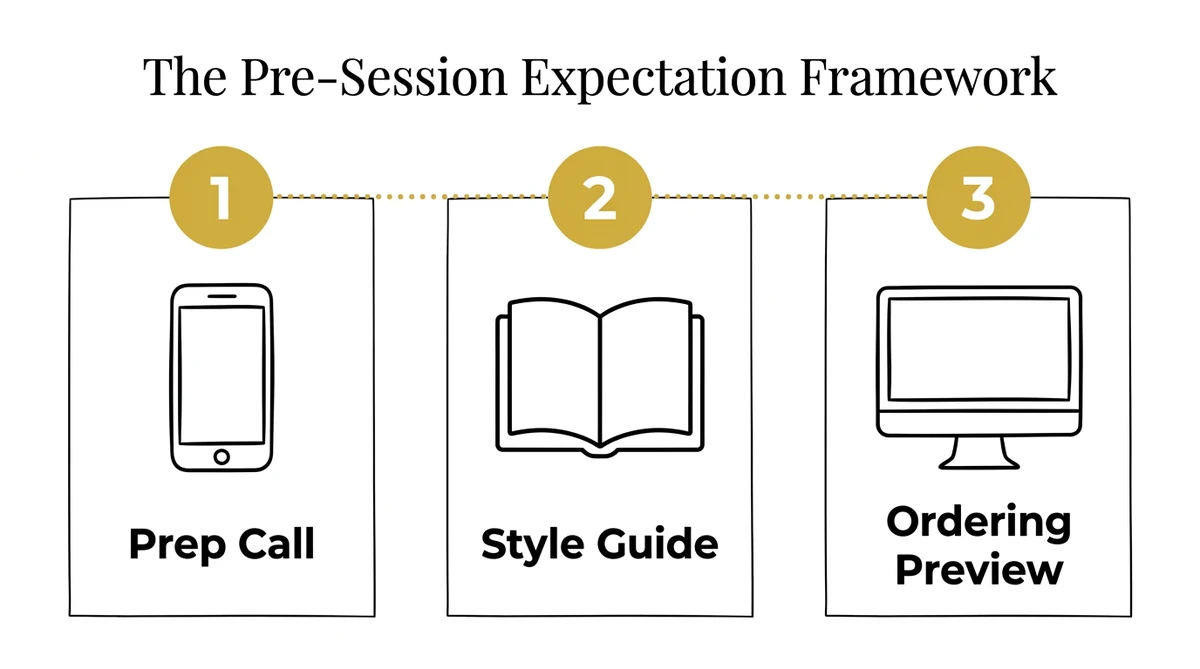
The Pre-Session Expectation Framework sets the stage for a frictionless ordering experience.
During your initial consultation, show physical product samples. Pull out an album. Hold up a 16x20 canvas. Let the client touch a metal print. Abstract numbers on a PDF don't create desire. Tangible objects do. When a client has held your 10x10 flush mount album and run their fingers across the cover, they understand what they'd be bringing home. That's a fundamentally different conversation than a pricing page on a website.
Include the pre-investment conversation explicitly in your consultation script. Something like: "Most of my clients invest between $1,200 and $2,500 in their session products. Some invest more, some invest a bit less. It depends entirely on which images speak to them. I want to make sure you have a sense of that range going in so there's no surprise." This conversation, had before the shoot, resets the client's internal budget. It also immediately filters out clients who aren't a fit, saving everyone time.
If you're relying on a PDF pricing guide emailed after the inquiry, you're doing the hardest version of IPS. The in-person conversation with physical samples does more in 10 minutes than a PDF does in three days.
The Reveal: Running the Ordering Session Start to Finish
The reveal is a performance with a structure. Deviating from that structure, especially under the pressure of a client asking to "just see all the pictures," costs you money and shortchanges the client's experience.
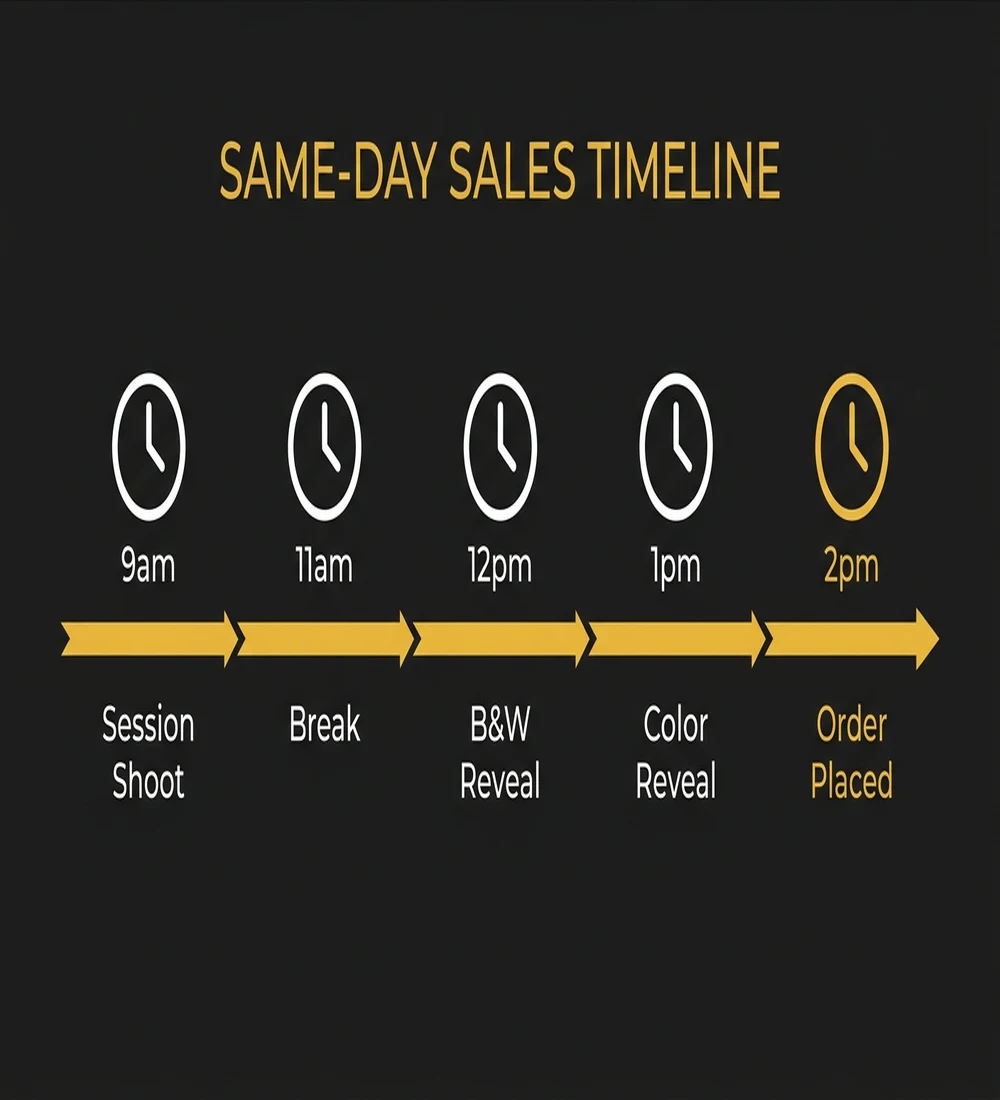
The same-day sales timeline compresses the emotional window, keeping clients in the feeling of their session.
- Music: Soft background music, no lyrics. Something that matches the tone of the shoot: ambient, acoustic, cinematic. This isn't decoration; it's emotional context that keeps the room feeling like an experience rather than a transaction.
- Skip the slideshow because it kills sales: Counterintuitive but proven: photographers who remove the opening slideshow consistently see higher sales. Why? When clients watch a slideshow, they compare image to image. By the time it ends, they've mentally edited out half the gallery before you've shown them a single product. Instead, go image by image, one at a time. Every image lands with fresh eyes. Each one gets a yes or no, with no frame of reference to compare against. The buying mindset stays intact from the first image to the last.
- Curated gallery only: Show 25 to 40 images maximum, pre-edited. Never show the full session. Photographers who skip this step and show 80 or 100 images see significantly lower sale averages. Choice overload is real and measurable. Your job is to do the editing work so the client doesn't have to. That curation is part of what they're paying for.
- B&W first if doing SDS: As described in the same-day sales section above: black-and-white reveal for the initial pass, then the color reveal as a gift.
- Client marks favorites: Give the client a simple way to flag the images they connect with most. In ProSelect or Fundy, this is built in. In other workflows, a simple star or heart system works. You want a shortlist of 10 to 20 images to build the ordering session around.
- Transition to product conversation: "Now that you've seen your favorites, let's talk about how we bring these home." This phrase is a natural bridge from emotional experience to practical decision. It's not a sales pitch. It's a continuation of the curation process.
The Yes/Maybe/No Sort: Why "Maybe" Always Goes in Yes
One of the most effective techniques in the P2P IPS system: sort images into three columns as you go: Yes, Maybe, and No. The rule that changes everything: if the client says "maybe," it goes in the Yes column. Always.
This sounds manipulative. It isn't. The psychology is simple: it's far harder to say yes to an image and then take it back later than it is to say no in the first place. By starting in Yes, you're not trapping the client. You're protecting them from the self-criticism and comparison that would eliminate great images before they've had a chance to see them side by side. On the final pass, removing an image they've already said yes to requires a deliberate second decision. Most clients won't make that cut. The Yes pile stays rich, and the final order reflects what the client actually loves rather than what survived their worst self-critical moment.
Humberto's business partner Jenn Bruno Smith, who runs the High Rollers Club with over a thousand boudoir and portrait photographers, uses this exact system on every single ordering appointment, and has an average sale of over $5,000. The full process, including her exact opening line, the color/B&W prep workflow, and how to handle payment plans, is inside the Photography to Profits coaching program.
Jenn's Yes/Maybe/No system is one of the highest-return techniques in IPS, and it's teachable in an afternoon. Want the full walkthrough?
Book a Strategy Call →Anchoring Without Apology: How to Present Pricing
Most photographers undersell themselves not because their prices are too high, but because they present pricing apologetically. The way you introduce your collections shapes the client's perception of value before they've heard a number.
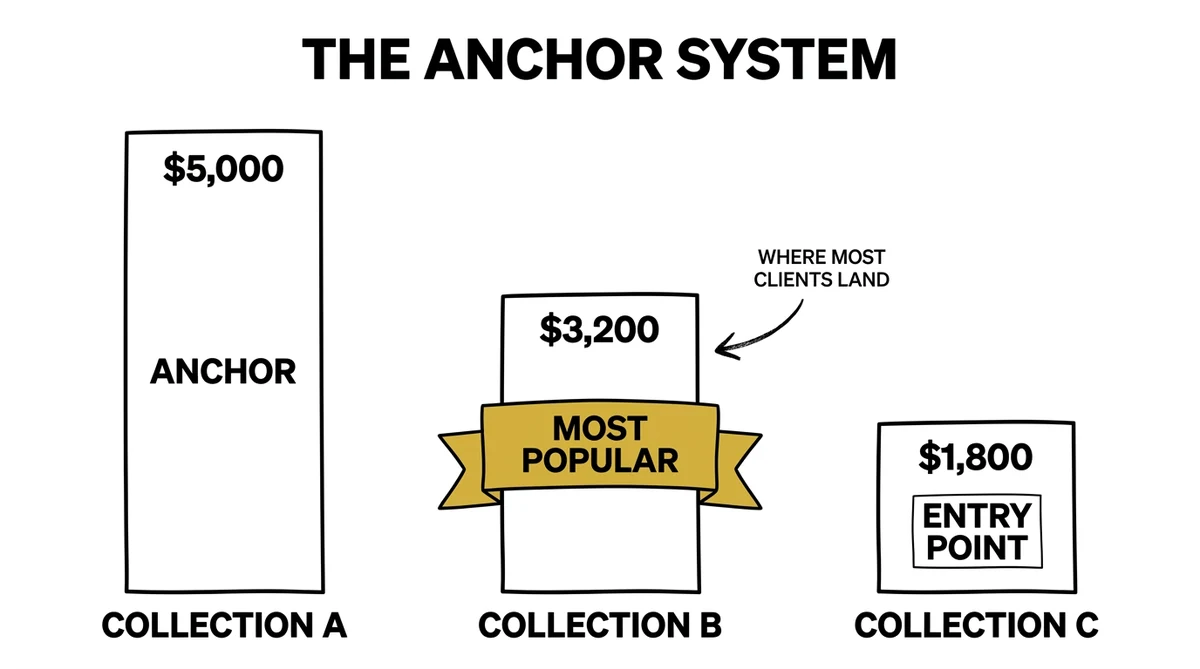

Photo: Unsplash
The B&W-to-color reveal is one of the highest-converting moments in any ordering session. Our coaching clients learn to run it in under 10 minutes.
See the Full IPS Playbook →Start with the highest collection first
Present your largest, most comprehensive collection at the top. This anchors the client's sense of "normal" at the high end. When you then present a mid-tier collection, it feels like a reasonable choice relative to the anchor, not a downgrade. Photographers who present pricing from cheapest to most expensive inadvertently anchor clients at the low end and then have to fight uphill to justify higher investments.
Knowing how to anchor pricing (and handle objections without discounting) is worth thousands per year. Let's build that skill into your studio.
Talk to a P2P Strategist →The silence rule
After stating the total of a collection ("This collection is $2,400"), say nothing. Do not explain. Do not qualify. Do not offer a discount before the client has said a word. The person who speaks first after a price has been named is typically at a psychological disadvantage in the conversation that follows. Silence feels uncomfortable; resist the urge to fill it. Give the client time to process. Their first words after the silence will tell you exactly what to address.
The decoy effect in package design
Design your collections using behavioral economics: Collection A is aspirational (your largest, most comprehensive option), Collection B is positioned as "most popular" and is priced slightly below Collection A, and Collection C is the entry point. The presence of Collection A makes Collection B feel accessible. Most clients will select Collection B, which is by design your highest-margin, easiest-to-fulfill offering. Without the aspirational anchor of Collection A, Collection B becomes the ceiling rather than the middle.
Never apologize for your pricing
The moment you begin hedging ("I know it's a lot," "some people think it's expensive but," "if the price is a concern"), you've communicated that you don't believe your work is worth the number you just said. Clients read that signal clearly. State your pricing as a neutral fact, the same way a restaurant presents a menu. The work is worth what it's worth.
Payment Plans, the Close, and Why Timing Is Everything
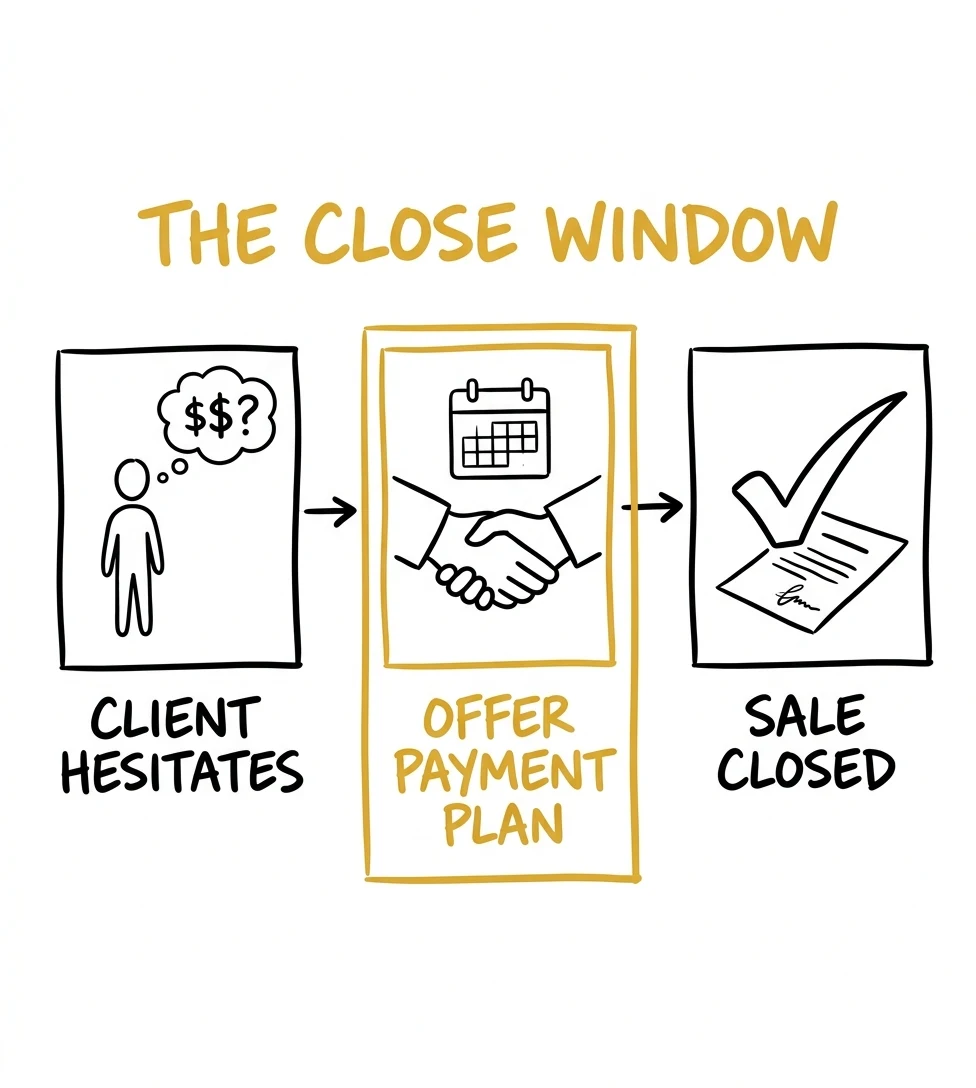
One of the most common IPS mistakes isn't about the reveal. It's about when you introduce payment plans. Most photographers bring up financing too early: "We do have payment plans available if that helps!" said before the client has seen a single image.
That's backwards. Offering payment plans before the emotional investment is like offering a restaurant a discount before anyone's tasted the food. The client hasn't fallen in love with anything yet. You're asking them to commit dollars to images they haven't seen.
The right sequence: images first, collection choice second, payment plans third. Once a client has chosen their collection, once she's in love with 40 images and has picked the $4,500 collection, then ask: "Do you want to break that into payments? We can do a down payment today and monthly from there." The emotional investment is already there. The payment plan isn't changing her mind about the collection; it's just removing the logistical barrier to saying yes.
Verbal Incentives: Off the Menu, Never in Writing
When a client is sitting between two collection tiers and you want to move them up, verbal incentives close the gap. An extra set of prints. A companion album. A wall art credit. Offer these in the moment, not on your printed menu, never promised in advance. This preserves your pricing integrity while giving you a tool to bridge the decision. If it's in writing, it becomes a discount. If it's offered in the moment as a reward for choosing the higher tier, it feels like a bonus being given.
Don't Leave Without Payment
Securing payment before the ordering session ends is the single most important discipline in IPS. Not because clients are dishonest, but because emotion cools. Once the call ends or the client walks out, the $5,000 decision gets re-evaluated against mortgage payments and car repairs. If they paid during the session, the decision is made. If they left with "I'll send you the deposit tonight," the odds of the full order drop by three-quarters. Sit with them through payment processing: Affirm, Klarna, Afterpay, all of it. The session isn't over until payment clears.
The Three Mistakes That Kill Sales at the Finish Line
IPS photographers who are doing most things right still lose sales to three specific mistakes that happen at the worst possible moment.
1. Sending the online gallery before the ordering session
This is the most common and most damaging mistake. If a client has already seen all their images (even just to "peek"), the reveal is gone. The surprise, the emotion, the first-time experience that drives purchasing decisions: evaporated. Once a client has browsed their gallery, they arrive at the ordering session in evaluation mode rather than emotional experience mode. If your workflow includes sending a sneak peek before the ordering session, stop immediately.
2. Showing all images instead of curated selects
The temptation to show everything comes from a fear of the client feeling they missed something. In reality, clients who see fewer, better images feel more satisfied and spend more. Your curation is a professional service. Own it. If a client asks to see the rest, the answer is: "What I've shown you are the images I selected as your best, the ones with the strongest light, expression, and composition. I'm happy to go through others after we've handled today's decisions, but I wanted to make sure we worked from the strongest first."
3. Rushing to fill the silence after the total
As noted above, silence is uncomfortable. Photographers with less IPS experience habitually undercut their own pricing by speaking first. "I could also do just the digital files for less," or "there's also a smaller option if that's more comfortable." You've just negotiated against yourself before the client said a word. Practice the silence. Let the client respond. Their response tells you where to go next.
IPS for Different Studio Types
The core IPS framework applies across genres, but the emotional levers and product emphasis shift depending on the type of session you're selling.
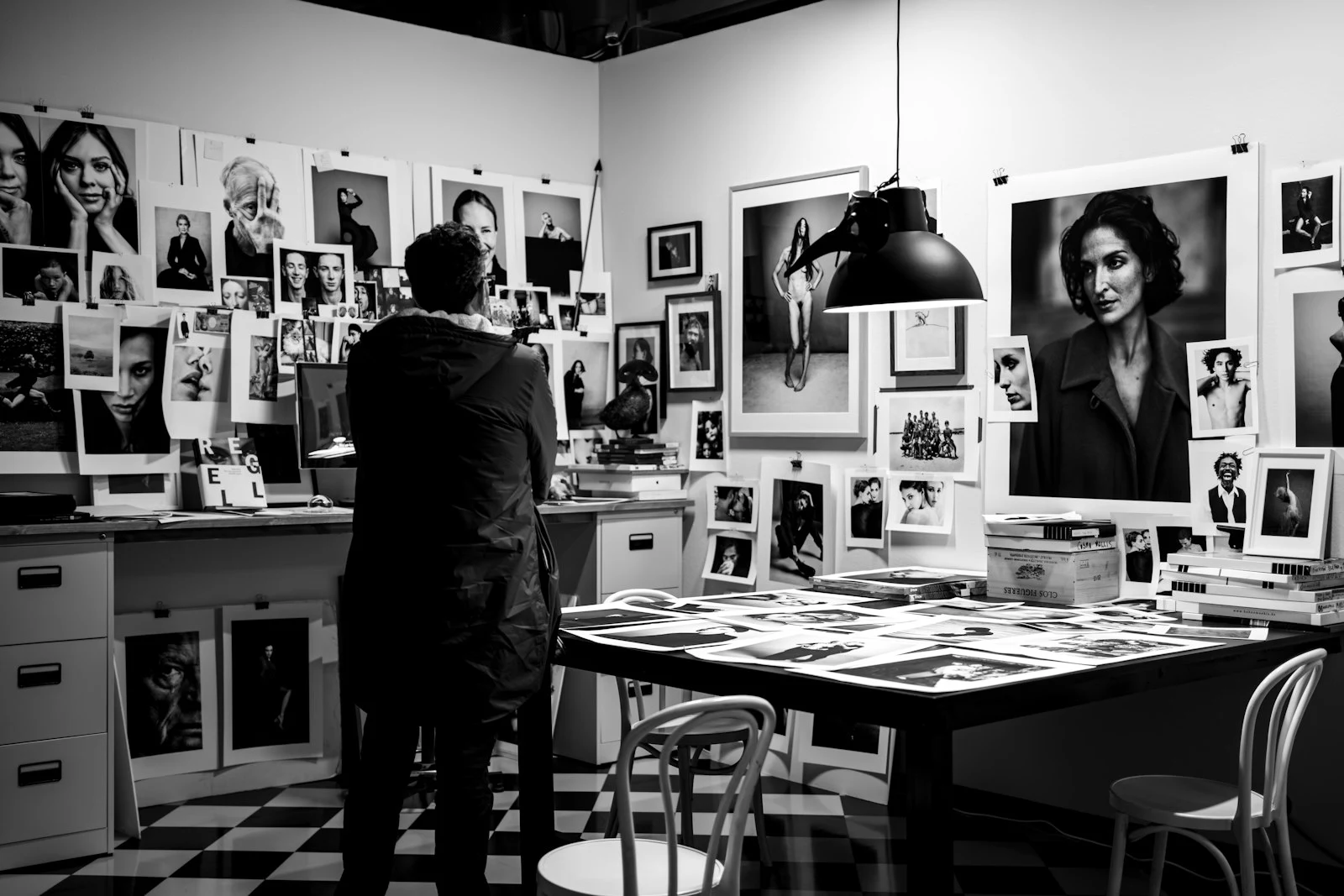
Whether you shoot families, boudoir, or newborns, in-person sales transforms how you deliver and profit.
Boudoir
Boudoir has the highest emotional peak of any portrait genre. Clients are more vulnerable during boudoir sessions than almost any other photographic experience, and that vulnerability, captured well, produces images that clients feel intensely about. The gift-giving angle is particularly powerful in boudoir: the album as a gift for a partner, or as a gift to oneself.
Privacy is non-negotiable in boudoir IPS. The ordering session should be one-on-one between photographer and client, with no partner or friend present unless the client explicitly requests otherwise. Many boudoir clients are making a deeply personal investment, and they will not do so comfortably with an audience. If clients want to involve a partner in the decision, structure the session so the partner joins after the reveal, not during. Clients who need to find a boudoir photographer and discover studios through targeted social platforms often arrive already emotionally primed for this kind of investment.
Family Portrait
The primary IPS conversation in family portraiture is wall art. The question that unlocks family sales is: "Where in your home would you see this every day?" Once a client mentally places an image on a specific wall in a specific room, the decision shifts from "should I buy this" to "which size fits that wall." Help the client see the image in context. This is where IPS software's on-wall visualization is most powerful.
Wedding
Wedding IPS typically happens 4 to 8 weeks after the wedding, when the couple has returned from their honeymoon and the emotional memories are still fresh but the logistical chaos has settled. The album is the primary revenue driver in wedding IPS, and it deserves its own dedicated reveal session, separate from gallery delivery. Couples who see their wedding album design for the first time in a controlled, emotional environment consistently invest more in upgrades and additional pages than couples who review designs alone via an online proofing tool.
Your Pricing Ceiling Is a Mindset Ceiling
Here's what nobody tells you about IPS: the system isn't the thing that stops most photographers. Their own money story is.

If $3,000 feels like a lot to charge, it's not because your market won't pay it. It's because you can't picture a client spending that on photography, because that number feels large to you. You project your own relationship with money onto your clients before they've had a chance to tell you anything. That isn't sales strategy, it's self-sabotage.
What changes it: reps. The first time a client looks at her images and cries, genuinely cries, and then says yes to the $5,000 collection without flinching, something shifts in you. You stop thinking "no one will pay that" and start thinking "I need to show them the right work and trust them to respond to it." The ceiling moves when you stop projecting.
Every photographer in the P2P network who's broken through the $3,000, $5,000, or $10,000 average has a version of the same story: the number felt impossible until a real client paid it without drama. After that, it felt normal. One of our High Rollers Club students, a headshot photographer in Calgary, had a top package of $750 when she joined. She thought $8,000 single-session sales were fabricated. Her very first ordering appointment: $8,000. "The client bought it from a sailboat in Antigua," she said. "No samples, no studio. Just the system."
Jenn Bruno Smith says it better than anyone: "Your pricing ceiling is usually a mindset ceiling. If $5,000 feels impossible to you, that's not a market problem. That's a belief problem." The full coaching on how to build that belief (and hold the price under pressure) is inside the 7-Figure Studio program.
If your average is stuck below $2,000, the fix is rarely technical. Book a call. We'll tell you exactly what's holding the number down.
Talk to a P2P Strategist →Your First IPS Session: What to Have, What to Say, What to Expect
You don't need a perfect studio to start IPS. You need a minimum viable setup and the willingness to sit with a client and guide them through a decision. The starting kit:
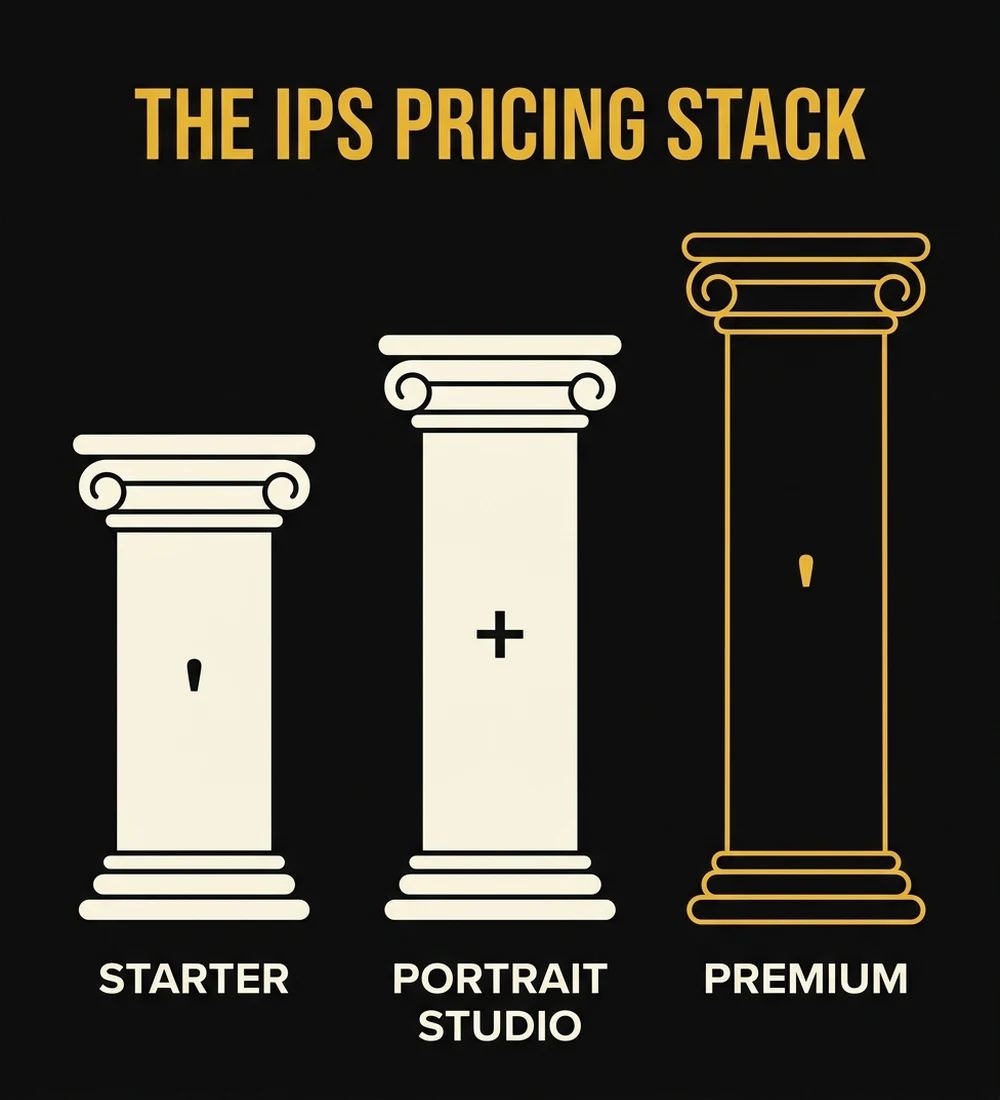
The Average Order Value Stack: each tier you add to your offerings directly lifts your studio revenue.
- Two or three physical product samples: At minimum, one album and one wall print. These don't need to be your own images. Order sample products from your lab. The tactile experience is the point.
- IPS software: ProSelect has a free trial period; Fundy Designer also has entry-level options. Either tool will let you display images at wall scale and build collections in front of the client.
- A pre-booked appointment: Schedule the ordering session before the shoot. Confirm it twice: once the day of the shoot, once the morning of the ordering session.
- A curated gallery of 25 to 40 images: Do the culling work beforehand. If you're doing SDS, do it during the client break. If you're doing traditional IPS, do it before the appointment.
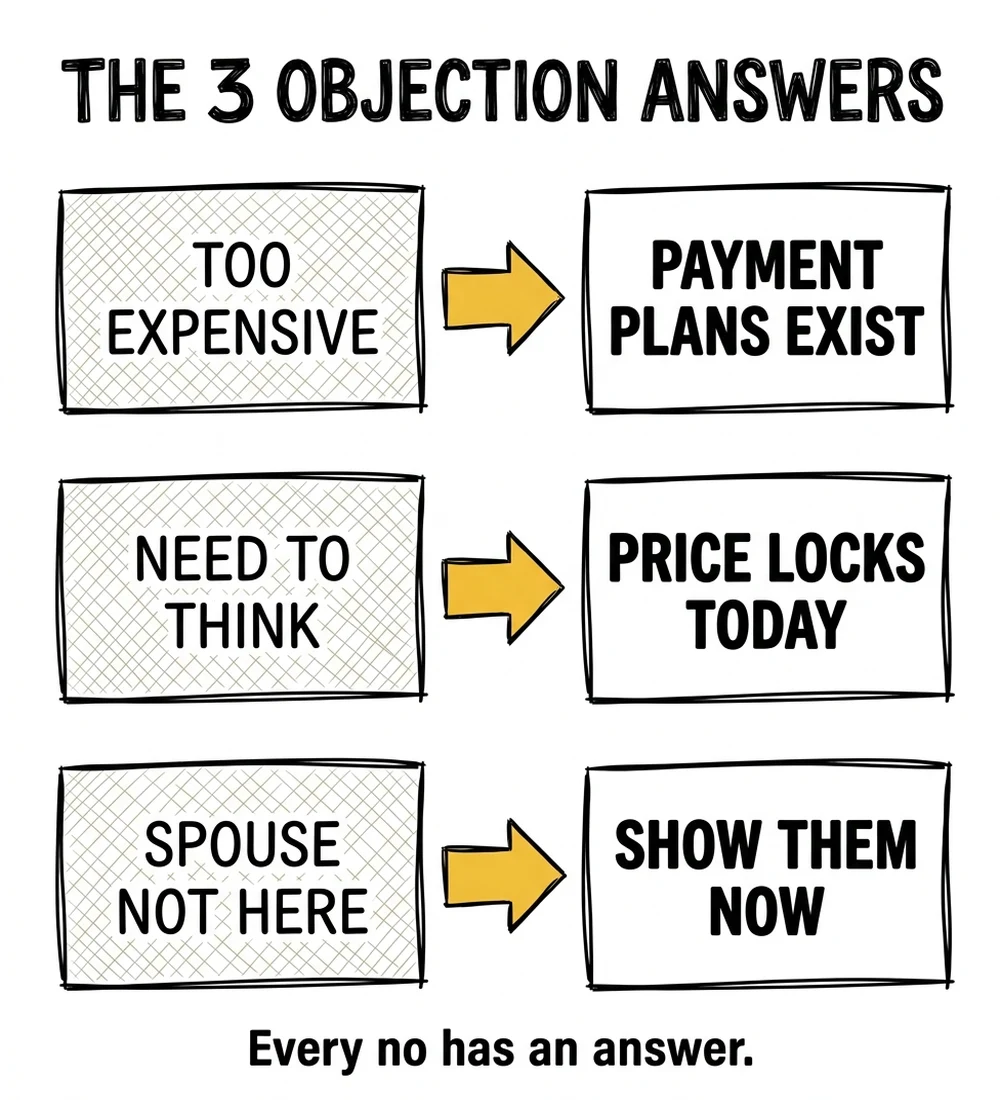
For the objection "I need to think about it," the best response is: "What specifically do you need to think through? Sometimes it helps to talk it out." This open-ended question invites the client to name the actual concern (whether it's budget, a spouse's input, or simply needing reassurance) rather than leaving you with a vague delay you can't address.
For your first IPS session, set a realistic benchmark of $800 to $1,200. That's not where you'll stay, but it's a meaningful improvement over a $250 online gallery order and proof that the system works. After three or four sessions, your benchmarks will rise as your comfort with the process increases.
The clients who find you through bottom-of-funnel Google Ads are often the most ready for IPS: they searched for a photographer, found you, and made an inquiry. That search behavior signals high intent and a client who arrived pre-sold. Learn more about driving paid traffic into your IPS funnel to keep a steady pipeline of ordering-session-ready clients.
IPS clients also become your highest-value referrers. When someone has a 30x40 canvas of their family on their living room wall, that print starts conversations. Guests ask about it. The client tells the story of the session. That social proof drives referrals at a rate no digital gallery photo can match. This is why referral marketing strategies work especially well for IPS-based studios: your physical products are walking advertisements in people's homes.
After the ordering session, your post-session email sequence matters for product delivery updates, print unveiling anticipation, and future session re-booking. And IPS doesn't exist in isolation. It's one piece of a broader marketing and sales system. If you're still building the full picture, start with the photography marketing guide that covers how all the pieces fit together.
Conclusion: In-Person Sales Is the Fastest Path to Higher Average Orders
Online galleries are convenient for you, not for your revenue. The photographers hitting $4,500–$10,000+ average orders aren't shooting more sessions; they're selling differently. In-person sales, same-day ordering, and the black-and-white reveal aren't complicated. They're just a system. Photography to Profits, founded by Humberto Garcia, has helped hundreds of portrait and boudoir studios implement IPS from scratch and see results in their very first ordering session. The script isn't what closes sales. The experience is. Build the experience, and the orders follow.
Ready to run your first IPS session? Start with the same-day sales flow outlined in this guide.