76% of photography searches happen on a mobile phone. Most happen within an hour of the decision, while someone is planning their engagement, preparing for a newborn, or scrolling through wedding inspiration at 11pm.
Key Takeaways
- Getting photography clients in 2026 requires a multi-channel system: studios that rely on a single channel like Instagram are one algorithm change away from an empty calendar.
- Humberto Garcia, founder of Photography to Profits, has helped hundreds of portrait and specialty photographers implement this system.
- P2P benchmark: studios using 3+ channels (GBP + paid ads + referrals) average 30+ bookings per month vs 8–12 for single-channel photographers.
- Start today: claim and optimize your Google Business Profile. It's the highest-ROI 2-hour investment in this entire guide.
That stat changes everything about how you should be marketing your photography business in 2026.
In 2020, the playbook was simple: post consistently on Instagram, ask for referrals, get listed on The Knot or WeddingWire, and maybe run a few Facebook ads. That was enough to build a six-figure studio.
It is not enough anymore.
Five of the top six client acquisition channels in 2026 either did not exist or were irrelevant to local photographers in 2020. Google AI Overviews, TikTok for local business, visual search via Google Lens, Pinterest as a booking engine, and Google Business Profile as a standalone marketing asset. All of these have emerged or fundamentally changed in the last four years.
This guide is not an update to the 2020 version. It is a replacement.
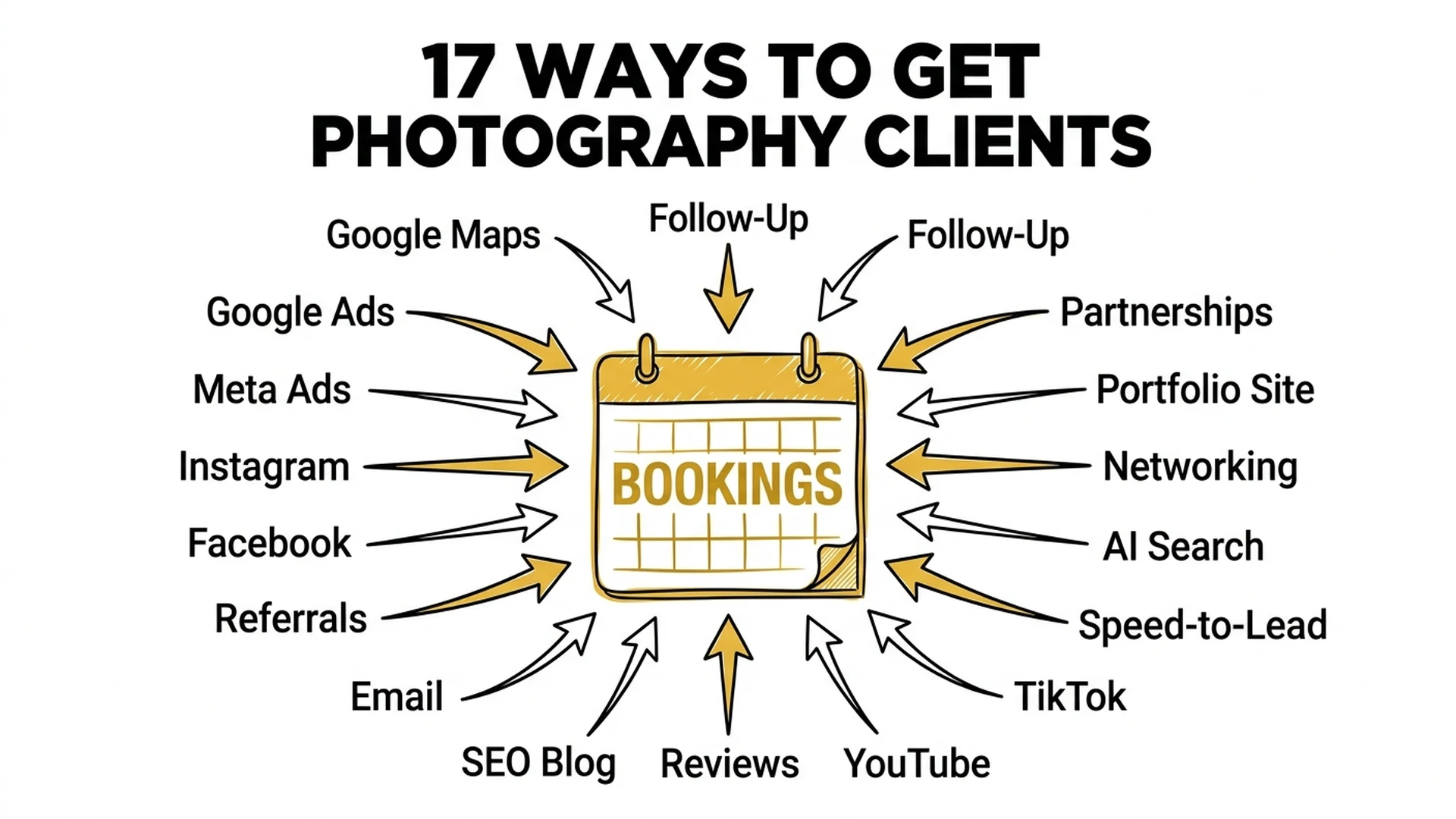
What you are about to read is the Speed-to-Visibility System, a 17-tactic framework organized around one core principle: the photographers who win in 2026 are the ones who show up first, show up everywhere, and respond fastest. Not the ones with the best portfolio. Not the ones with the most followers. The ones who are visible at the exact moment a buyer decides to search.
Each tactic below is organized into one of six groups based on where in the client acquisition journey it operates. Work through the groups in order. Month one, focus on Group 1. Month two and three, add Groups 2 and 3. By month four, you will have a system that generates leads without requiring you to manually hustle for every single booking.
Let us get into it.
Group 1: Own Local Search
Local search is where buyers with money and urgency go. Someone searching "wedding photographer Nashville" is not browsing. They are deciding. This group of tactics puts your business at the top of that decision moment.
Tactic 1: Dominate Your Google Business Profile
Your Google Business Profile (GBP) is not a listing. It is your most powerful local marketing asset, and most photographers treat it like a yellow pages entry they set up once and forgot.
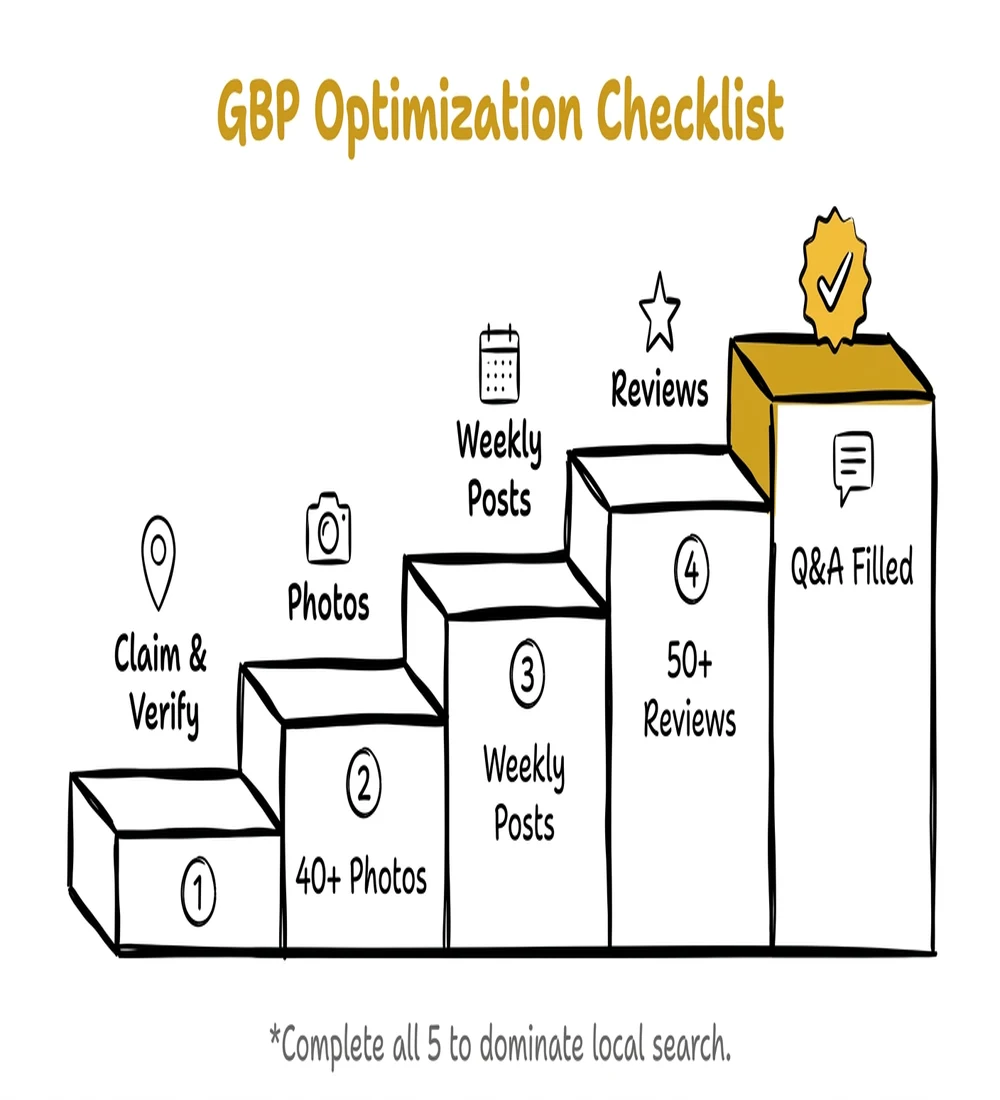
The reality: GBP accounts for approximately 32% of local pack ranking in Google search results. That means nearly a third of whether you appear in the map pack when someone searches "photographer near me" comes down to how well you manage this one free tool.

Photo: Unsplash
More importantly, GBP is more important than your website for local discovery. A buyer searching on mobile often never clicks through to a website. They call directly from the GBP panel, get directions, or read reviews, all without leaving Google.
What dominating GBP looks like in 2026:
- Post weekly. GBP posts appear in your profile and signal to Google that your business is active. Post a recent session image, a behind-the-scenes moment, a client testimonial, or an upcoming mini session promotion. Weekly posts are non-negotiable.
- Answer every Q&A. Google allows anyone to ask and answer questions on your profile. Seed it with your own FAQs (pricing range, turnaround time, booking process) and answer them yourself before competitors or random strangers do.
- Upload new photos every week. Profiles with recent, high-quality photos generate 42% more direction requests and 35% more website clicks than those without. Add session images directly to GBP, not just to Instagram.
- Complete every field. Services section, business description (use your target keywords naturally), attributes (women-owned, appointment-required, etc.), and hours including special holiday hours.
- Respond to every review within 24 hours. Both positive and negative. Google factors response rate into ranking signals.
For a complete breakdown of how to optimize GBP alongside your full local search strategy, read our guide to SEO for photographers.
Tactic 2: Target Local Intent Keywords
There is a difference between "photographer" and "wedding photographer Nashville." One is a category. One is a buying search.
Every piece of content you create (website pages, blog posts, GBP posts, captions) should be built around local intent keywords. That means city plus niche combinations your ideal clients are actually searching.
Examples of local intent keyword structures:
- [niche] photographer [city]: wedding photographer Austin, newborn photographer Denver
- best [niche] photographer in [city/region]: best boudoir photographer in Chicago
- [niche] photography [city] prices: maternity photography Nashville prices
- [niche] photographer near [landmark or neighborhood]: portrait photographer near Brentwood TN
Your homepage and each service page should each target one primary local intent keyword. Do not try to rank a single page for 10 variations. Build separate, dedicated pages for each major niche and city you serve.
Use Google autocomplete and the People Also Ask section to find exact phrasing. These are the queries your actual clients are typing, not the keywords an SEO tool suggests based on volume alone.
Tactic 3: Run Google Search Ads for Bottom-of-Funnel Buyers
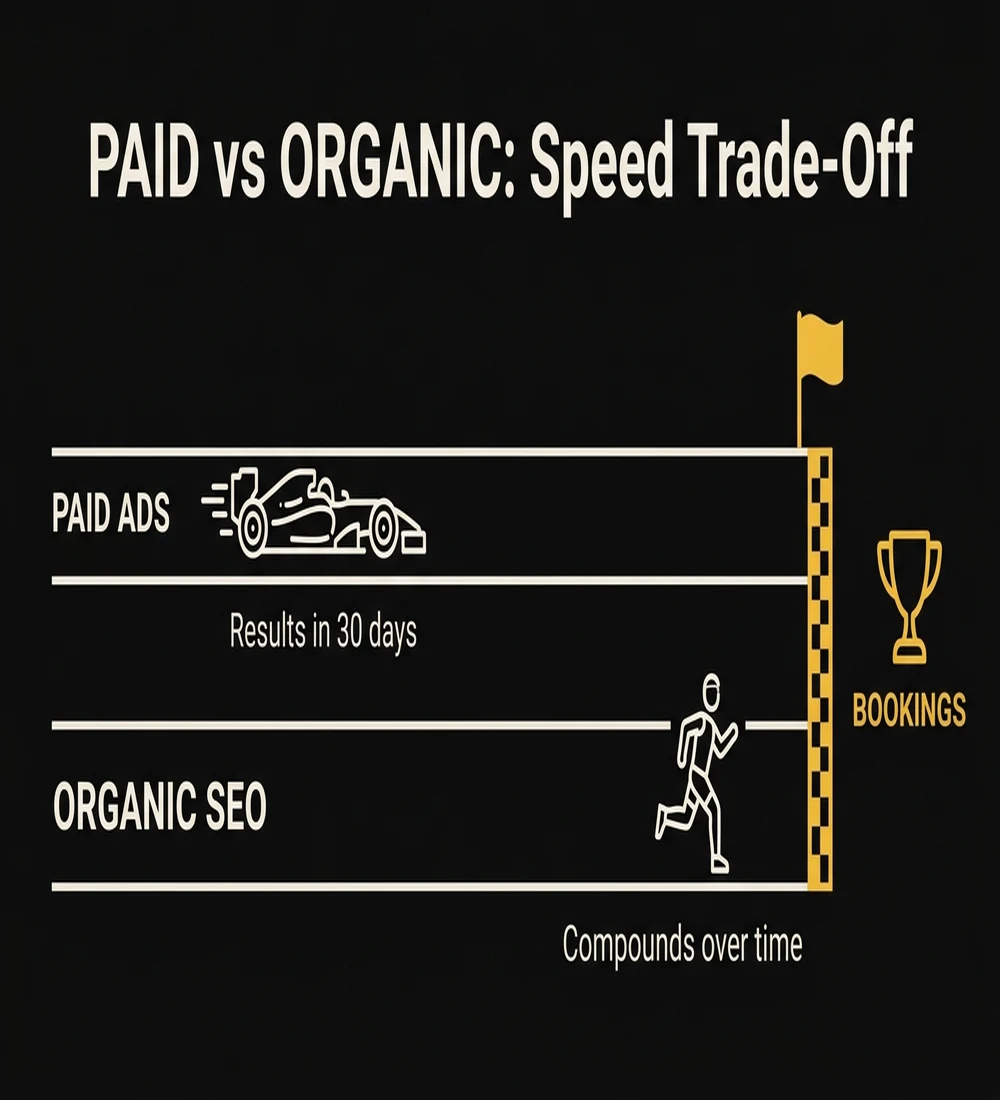
While SEO builds long-term organic visibility, Google Search Ads give you immediate placement for the highest-intent searches in your market.
When someone searches "wedding photographer [your city] 2026" and clicks a paid ad, they are not browsing. They have a date, a budget, and a decision to make. That is a bottom-of-funnel buyer, the most valuable click in local advertising.
The most common mistake photographers make with Google Ads is targeting too broadly. They set their ads to match "photographer" and wonder why they are getting clicks from people looking for headshot photographers in cities three states away.
A well-structured Google Ads campaign for a photographer in 2026:
- Targets exact and phrase match keywords only, no broad match
- Includes negative keywords for every niche and city you do NOT serve
- Uses location targeting set to your actual service area, not presence or interest
- Drives traffic to a dedicated landing page, not your homepage
- Tracks conversions (form fills and calls), not just clicks
Google Ads require active management to perform. If you are running ads and seeing low conversion rates, the problem is almost always the landing page, not the ad itself. Learn how to build campaigns that actually book sessions in our complete guide to Google Ads for photographers.
Tactic 4: Build a Google Review Engine
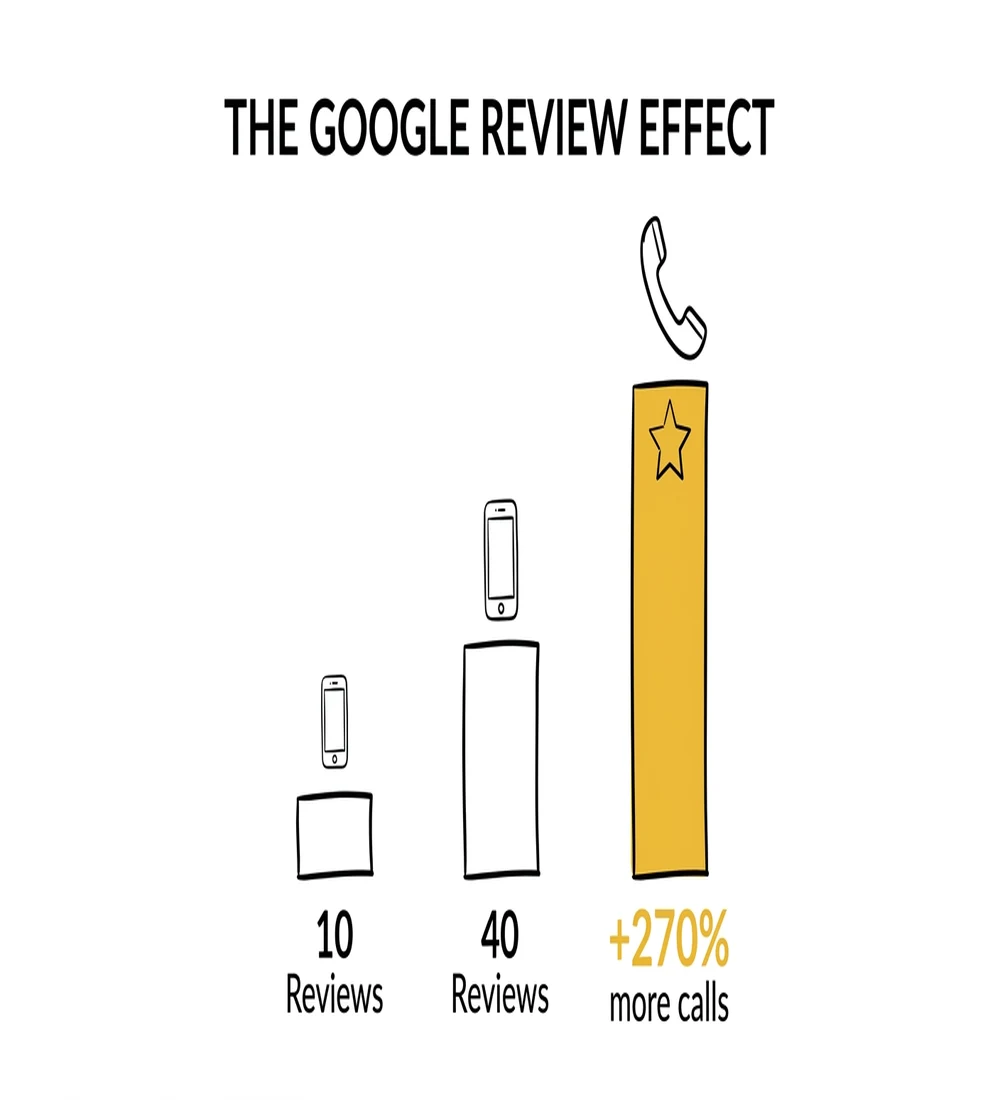
Reviews are the single highest-trust signal for local service businesses. A photography studio with 47 reviews at 4.9 stars will outrank and out-convert a studio with 8 reviews at 5.0 stars, every time.
The problem is not that clients do not want to leave reviews. Most do. The problem is that nobody asks in a way that makes it easy and timely.
The Google Review Engine is a simple system:
- Trigger: Gallery delivery email goes out.
- Wait 3 days, enough time for the client to open and love their images.
- Send a personalized follow-up that references something specific from their session (the light at golden hour, the kids laughing on the blanket) and includes a direct link to your Google review page. One click, no friction.
- If no review in 5 days, send one reminder: shorter, warmer, same direct link.
This system, when implemented consistently, generates 3-5x more reviews than relying on organic review behavior. Set it up once in your CRM or email platform. Let it run automatically after every gallery delivery.
Aim for a minimum of 50 Google reviews before you shift energy elsewhere. At 50 or more reviews, your GBP begins to dominate the local map pack for your primary keywords.
Group 2: Convert Social Media Into Bookings
Social media is not a portfolio. It is a discovery engine and a trust accelerator, but only if you use it the way the algorithm rewards in 2026. Here is what is actually working right now.
Tactic 5: Short-Form Video Is Not Optional
Instagram Reels and TikTok videos are the highest-reach content format on both platforms. By a significant margin.
Static posts and carousels are down. Engagement on Instagram carousels has dropped 16% year-over-year. Instagram Stories are down 9.5%. Meanwhile, Reels continue to receive disproportionate algorithmic distribution, especially to non-followers.
Short-form video is where new audiences discover your work. It is not optional in 2026.
The content format that converts for photographers is session-as-experience video. Not just the final images but the entire experience. Show the prompts you give. Show the laughter. Show the client seeing the back of the camera for the first time. Show the drive to the location and the sunset you found.
This content does two things simultaneously: it educates potential clients on what a session with you feels like, and it builds emotional connection before they ever inquire. By the time someone reaches out after watching three of your Reels, they are already 80% sold.
Aim for 3-5 short-form videos per week. Batch film on session days. Edit in 20-minute blocks three times a week. This is a system, not inspiration-dependent content creation.
Tactic 6: TikTok for Local Business
Most photographers think TikTok is for teenagers. It is not.
TikTok advertising revenue grew 32% year-over-year, compared to Instagram at 12%. More relevant for local photographers: TikTok organic reach is one of the few remaining platforms where a local business account with zero followers can reach thousands of people in their city in 48 hours.
The key is using TikTok as a local discovery tool. Always include your city in your caption, your audio, and where possible, your on-screen text. TikTok distributes content to users based on interest signals and geographic proximity. A video about Nashville wedding photography behind the scenes will reach Nashville users interested in weddings, exactly your target audience.
Content that performs on TikTok for photographers:
- Before and after transformations (location scouting to final image)
- What to expect at your session type walkthroughs
- Real client reactions (with permission)
- Photographer answers your questions: response videos
- Pricing transparency videos: these generate massive engagement because almost no photographers do it
Start with two TikTok videos per week. Repurpose your Reels content. The same video often performs well on both platforms without modification.
Tactic 7: Pinterest as a Visual Search Engine
Pinterest is not a social media platform. It is a visual search engine used by people actively planning future purchases and experiences.
96% of Pinterest searches are unbranded: people searching for ideas, not specific brands. That is an enormous opportunity for photographers. When someone searches "rustic outdoor wedding photos Tennessee," they are in planning mode. They are collecting inspiration. They are deciding what they want their wedding to look like.
Photo: Clay Banks / Unsplash
If your images appear in that search (and they will if you optimize your pins correctly), you become the visual standard for what their wedding should look like before they ever start contacting photographers.
Pinterest SEO for photographers:
- Use keyword-rich pin titles and descriptions (treat them like blog meta descriptions)
- Create boards organized by niche and location: Nashville Wedding Photography, Outdoor Newborn Sessions Tennessee, Dark Moody Bridal Portraits
- Pin 5-10 images per week from your sessions, not all at once
- Link every pin directly to the corresponding blog post or service page on your site
- Use vertical images at a 2:3 ratio. They take up more real estate in the feed
Pinterest traffic compounds over time. A well-pinned image from a session two years ago can still drive traffic and inquiries today. It is the closest thing to passive SEO traffic in the visual content world.
Tactic 8: Instagram Carousels and Story Sequences That Pre-Sell
Despite declining engagement rates, Instagram remains the platform where photography clients go to evaluate whether they want to book you. It is not a discovery platform anymore. It is a trust platform.
When someone finds you through Google, TikTok, or a vendor referral, the first thing they do is check your Instagram. Your feed is your brand. Your stories are your personality. Together they answer the question: Is this the photographer I want to hire?
Carousels that pre-sell the session experience:
- Slide 1: Hook image or statement that stops the scroll
- Slides 2-6: Sequence of images that tell the story of a session (not just the best shots but the journey)
- Slides 7-8: Behind the scenes or location detail
- Final slide: Clear call to action with your booking link or inquiry prompt
For Stories, create 5-7 slide sequences around a single topic: What a boudoir session looks like from start to finish. These sequences build anticipation and answer objections before the client even reaches out.
Post 4-5 carousels per month and 15-20 Stories per week. Stories do not need to be polished. Real, candid, in-the-moment content performs better than produced Stories.
Group 3: Build the Referral Machine
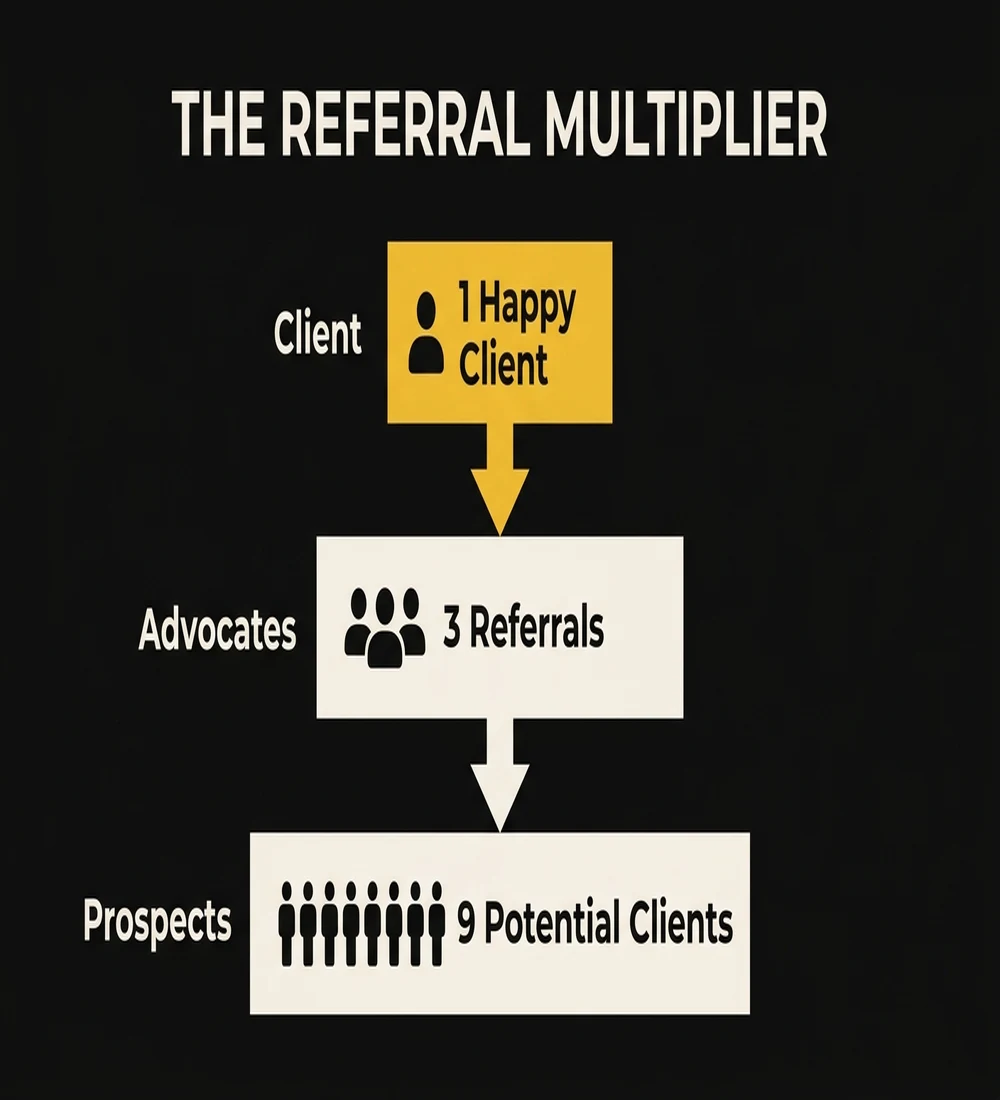
Referrals are still the highest-converting, lowest-cost client source available to photographers. The problem is most photographers are leaving 75% of their referral potential on the table.
Tactic 9: The Formal Referral Ask Email
Here is a gap that should shock you: 83% of satisfied clients say they would be happy to refer a photographer to someone they know. Only 29% ever do.
The gap is not willingness. It is the ask. Most photographers never explicitly ask for referrals. They hope clients mention them naturally in conversation. Some do. Most do not, not because they do not love your work, but because life is busy and it never comes up at the right moment.
Photo: Unsplash
Studios that implement a structured referral ask see 25-30% more bookings from referrals within the first 90 days, with no additional ad spend.
The referral ask email formula:
- Send 7 days after gallery delivery (emotion is highest)
- Express genuine gratitude: reference something specific from their session
- Make the ask direct and easy: If you know anyone getting married, expecting a baby, or wanting family photos, I would be honored if you shared my info.
- Include your booking link and a one-sentence description of what you offer
- Optional: offer a small incentive (print credit, session upgrade) for referrals that book
Referred clients bring 16% higher lifetime value and spend 25% more on their first session than cold traffic clients. For a complete referral system including email templates and timing sequences, read our guide to referral marketing for photographers.
Tactic 10: Build a Vendor Partner Network
Three to five strong vendor relationships (a wedding planner, a florist, a venue, a bridal boutique, a hair and makeup artist) can fill a photography calendar without a single ad dollar spent.
Vendor partnerships work because the referral comes with built-in trust. When a planner whose taste a couple already respects recommends a photographer, the conversion rate is dramatically higher than any cold traffic source.
How to build vendor partnerships that actually generate referrals:
- Give first, ask never. Send vendor partners high-resolution images from every shared event, same week. Tag them in posts. Feature their work. Be the photographer who makes vendors look good.
- Attend vendor events and styled shoots. These create relationships with dozens of vendors simultaneously and generate portfolio content.
- Create a simple co-marketing agreement. You display their card in your studio. They display yours in their showroom. You recommend each other in your client welcome guides.
- Schedule quarterly coffee or lunch meetings. Relationships that are maintained get referrals. Relationships that go quiet get forgotten.
One strong venue partnership in a competitive wedding market can generate 15-25 bookings per year. That is a calendar-filling pipeline built on one relationship.
Tactic 11: Past Client Reactivation
Your past client list is your most underused asset.
The close rate on a warm past client is 60-80%. The close rate on cold traffic is 1-3%. Yet most photographers spend 90% of their marketing budget chasing cold audiences and do nothing to re-engage the people who already love their work and have already proven they will pay their prices.
Past client reactivation is a simple two-step system:
- Annual milestone email. One year after their session, send a short email noting that you were looking through their gallery and their images are still some of your favorites. If they have been thinking about updating their family photos, you would love to work together again. Include a booking link. This alone reactivates 8-12% of past clients annually.
- Mini session invite list. When you run mini sessions, email your past clients first, before you open to the public. Give them 48 hours of early access. Past clients convert at 3-4x the rate of cold email lists for mini session promotions.
For email marketing systems built specifically for photographers (including full automation sequences), read our guide to email marketing for photographers.
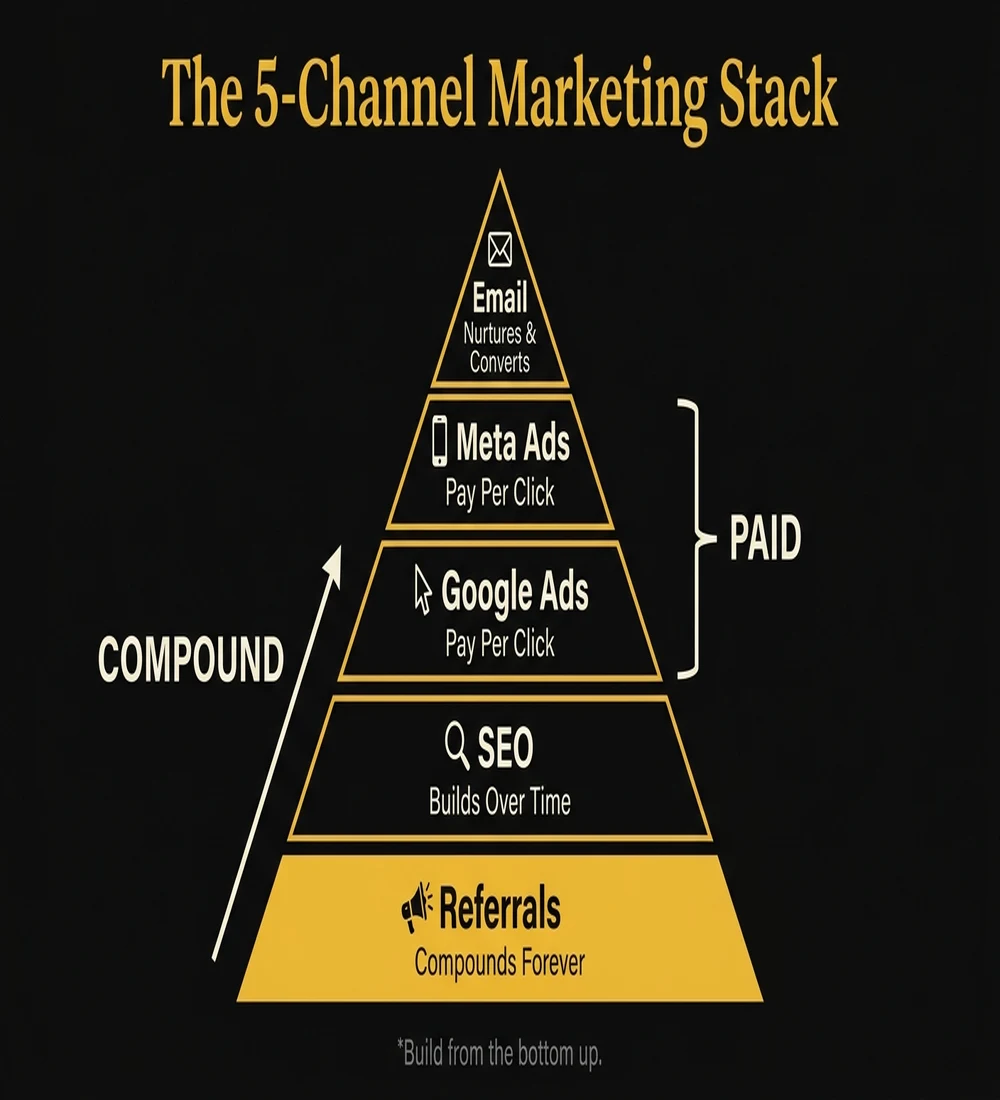
The studios hitting 30+ bookings a month aren't doing 17 things. They've dialed in 5 channels that compound. We help you identify which ones fit your market.
Get a Free Strategy Call →Group 4: Win at AI-Era Discovery
Search is changing faster than at any point in the last decade. Google AI Overviews are reshaping how buyers find service providers. Visual search is growing. And the photographers who understand these shifts now will have a significant advantage over those who catch up in 2027.
Tactic 12: Optimize for Visual Search
Google Lens processes billions of visual searches every month. Pinterest Lens is used by hundreds of millions of users to find products and experiences that match what they see in the world around them.
For photographers, this creates a specific and powerful opportunity: your real photographs can be found by buyers actively looking for what they look like.
AI-generated images (despite their technical sophistication) are systematically excluded from visual search results on most platforms. Real photographs of real sessions in real locations are what visual search surfaces. This is a competitive advantage that AI cannot replicate.
Visual search optimization for photographers:
- Alt text with descriptive, keyword-rich language. Every image on your website needs descriptive alt text: outdoor maternity session golden hour Nashville Tennessee, not just "photo" or the raw filename.
- File names before upload. Rename image files to match keywords before uploading: nashville-wedding-photographer-outdoor-ceremony.webp not DSC0041.jpg.
- Structured data for images. Use ImageObject schema markup on portfolio pages so Google can understand what your images depict.
- High-resolution Pinterest uploads. Pinterest visual search performs better with high-resolution images. Upload full-size versions, not compressed thumbnails.
Tactic 13: Answer Questions in Google AI Overviews
Google AI Overviews (the AI-generated summaries that now appear at the top of many search results) pull from content that directly and clearly answers specific questions.
When someone searches how much does a wedding photographer cost in Nashville, Google AI Overview pulls an answer from a local source it considers authoritative. If that source is your website, you get visibility at the very top of the results page, above all paid ads and organic listings.
Photo: Samuel Angor / Unsplash
How to appear in AI Overviews as a photographer:
- Add an FAQ section to every service page with the exact questions your clients ask
- Answer each question directly in the first sentence. Do not bury the answer
- Use conversational language that mirrors how people actually ask questions
- Keep answers between 40-80 words. AI Overviews favor concise, direct answers
This is the core of Answer Engine Optimization (AEO), the emerging discipline of optimizing content for AI-generated search answers rather than traditional blue-link results. Learn the complete system in our guide to AEO for photographers.
Tactic 14: Build a Topical Authority Content Cluster
Google no longer rewards individual pages in isolation. It rewards websites that demonstrate deep expertise on a topic across multiple interconnected pages.
For a photography business, this means building a content cluster: one pillar page on your primary topic (photography marketing, wedding photography, newborn photography) supported by 5-8 tightly interlinked supporting posts that cover subtopics in depth.
A topical authority cluster for a wedding photographer might look like:
- Pillar: Complete Guide to Hiring a Wedding Photographer in [City]
- Supporting: Wedding Photography Pricing in [City]
- Supporting: How to Choose a Wedding Photographer Style
- Supporting: What to Wear for Wedding Engagement Photos
- Supporting: Best Wedding Venues in [City] for Photography
- Supporting: Wedding Photography Timeline: How to Plan Your Day
When these pages link to each other and are all hosted on your domain, Google begins to treat your site as the authoritative local resource on wedding photography, and ranks you accordingly. A single blog post cannot achieve this. A coordinated cluster can.
For the full strategy including how to structure internal linking, read our guide to SEO for photographers.
Group 5: Paid Media
Organic channels build long-term visibility. Paid media accelerates it. When you have a proven offer (a price point that converts, a niche that books), paid ads let you scale what is already working.
Tactic 15: Meta Ads for Awareness and Retargeting
Facebook and Instagram ads (Meta ads) remain one of the most efficient paid channels for photographers, but not in the way most photographers use them.
The mistake is running cold traffic ads with a direct Book Now call to action to an audience that has never heard of you. Cold traffic needs to warm up first. The photography buying cycle (especially for weddings and boudoir) involves research, comparison, and emotional readiness. Cold ads that skip this process generate clicks but not bookings.
The correct Meta ads structure for photographers in 2026:
- Awareness campaign: Video or carousel ads showing your work to a cold local audience. Goal is views and profile visits, not clicks. Budget: 60% of total spend.
- Retargeting campaign: Ads shown only to people who have watched your awareness videos or visited your website. These people know you. Now you show them a specific offer or booking invitation. Budget: 40% of total spend.
Retargeting audiences convert at 3-8x the rate of cold audiences. The awareness campaign builds the retargeting pool. Together, they create a self-filling funnel.
For the complete Meta ads strategy including audience setup, ad creative, and budget recommendations, read our guide to Facebook ads for photographers.
Tactic 16: Mini Session Promotions via Paid Ads
Mini session ads are the highest-converting ad format for portrait photographers. Bar none.
A mini session has a specific price, a specific date, a specific location, and a specific number of spots. That specificity creates urgency. Urgency creates action. A vague book your family session ad competes with inertia. 5 spots left for Fall Mini Sessions at Shelby Bottoms Park on Saturday October 12 at $275 for 20 minutes and 15 edited images does not.
Mini session ad best practices:
- Run ads 3-4 weeks before the session date, enough time to fill spots without losing urgency
- Use a simple landing page with the session details, a sample image gallery, and a booking button, not your homepage
- Target past clients first (custom audience from your email list), then lookalike audiences, then cold local targeting
- Cap spots at 6-8 per day. Real scarcity converts better than artificial scarcity.
- Follow up with a waitlist for those who miss out. They become your first buyers for the next mini session
A well-executed mini session ad campaign can generate $3,000-$6,000 in a single weekend from $200-$400 in ad spend. It is the most reliable ROI formula in portrait photography marketing.
Paid ads can work, but only when your offer, targeting, and follow-up are dialed in. Most photographers waste budget on the first two and skip the third entirely.
Let's Fix Your Ad ROI →Group 6: Convert Faster
All 16 tactics above generate leads. Tactic 17 determines how many of those leads actually become bookings.
Tactic 17: Speed-to-Lead. Respond in 5 Minutes
No other single change does more for most photography businesses right now.
Photo: Unsplash
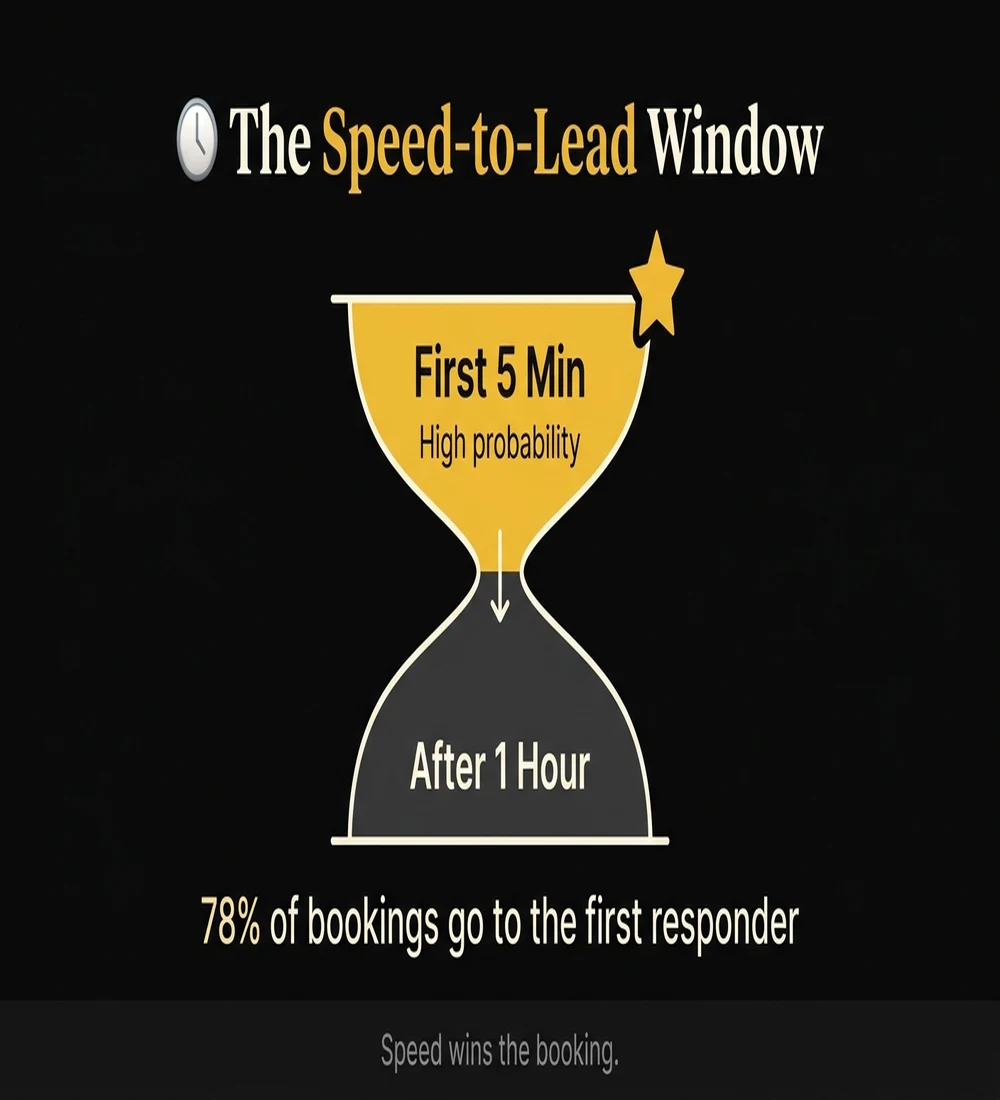
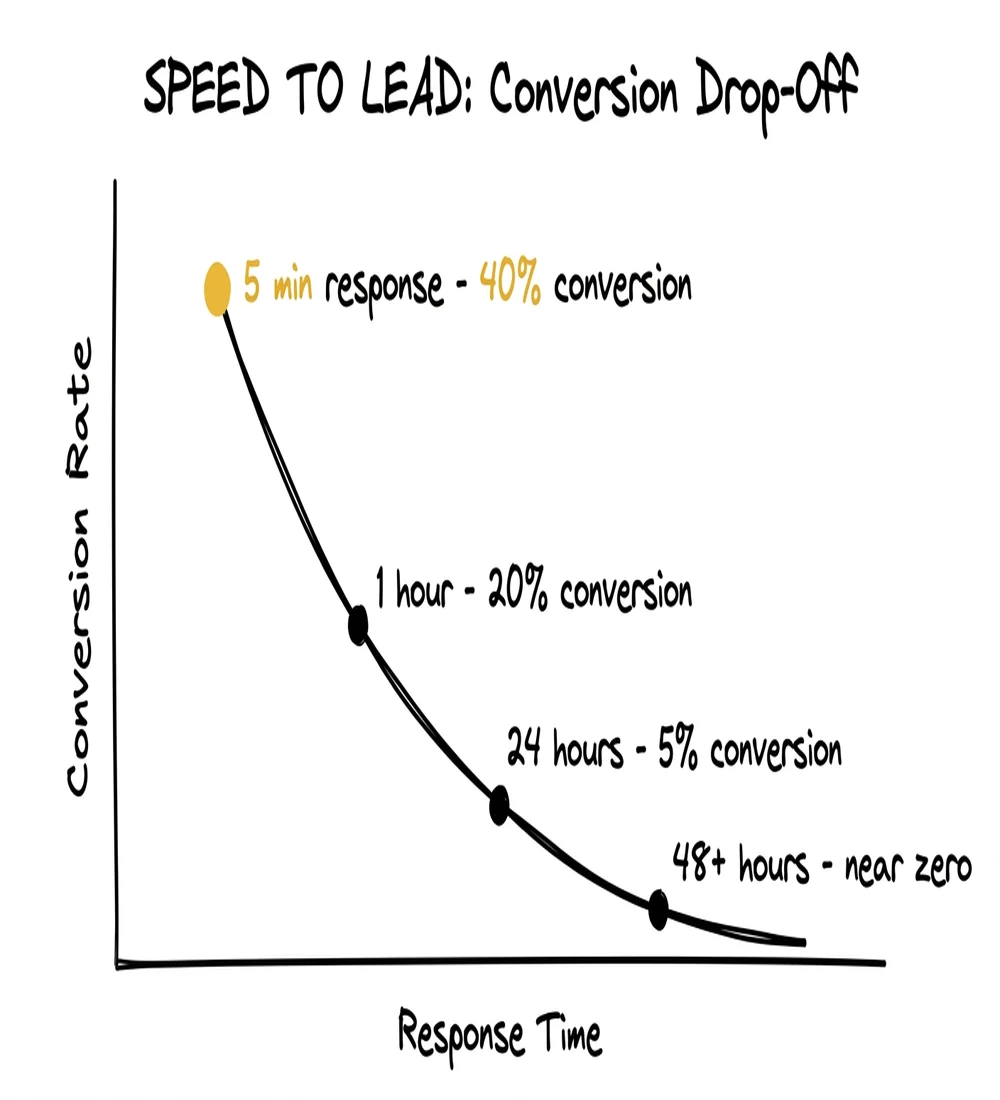
The data is unambiguous: responding to an inquiry within 5 minutes results in a 21x higher conversion rate compared to responding within 30 minutes. Not 21% higher. 21 times higher.
Why? Because photography inquiries are often sent to multiple photographers simultaneously. The first to respond professionally gets the booking most of the time. Wait until the next morning to check your email and you are competing against a photographer who called the client back within 4 minutes.
Speed-to-lead implementation:
- Set up immediate email and text notifications for every inquiry form submission. Most CRMs and form tools (HoneyBook, Dubsado, Studio Ninja) support this natively.
- Create a 5-minute response template. Not a form letter: a personalized but fast response that acknowledges their specific inquiry, confirms availability for their date, and includes a direct link to book a call or view your packages.
- If you cannot respond immediately, set up an auto-responder that confirms receipt within 60 seconds and sets the expectation that you will follow up within 2 hours. This alone prevents the inquiry from going cold.
- Respond during business hours in real time when possible. 9am-6pm, treat inquiry notifications like urgent client calls. Outside those hours, the auto-responder holds the inquiry until you can respond personally.
- Track your response time as a business metric. Average response time under 15 minutes should be your standard. Under 5 minutes is the competitive edge.
Speed-to-lead is free to implement. It requires no ad budget, no new tools, no website changes. It is purely a behavioral shift, and it is the fastest way to increase your booking rate from your existing lead volume.
Speed wins the booking. If you're responding to leads in hours instead of minutes, you're handing bookings to your competitors. Here's how to fix that system.
Build a Faster Follow-Up System →Conclusion: Build a System, Not a Hustle
Getting photography clients doesn't require doing all 17 things on this list. It requires doing 4–5 of them consistently, connected to each other. GBP feeds referrals. Referrals lower your paid ad CPL. Paid ads retarget your organic social viewers. Email captures everyone who didn't book yet. That's the compound machine, and it's what separates studios booking 30+ sessions a month from those grinding for 8. Photography to Profits, founded by Humberto Garcia, teaches this exact multi-channel system to portrait, boudoir, and wedding photographers across the country. The playbook is in this guide. The question is which 5 channels fit your market.
Not sure which to prioritize? Book a free strategy call and we'll map it out for your specific studio.