The wedding photography marketing playbook that worked three years ago is actively working against you in 2026.
The Knot, which once delivered 15 bookings a year for $1,500 in annual spend, now carries a 95% ghosting rate. Photographers paying $3,600 per year are booking zero weddings. Instagram is rewarding Reels reach while simultaneously penalizing studios that posted a single gear review two months ago, reclassifying their accounts as photography-educator pages that reach other photographers instead of engaged couples. And the advice filling every other Google result ("post more consistently, use hashtags, try Pinterest") was written by content agencies that have never booked a single wedding.
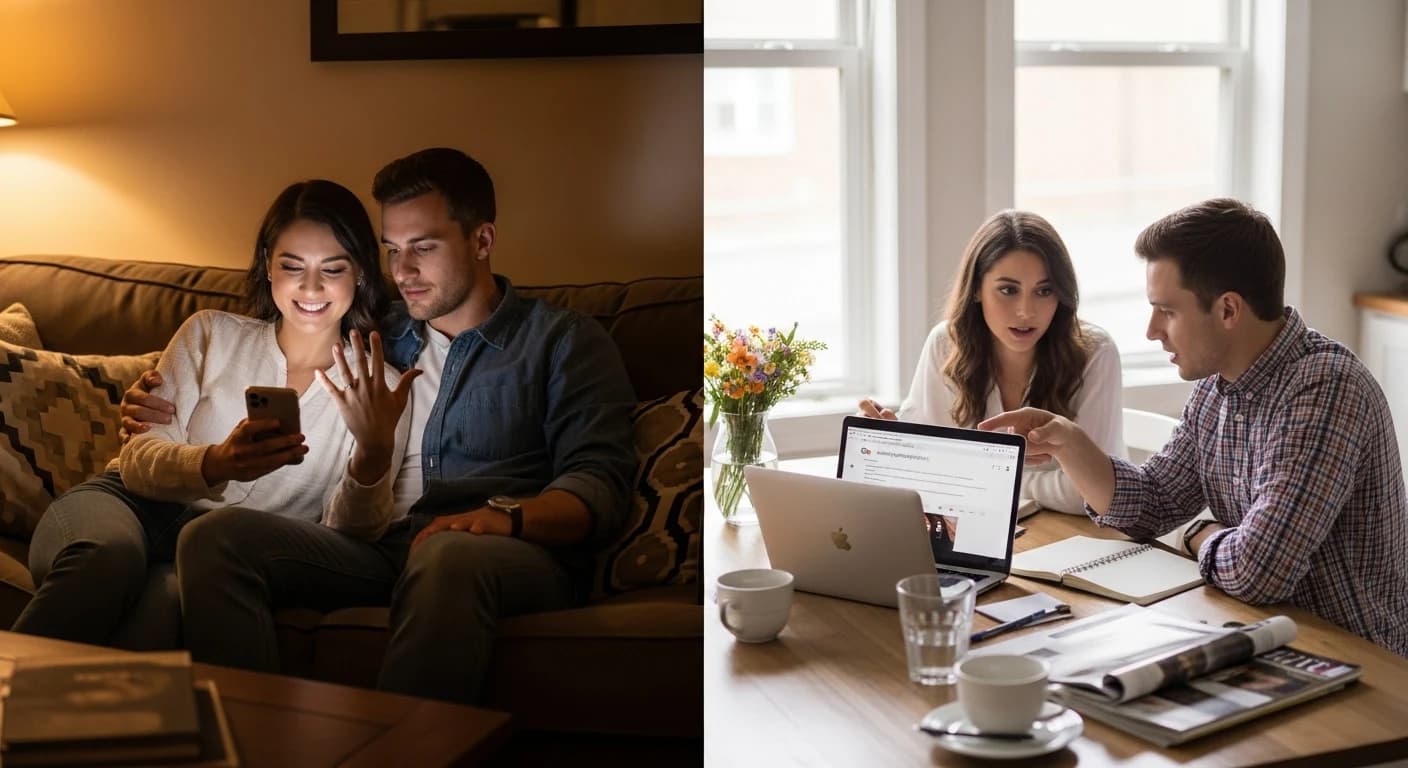
Here's the shift most posts are missing: Gen Z now makes up 51% of engaged couples for the first time in history. They form opinions about your brand in 50 milliseconds. They demand transparent pricing. They use TikTok as a search engine. And they interact with a photographer's brand 6-7 times across multiple platforms before making any booking decision, a journey that often starts before they're even officially engaged.
This guide maps the new system: what broke, what replaced it, and the exact channels worth your time in 2026.

Key Takeaways
- The Knot and WeddingWire now carry a 95% ghosting rate. Their effective cost per booked wedding has climbed to $500–$2,000 against typical $3,500–$5,000 packages.
- Humberto Garcia, founder of Photography to Profits, has helped hundreds of wedding photographers shift from scattered multi-platform burnout to focused systems that generate 50–80% of bookings from referrals alone.
- Carousels drive 3× the save rate of Reels (1.2% vs. 0.4%). Saves are the signal that tells Instagram your content is worth showing to engaged couples, not other photographers.
- 19% of couples begin full wedding planning before they are officially engaged. The studio capturing those couples in November for engagement sessions is first in the door when wedding bookings begin in January.
The Wedding Photography Marketing Playbook Broke in 2025: Here's What Replaced It
Three things happened in 2025 that made the old wedding photography marketing model obsolete.
Gen Z now represents 51% of engaged couples for the first time ever. This generation forms opinions about your brand in approximately 50 milliseconds, and what they see in those 50ms determines whether they go deeper or swipe away. They expect pricing transparency upfront. "Contact us for pricing" is dead. They research vendors on TikTok before they've typed anything into Google. And they are proof-driven in a way that previous generations weren't. Claims about your work don't move them. Real client stories do.
The pre-planning window expanded dramatically. Nearly 1 in 5 couples (19%) enter full wedding planning mode before they are even officially engaged. Active vendor comparison typically begins 10-12 weeks after the proposal. The photographer who captures a newly engaged couple in November for an engagement session has a relationship advantage that every other photographer in that market doesn't have when booking season opens in January.
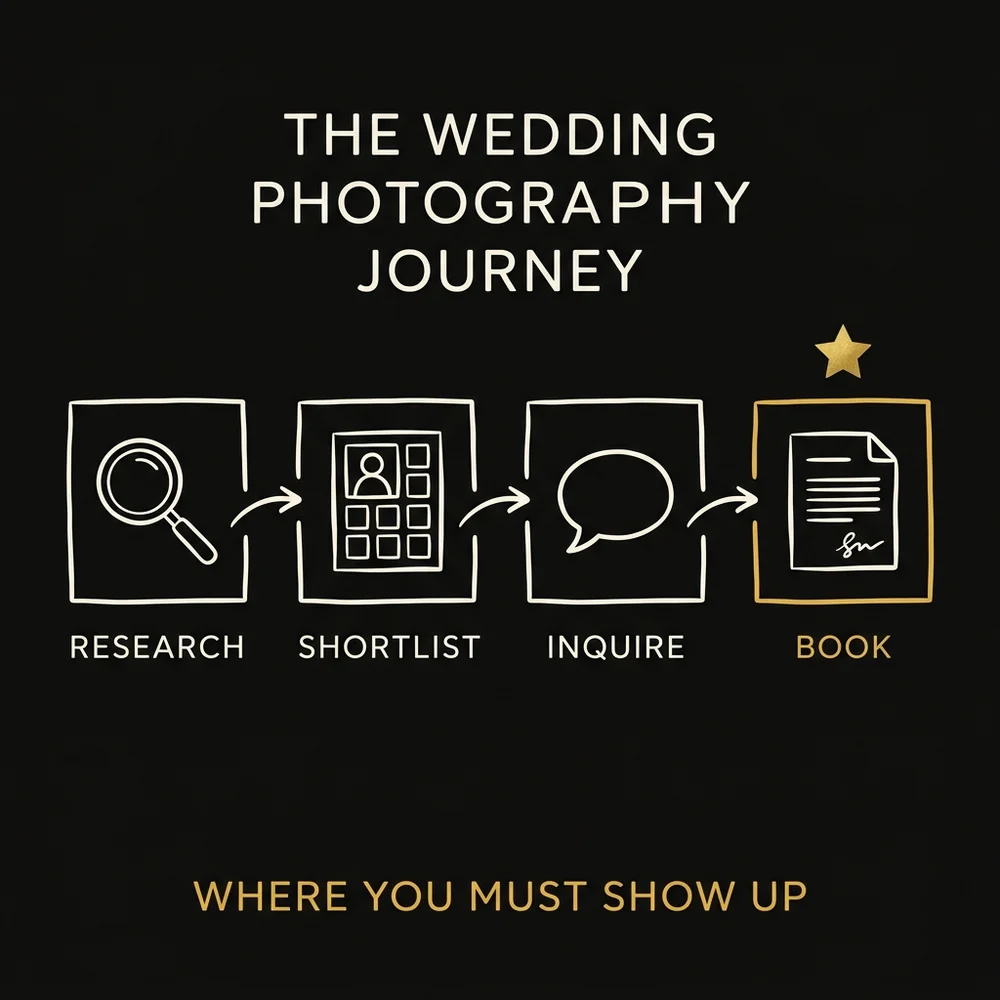
The multi-touchpoint journey replaced single-channel discovery. In 2020, a couple searched Google, found your website, and either emailed or moved on. In 2026, couples interact with a photographer's brand 6-7 times across multiple platforms before making a booking decision, often spanning months. They discover you on TikTok, verify you on Pinterest, read your GBP reviews, scroll your Instagram, visit your website, and then decide. If you're only visible on one of those touchpoints, you're invisible for most of the journey.
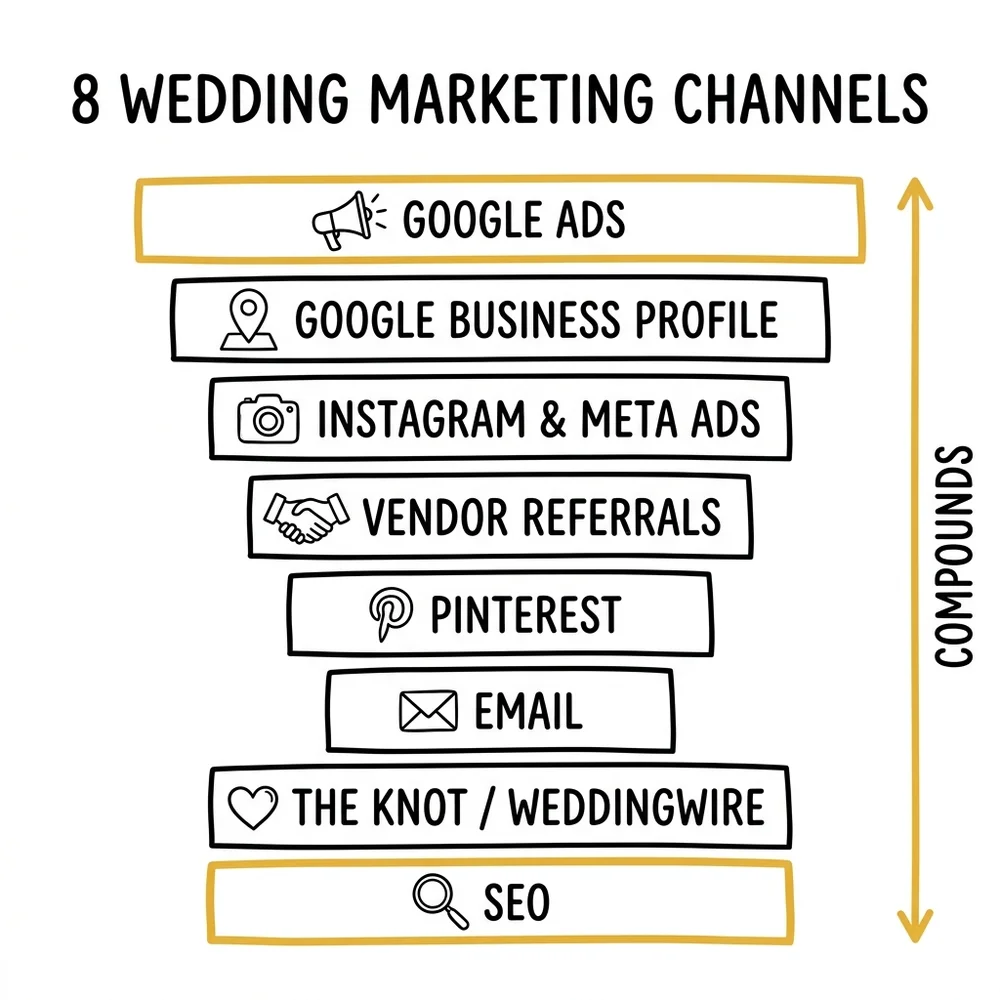
The photographers filling their calendars in 2026 aren't on more platforms. They've stopped doing six things at a C-minus level and committed to three things at an A level. Fewer channels, executed completely, at every stage of how couples actually make decisions.
Here's the pricing math underneath all of this: the national average for wedding photography runs $2,500–$3,500 at the market level, with established studios in the $3,000–$6,000 range and premium/destination work at $5,000–$15,000. To hit $100,000 in net personal income at a $3,500 package requires shooting 46 weddings per year, above the 40-event threshold where solo operators face burnout and quality decline. At $5,000 per wedding, the same $100,000 net requires 32 weddings. Pricing is not a vanity decision. It's a sustainability one. The marketing system you build determines whether you can charge what makes the math work.
The Algorithm Poison Problem (And Why Your Best Photos Aren't Reaching Couples)
Here's the most common reason a wedding photographer can post five times a week, have a stunning portfolio, and still get almost no inquiries from Instagram: algorithm poisoning.
When you post a lens review, a "what's in my bag" video, or a behind-the-scenes discussion of camera settings alongside your wedding content, Instagram's algorithm doesn't just log the individual post. It recategorizes your entire account. Within weeks, your account is classified not as a wedding vendor, but as a photography educator or gear reviewer. The algorithm begins routing your content to other photographers interested in gear, not to the engaged couples in your city who are actively planning weddings.
The damage compounds. Your next beautiful wedding carousel reaches photographers in Ohio. The one after that reaches gear enthusiasts in Tokyo. By the time you realize something is wrong, your account has been misclassified for months. Recovery requires 60-90 days of exclusively couple-focused content to retrain the algorithm.
Visual inconsistency causes the same problem at the portfolio level. When couples see dramatically different editing styles across your posts (one image moody and faded, the next bright and editorial, the next heavy-contrast), they can't predict what their own photos will look like. That uncertainty kills the booking before the conversation even starts. Couples hire based on the aesthetic they see in the feed. Visual variance signals that the aesthetic they're hiring isn't guaranteed to be the one they'll receive.
The fix is ruthless content segregation. Your wedding photography Instagram account posts nothing but content that speaks directly to engaged couples: their questions, their fears, their planning problems, their emotions. If you want to discuss gear or connect with other photographers, do it on a separate account or not at all. Your business account exists for one audience. Give it one signal. The algorithm rewards clarity about who you serve.
The 4-2-1 Instagram Formula That Actually Books Weddings
Here's the data most Instagram strategy posts for photographers get wrong.
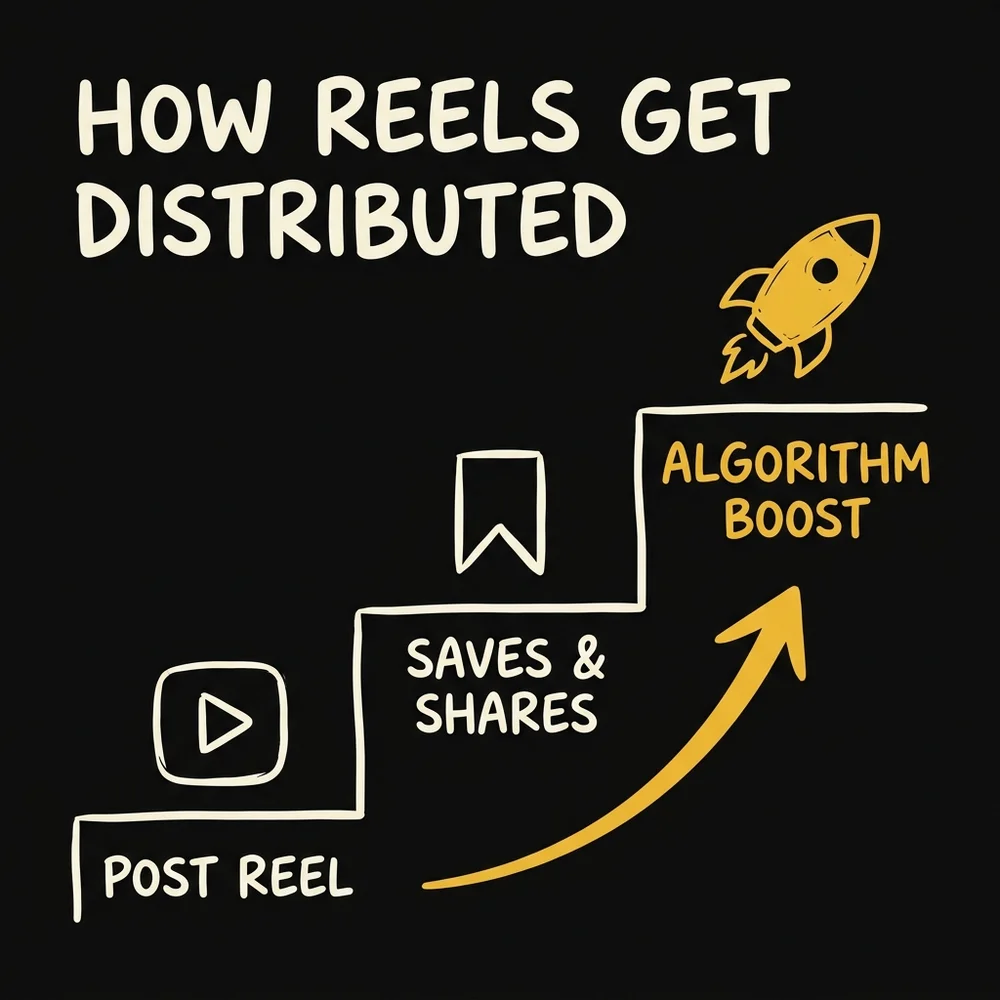
Reels get 33% higher reach to non-followers, which is why every piece of advice says "post more Reels." But reach isn't what books weddings. Saves are. And carousels earn 3× the save rate of Reels: 1.2% vs. 0.4%. When a couple saves your carousel of "5 things to ask your wedding photographer before booking," Instagram reads that save as a strong signal that the content deserves wider distribution to engaged couples with similar interests. When they passively watch a Reel, Instagram routes more Reels, not more of your specific content, to their feed.
The formula that balances both: the 4-2-1 ratio.
- 4 carousels per week (educational): Each one answers a specific question a planning couple would search. "How to build a wedding day timeline." "3 things that ruin ceremony photos." "What golden hour engagement sessions actually look like." Educational content gets saved. Saved content gets distributed. Distribution reaches engaged couples who aren't following you yet.
- 2 Reels per week (discovery): Raw emotional moments from real weddings. The groom seeing the bride for the first time. Laughter during portraits. Tears at the ceremony. No logo, no voiceover, no CTA. Just feeling. Reels extend your reach to strangers. Carousels convert them.
- 1 static post per week (brand): Your best single image as a visual anchor. Don't expect it to grow your reach. Use it for brand continuity.
Every caption speaks to the couple, not about you. "You were nervous the entire shoot. You kept asking if the photos were okay. These are the photos." is a caption. "Incredible fall light at [venue]" is not. The difference: one of those captions makes a bride save it and send it to her fiancé. The other gets a like from a photographer and disappears from the algorithm's attention.
The goal of every Instagram post isn't likes. It's a DM that says "where are you located?" That's the metric worth tracking.
TikTok and Pinterest: The Two Platforms Wedding Photographers Are Sleeping On
TikTok: 49% of U.S. consumers now use TikTok as a search engine, not just a feed. The platform jumped from serving 15% of couples as a top wedding planning resource in 2025 to 25% in 2026. A 10-point increase in 12 months is not a trend to monitor. It's a platform to be on now, while the competitive density is still low among wedding photographers.
The TikTok algorithm does not care about follower count. A new account with zero followers can reach tens of thousands of engaged couples if the content triggers the right signals: completion rate (do people watch to the end?), satisfaction (do they save or share?), and search relevance (does it answer what couples are searching for?). Content structured around questions ("3 things to ask before booking your wedding photographer," "what nobody tells you about golden hour weddings at [venue name]") ranks in TikTok search the same way a blog post ranks in Google. Couples find it weeks or months after you post it. This is a search engine play disguised as social media.
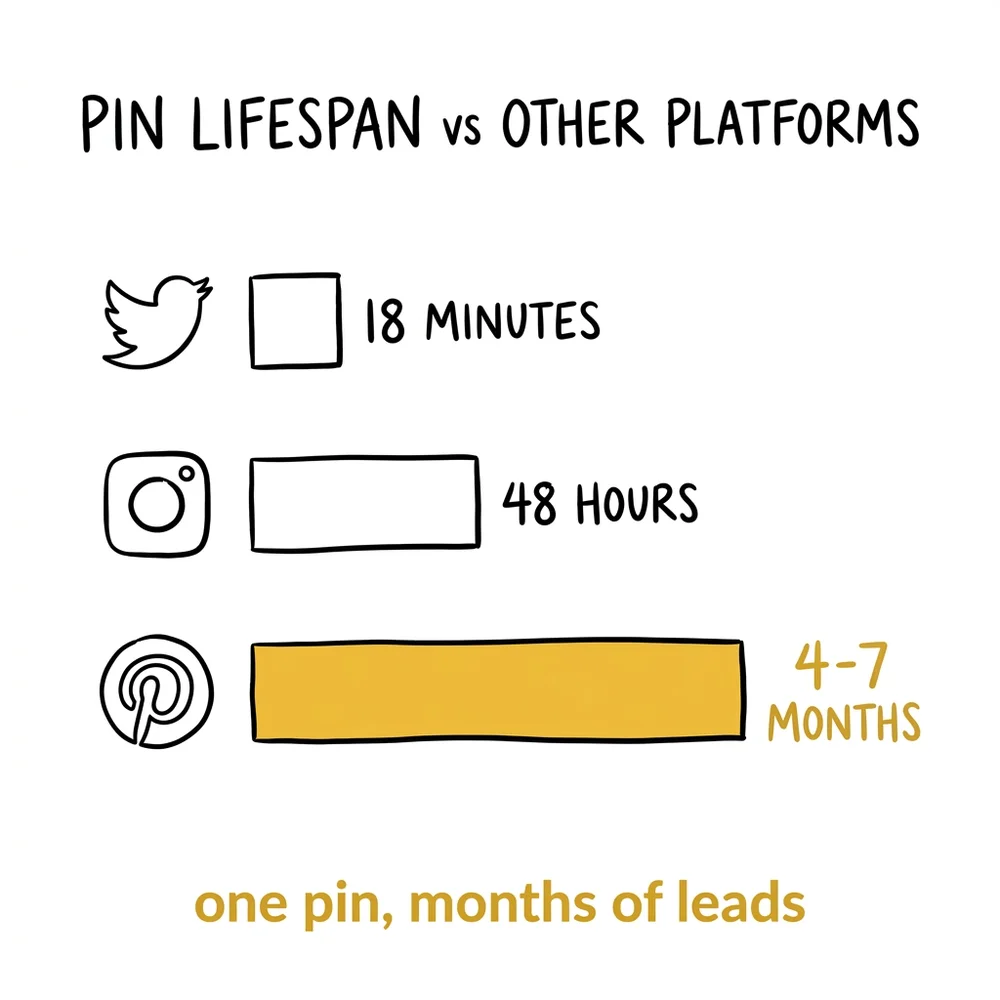
Pinterest: 77% of couples use Pinterest during wedding planning. Pinterest is not social media. It's a visual search engine with 18-24 month content lifespans. A pin you post today can drive qualified traffic to your booking page for two years. Instagram gives you 48 hours for the same content.
The strategy shift that matters in 2026: pins need to be keyword-first, not aesthetic-first. A pin titled "Laguna Beach wedding photographer: golden hour ceremony portraits" outranks a beautiful pin with no location keywords every time. Couples search Pinterest using the same terms they'd type into Google. Every pin needs those terms in the title and description. And every pin should link directly to your booking page or engagement inquiry form, not to a blog post that adds another step in the funnel before the couple can reach you.
Practical implementation: batch 15-20 pins per wedding from each gallery you shoot. Name them with venue, city, and style. Schedule them across 2-3 weeks using Tailwind. One 30-wedding year generates 450-600 pins. Compounding over 12 months, this is a search presence that rivals what most photographers have built with years of SEO work, for minimal ongoing effort.
Want a full multi-channel marketing system built and managed for your studio?
See how P2P's done-for-you approach works →Google Business Profile: The Free Channel Booking 64% of Wedding Pros' Leads
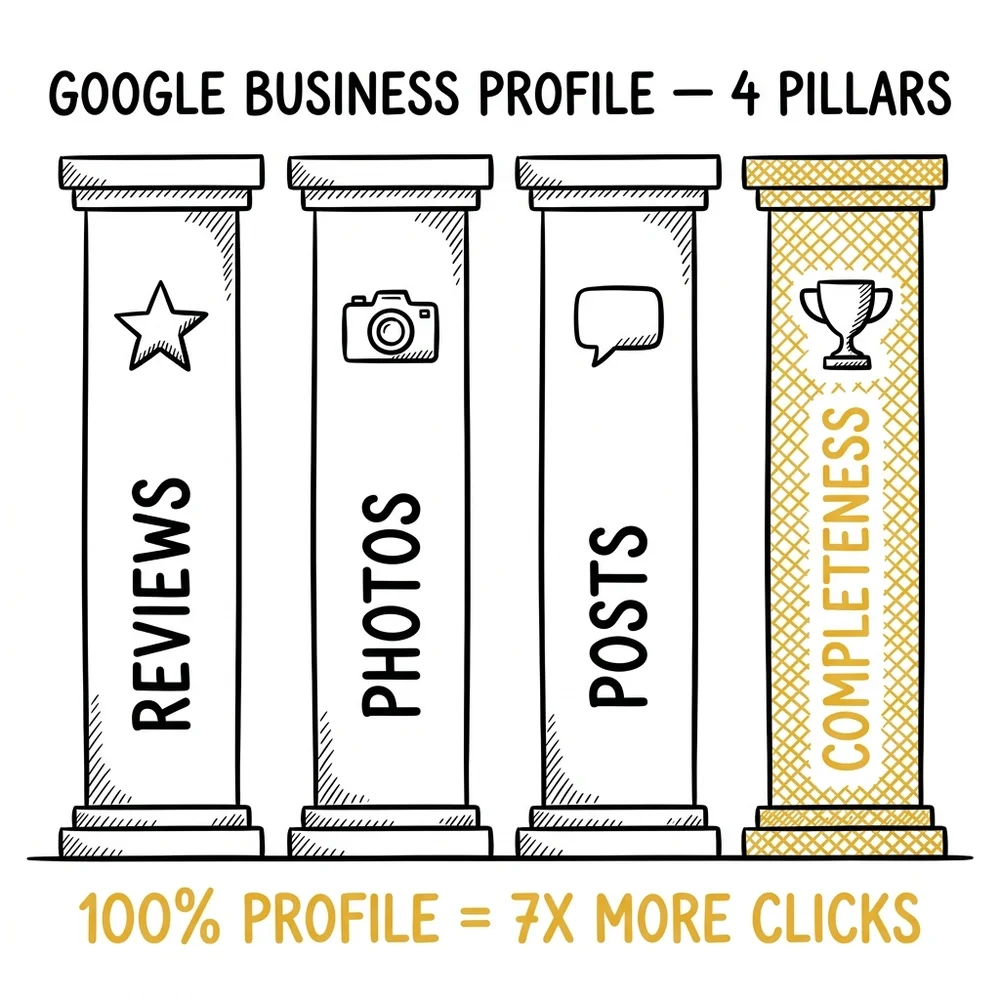
64% of wedding professionals cite Google as their top lead source in 2026. A significant portion of that is Google Business Profile, the listing that appears before organic search results and before paid ads when a couple searches "wedding photographer near me" or "wedding photographer [your city]."
Most studios claim a profile and stop there. The studios generating consistent, high-intent inquiries from GBP are doing these five things every week without exception:
- Upload 5-10 venue-tagged photos weekly. Venue-tagged photos appear in venue-specific searches, one of the highest-intent discovery moments in wedding planning. A couple who has already chosen their venue actively searches for photographers familiar with that space. If you have photos tagged at that venue in your GBP, you appear in that search. Couples searching "[venue name] wedding photographer" are almost always ready to book.
- Publish 1-2 GBP posts per week. Use real wedding images with venue names in the caption. These index in both Google Search and Maps. A couple searching for photographers six weeks from now can find a post you published today.
- Pre-populate your Q&A section. Don't wait for couples to ask questions. Add 10-15 of your own: "What's your booking process?" "Do you travel for weddings?" "What's included in your packages?" These appear directly in search results, answering objections before a couple has even clicked through to your website.
- Build reviews aggressively. Businesses with 10+ Google reviews get algorithmic preference in local search rankings. At 100+ reviews, you see 270% more calls than profiles with fewer than 10. The fastest review acquisition: send an SMS with a direct Google review link within 48 hours of gallery delivery, when emotional satisfaction is at its highest.
- Reply to every review within 24 hours. Google treats review responses as an activity signal. Non-responding profiles rank lower over time. This takes 90 seconds and has measurable impact on your position in local searches.
Studios hitting all five benchmarks consistently report a 40-60% increase in GBP profile views within 90 days. That's not a dramatic claim. It's the compound effect of weekly activity in a category where most competitors check their profile quarterly.
Why The Knot Is Bleeding You Dry (And What to Spend That $3,600 On Instead)
If you're still on The Knot or WeddingWire, run this math right now.
Photographers who were on WeddingWire in 2020, paying $1,500 annually and booking 15 weddings, now pay $3,600 annually and book 0-2 weddings, with a 95% ghosting rate on inquiries. When you account for the CRM fees required to manage shared leads and the hours spent chasing non-responses, the effective cost per booked wedding runs $500-$2,000. Against a $3,500-$5,000 wedding package, that math doesn't work. It hasn't worked for most photographers since 2023.
The structural problem with both platforms: they send your inquiry to 5-10 competing photographers simultaneously. The couple is price-shopping before they've met anyone. You're not competing on relationship, portfolio, or experience. You're competing on speed of response and willingness to discount. The platforms train couples to treat photographers as interchangeable commodities. That is a race you do not want to win.
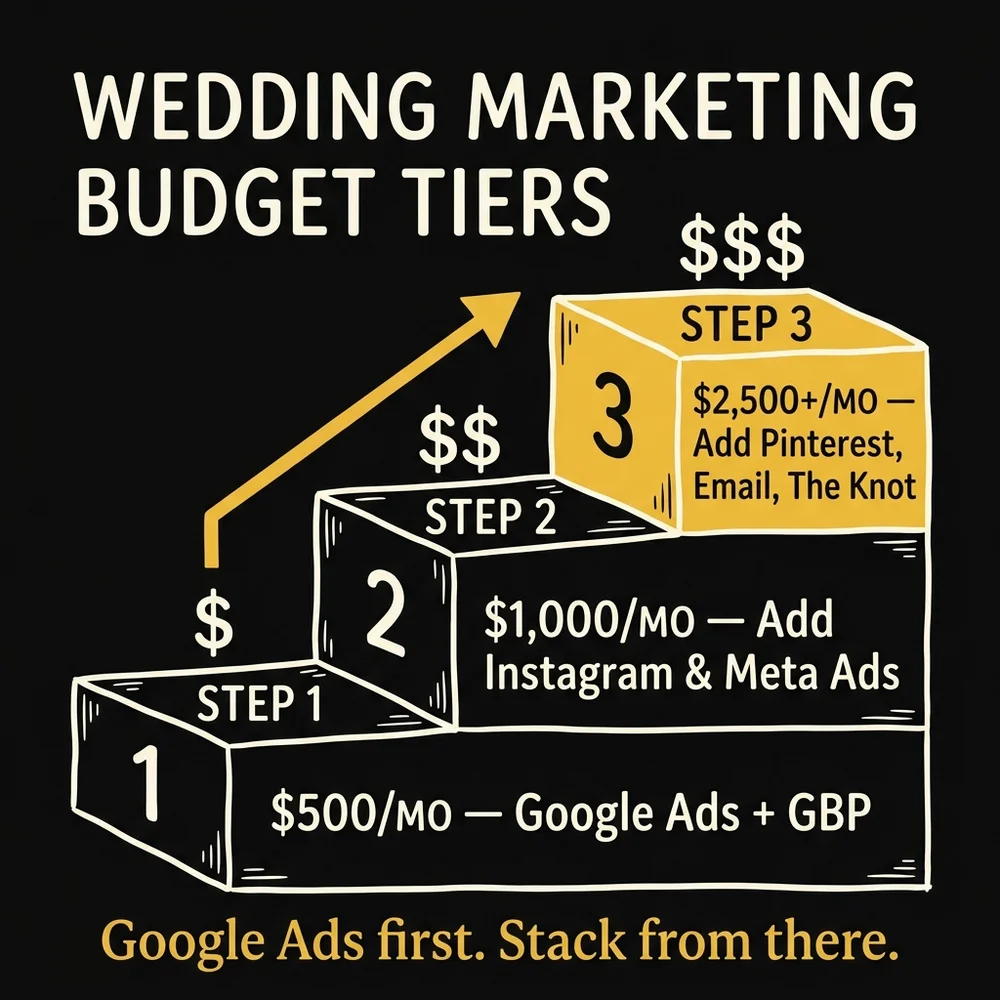
The exception: smaller markets with fewer than 20-30 competing listings where volume can still justify the spend. Verify with real numbers: divide your annual platform cost by actual weddings booked from that source. If the result exceeds $400, redirect that budget as follows:
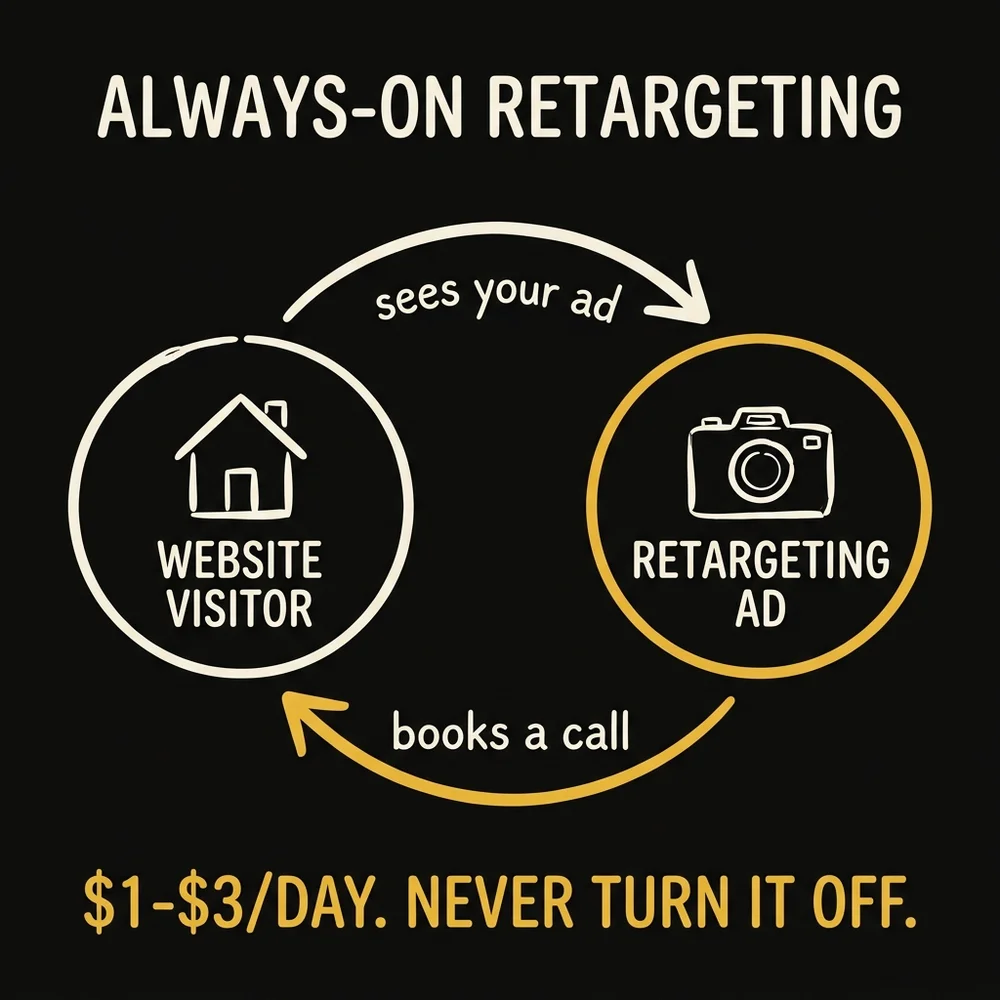
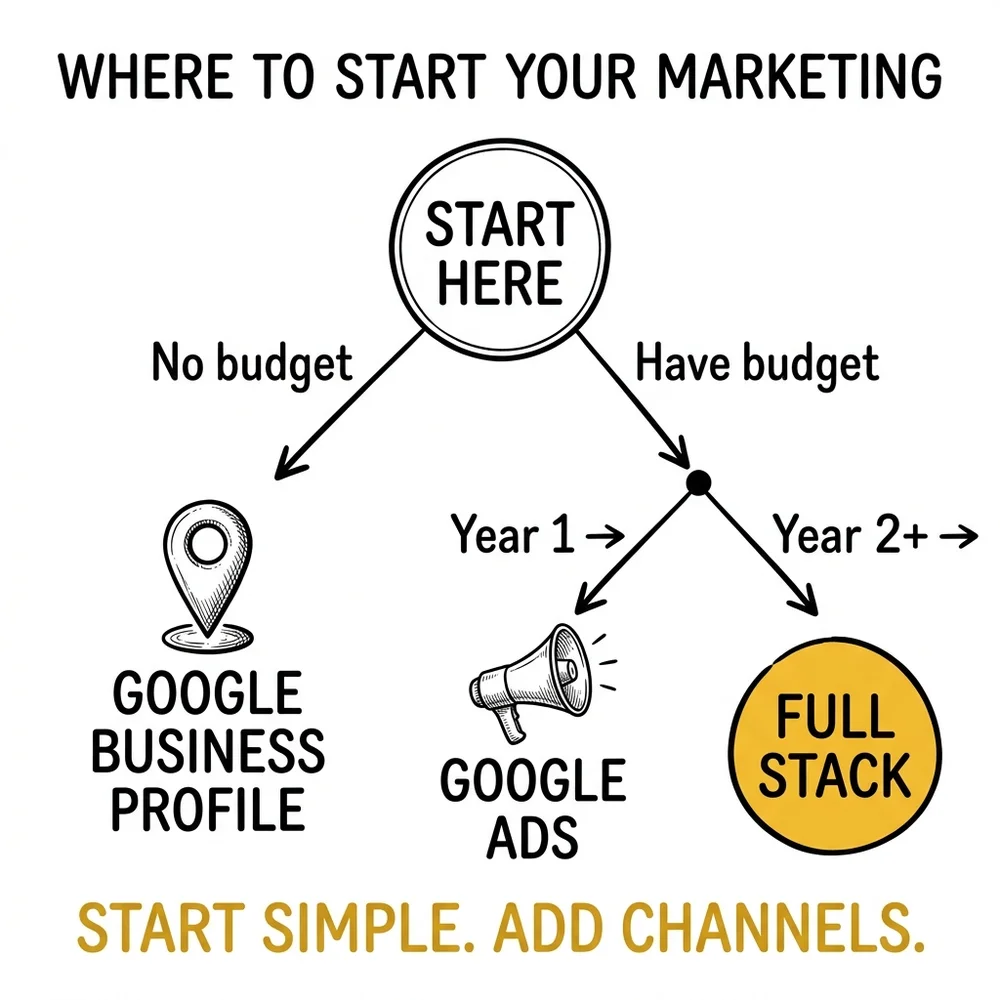
Level 1, retargeting ($5-10/day, set-and-forget): The best first move for any photographer with existing website traffic. You're not prospecting strangers. You're following up with warm leads who already know you exist. Build three audiences: website visitors from the last 180 days, Instagram engagers from the last 90 days, and pricing page visitors from the last 30 days. Budget $5-10/day. Run one static image ("Still thinking? 4 dates left for 2026"), one short Reel under 15 seconds, one testimonial graphic. This setup takes one afternoon. The ongoing time requirement is 10 minutes per week to check that it's spending.
Level 2, Google Ads ($500-$1,500/month): These leads are pulling. They're already in buying mode when they search "wedding photographer [your city]." Conversion rates from Google search run 15-25% for photographers with structured campaigns, making Google cost-effective despite higher CPCs than social. Bid on genre-specific + location-specific terms: "[your city] wedding photographer," "[venue] wedding photography." Never bid broadly on "wedding photographer": too competitive, not specific enough to your market.
Level 3, the full Meta funnel: Cold audiences get emotional content only: no CTA, no portfolio showcase, just 15-30 seconds of raw wedding moments (first look, ceremony tears, reception laughter). Warm audiences (past Instagram engagers + website visitors) get a behind-the-scenes story or one real client testimonial. Hot audiences (pricing page visitors, past inquirers) get a direct availability message. This three-stage structure is what allows Meta Ads to generate consistent pipeline at the lowest cost per lead in the paid channel stack. The Proof-to-Paid Loop (post proof organically, let engagement signal what works, turn the winners into ads) is the flywheel that makes the system improve automatically over time.
Want P2P to build and manage your complete paid advertising funnel, retargeting through cold?
See how our done-for-you Meta Ads service works →The Engagement Session Funnel: Capturing Couples Before Every Other Photographer
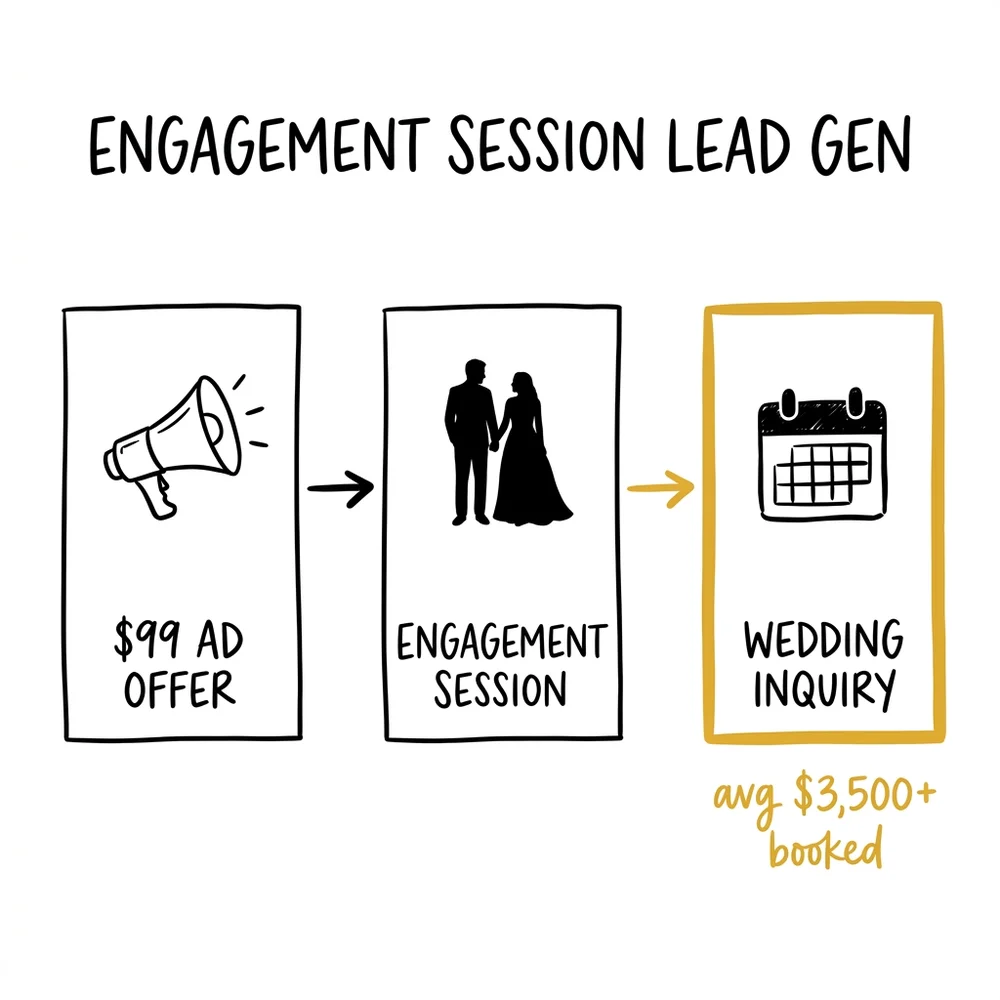
19% of couples begin full wedding planning before they are officially engaged. Active vendor comparison starts 10-12 weeks after proposals. Most photographers are only visible during the vendor-comparison window, when couples are already on shortlists and comparing prices. The engagement session funnel gets you in front of couples before that comparison window even opens.
The strategy: starting in November, run Meta Ads targeting newly engaged couples in your area. Use Meta's Life Events targeting ("Newly Engaged, 6 months"), layer in wedding-related interests (The Knot, bridal magazines, wedding venues), set a 20-50 mile geographic radius, aged 22-36. The offer isn't your wedding package. It's a standalone engagement session.
Two offer structures work:
- Volume approach ($0-$99 engagement session): "Just engaged? We're gifting [City] couples a complimentary engagement session this month." Highest lead volume: CPL runs $8-25 via Meta Lead Forms. Requires strong intake qualification to filter out couples who want free photos but aren't realistic wedding prospects. Best for photographers who want volume and are comfortable with a higher-touch qualification process.
- Quality approach (complimentary session bundled with wedding booking): "Book your 2026 or 2027 wedding package and receive a complimentary engagement session (a $300 value, included)." Lower volume, higher intent. Best for established photographers who want fewer, more qualified conversations.

Photo: Hoi An and Da Nang Photographer / Unsplash
The conversion window closes fast. Deliver the engagement session gallery within 5-7 days, not 3-4 weeks. When emotional satisfaction peaks, the next step converts. Wait a month and the couple has moved on, is now comparing four other photographers, and the relationship advantage you built in the session has evaporated.
At gallery delivery, don't say "let me know if you're interested in wedding coverage." Say: "Would it make sense to meet this week to talk about your wedding date? I have Tuesday at 2pm and Thursday at 4pm open, which works?" Direct calendar invitations convert 3-5× higher than open-ended asks. This is not a soft suggestion. It's the step that makes the funnel work.
One more factor: respond to engagement session inquiries within 1 hour. Couples who receive a response within 1 hour are 7× more likely to book than leads that sit 24 hours. Couples are contacting multiple photographers simultaneously. Speed-to-lead is a conversion lever, not a courtesy.
Vendor Referrals: The System That Fills Your Calendar While You Sleep
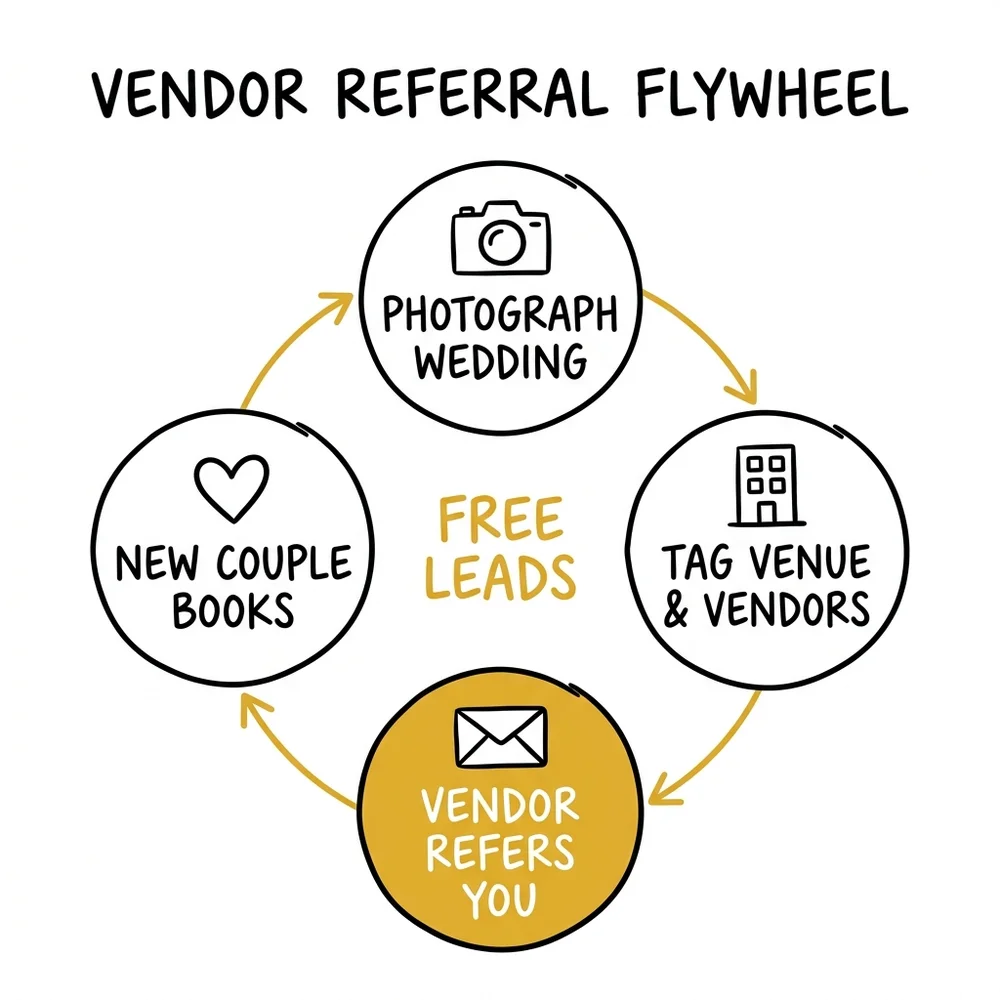
Seven consecutive years of Zenfolio industry survey data point to the same conclusion: referrals are the single most reliable booking source for wedding photographers. Established studios attribute 50-80% of their calendar to referrals, from past clients and from vendor networks. This doesn't happen passively. It's a built system.
The venue photo gift strategy: After every wedding at a new venue, send the coordinator 10-15 edited images of the venue space specifically: wide shots, exterior shots, detail shots that showcase the venue's architecture and lighting. Not just close-up couple portraits. Images the venue can actually use for their own Instagram and website marketing. Do this within 24-48 hours. This single gesture has converted into preferred vendor list placements at venues where photographers previously had no relationship. The coordinator posts your images, credits you, and her entire engaged-couple audience sees your work associated with their venue. You've created value first, before asking for anything.
The sample album placement: Offer a printed album of a real wedding at that venue for display in their showroom or bridal suite. Couples touring the venue see your work in the exact space they're considering booking. This is documented consistently as the highest-converting passive referral mechanism in the wedding industry. You invest the cost of one printed album, typically $150-$350. The venue generates leads for you for years.
The holiday physical card: Send a card at Thanksgiving or New Year's with a handwritten note and 2-3 printed 4×6 images from weddings you shot at their venue that year. Physical mail is opened because it's rare. Physical mail with a handwritten note from a vendor is remembered because almost no one does it. Your competitors are sending a generic digital "Happy Holidays" email to the same coordinator. You're putting something on her desk that might stay there for months.
The referral ask from past clients (the script matters): "Feel free to refer me if you think of anyone" converts at nearly zero. "If any of your friends just got engaged, I'd love an introduction. I have 4 Saturdays left open for 2026" converts because it's specific, timely, and implies scarcity. Offer a referral incentive of $100-$200 toward prints or albums, not a discount on wedding coverage, because a wedding client won't rebook. Send this ask within 48 hours of gallery delivery at peak emotional satisfaction. That timing is not a detail. It's why the ask works.
Photo: Kari Bjorn Photography / Unsplash
One more referral channel worth the investment: styled shoots submitted to publications like Style Me Pretty, Green Wedding Shoes, or Magnolia Rouge through Two Bright Lights. A feature generates 2-3 high-authority backlinks that improve your Google rankings, creates the "As seen in Style Me Pretty" credibility signal that converts price-sensitive couples, and builds relationships with every vendor on the shoot (florists, planners, venues) who now know your work and can refer you.
The Revenue Formula: Why "More Leads" Is the Wrong Goal
Photo: Hoi An and Da Nang Photographer / Unsplash
Every wedding photography business runs on three numbers: Leads × Booking Rate × Average Sale = Revenue.
Most photographers obsess over the first number. They spend more on ads, post more on Instagram, buy another directory listing, all in pursuit of more leads. The math reveals why that's often the wrong lever:
A photographer with 20 leads per month, a 15% booking rate, and a $4,500 average sale books 3 weddings and earns $13,500 in monthly revenue. If she doubles her leads to 40 (same booking rate, same sale), she makes $27,000, but now manages twice the inquiry volume.
If instead she keeps 20 leads and improves her booking rate from 15% to 30% (by responding within 1 hour, running a structured consultation call, and following up with a 4-email sequence), she also makes $27,000. From the same leads she was already generating. No additional ad spend required.
Improve all three modestly: 30 leads × 30% booking rate × $5,500 average sale = $49,500/month. That's a 3.7× increase with proportionally modest changes across each lever.
The booking rate is the most underworked lever in wedding photography. Photographers who respond within 1 hour close at 7× the rate of those who respond in 24 hours. A structured consultation call (not just answering questions, but guiding the couple to understand why you're the right choice) moves people who were comparison-shopping into clients who feel like they've already decided. Email follow-up sequences keep you visible during the 2-8 week decision window when couples are comparing multiple photographers.
The copy that brings them in matters just as much. In Chapter 14 of 7-Figure Studio, Humberto introduces what he calls the 3 AM Scroll, the internal monologue running through a newly engaged woman's head before she decides whether to book: "Where would we even shoot? Will he be awkward the whole time? Can this photographer do our wedding too, or do I have to find two people? And we just spent everything on the venue deposit." Your marketing either speaks to that monologue or it doesn't. The complete framework for writing website copy, ad creative, and email sequences that convert that midnight anxiety into a morning inquiry (for weddings, for every genre) is inside 7-Figure Studio.
Conclusion: The System That Fills Wedding Calendars in 2026
Photo: Stephen Andrews / Unsplash
The wedding photographers filling their calendars in 2026 are not on more platforms. They've stopped doing six things at a C-minus level and committed to three things at an A level. Their Instagram account posts exclusively to engaged couples: the 4-2-1 formula, no gear content, no mixed signals for the algorithm. Their GBP gets venue-tagged photos weekly and review requests every 48 hours post-delivery. Their engagement session funnel runs in November to capture holiday proposals before any other photographer is visible. Referrals account for 50-80% of bookings because they built the vendor referral system, not because they got lucky. Their The Knot budget went to $5-10/day retargeting that follows warm leads they were already losing. And when a lead comes in, they respond in under an hour.
Photography to Profits, founded by Humberto Garcia, builds these systems with wedding photographers, from the paid channels and SEO through the consultation script and follow-up sequences that convert inquiries into signed contracts. Pick the channel that fits your current situation. Execute it for 90 days. Layer the next one in. The calendar fills incrementally, and then permanently.