Most of the photography pricing advice photographers get is focused on the wrong number.
The debate is always about the session fee. Raise it, lower it, justify it, protect it. Photography Facebook groups dedicate entire threads to whether $300 is "too cheap" or whether $800 "attracts the right clients." Photographers spend hours agonizing over this number, one that, in the highest-earning studios, barely matters.
Here's what they don't tell you: the session fee is not your revenue. It's your door. And the photographers fighting hardest to keep it high are often the ones with the emptiest calendars.
In this guide, I'll break down every major photography pricing model: shoot-and-burn, packages, à la carte, and in-person sales (IPS), with real revenue numbers attached to each. You'll see exactly why two photographers with identical skills and portfolios can be on completely different income trajectories, and what the highest-earning P2P studios do differently.
Key Takeaways
- Photography has six main pricing models. Two of them (IPS and à la carte) can consistently produce $5,000+ per client when run correctly.
- Humberto Garcia, founder of Photography to Profits, has helped photographers shift from $300 shoot-and-burn averages to $5,000+ in-person sales averages: same market, same clients, different model.
- The #1 pricing mistake is treating the session fee as revenue. It isn't. It's an entry point. The real sale happens after the session, at the reveal.
- Action step: Calculate your current revenue per client (total annual revenue ÷ clients booked). If it's under $1,500, the model needs to change, not the session fee.
Why Most Photographers Are Arguing About the Wrong Number
Go into any photography Facebook group and ask about pricing. You'll get hundreds of responses, all about the session fee. Raise it. Lower it. Add a minimum purchase. Make it refundable. Offer a discount if they book today.
Nobody in those threads is talking about what clients spend after the session. Nobody's discussing wall art, album collections, or average order values at the reveal. Every comment is about the front door, never about the back of the house where the real money is made.
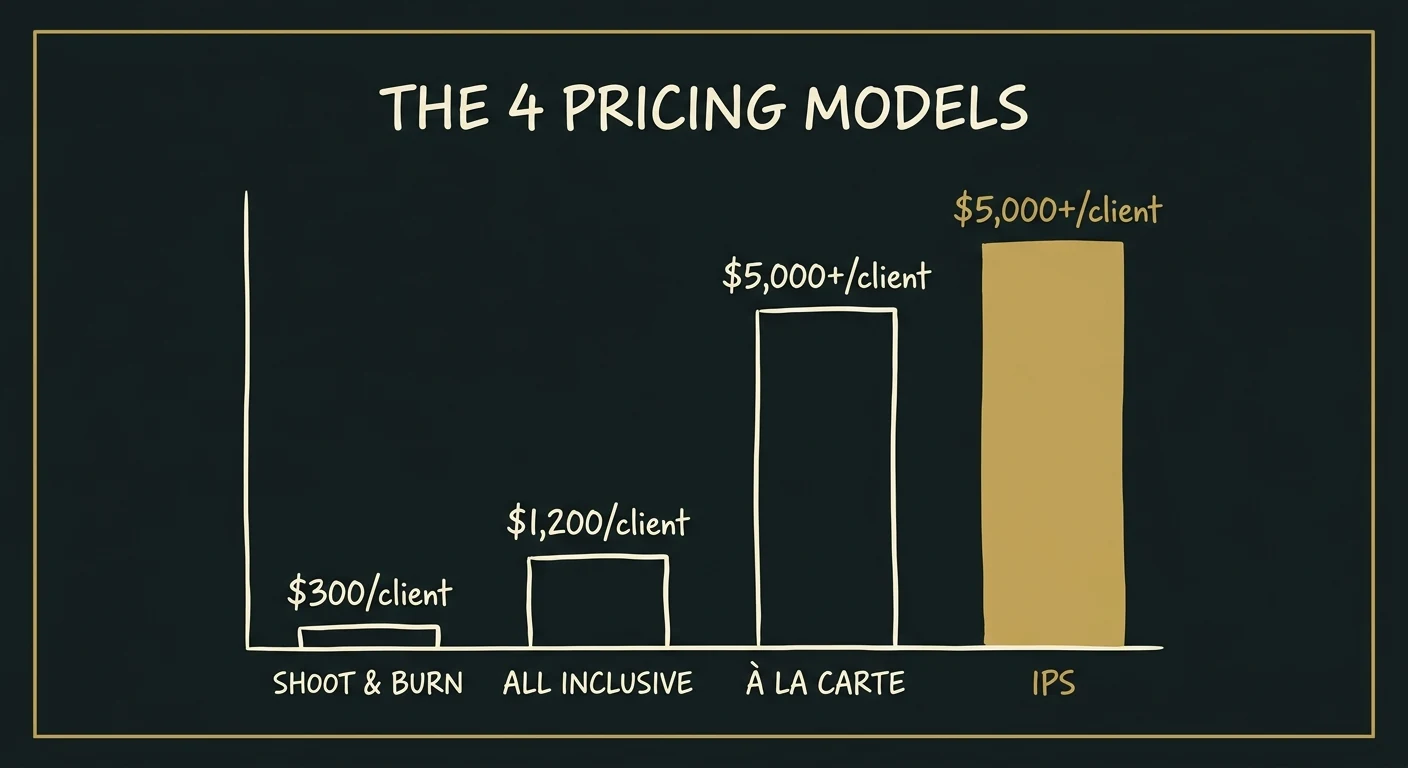
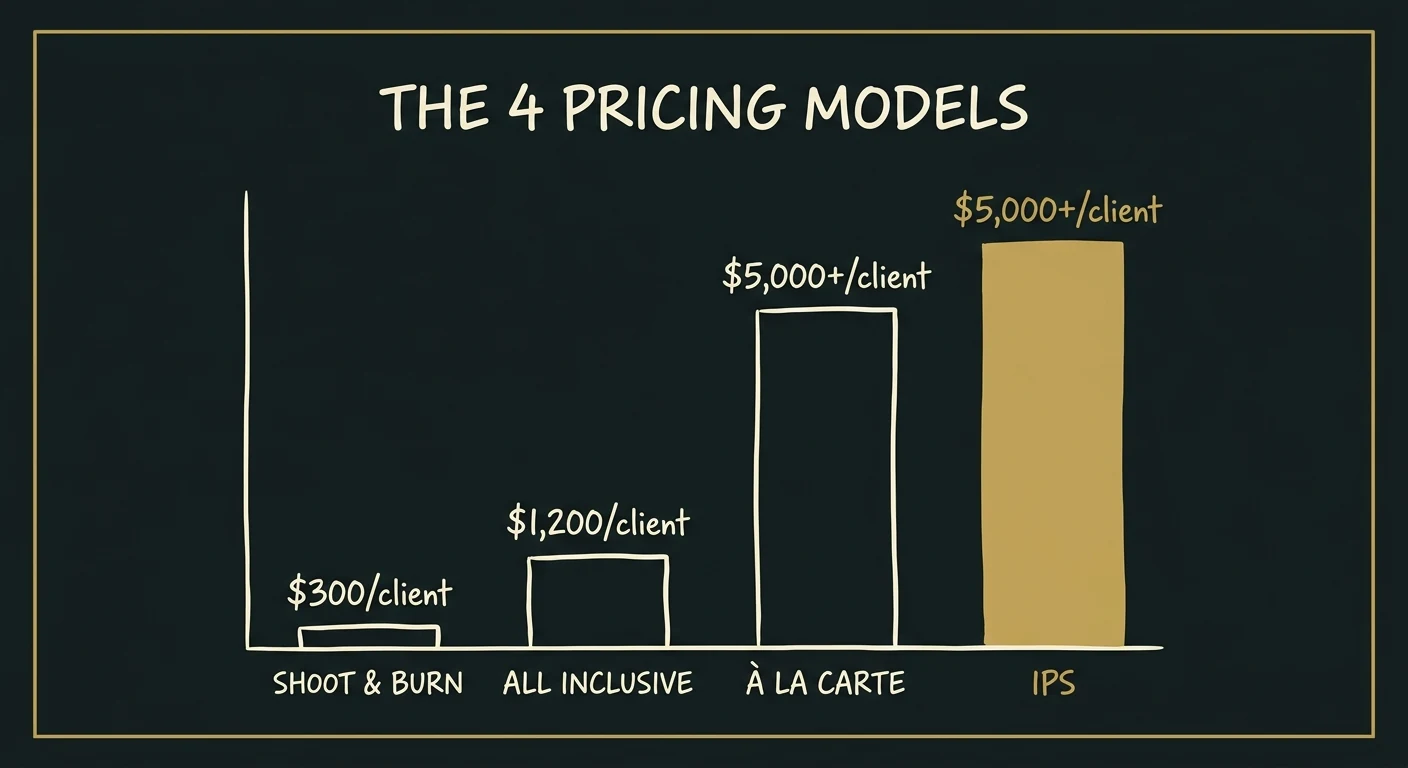
I've worked with studios charging $1,500 session fees who were earning less per client than studios charging $99. That's not a typo. I'll show you the math later in this post. But first, you need to understand how the four pricing models actually compare.
The Photography Pricing Models (What Each One Actually Earns)
Here's an honest breakdown of every model photographers use, what it typically produces, and where it breaks down.
Shoot and Burn
The photographer charges a flat fee (usually around $300) and delivers all edited digital files. The client owns everything. There's no upsell, no product, no follow-up purchase.
Average per client: $300. This model trades convenience for a capped ceiling. Volume is the only lever, and volume burns out photographers fast.
Photography Packages
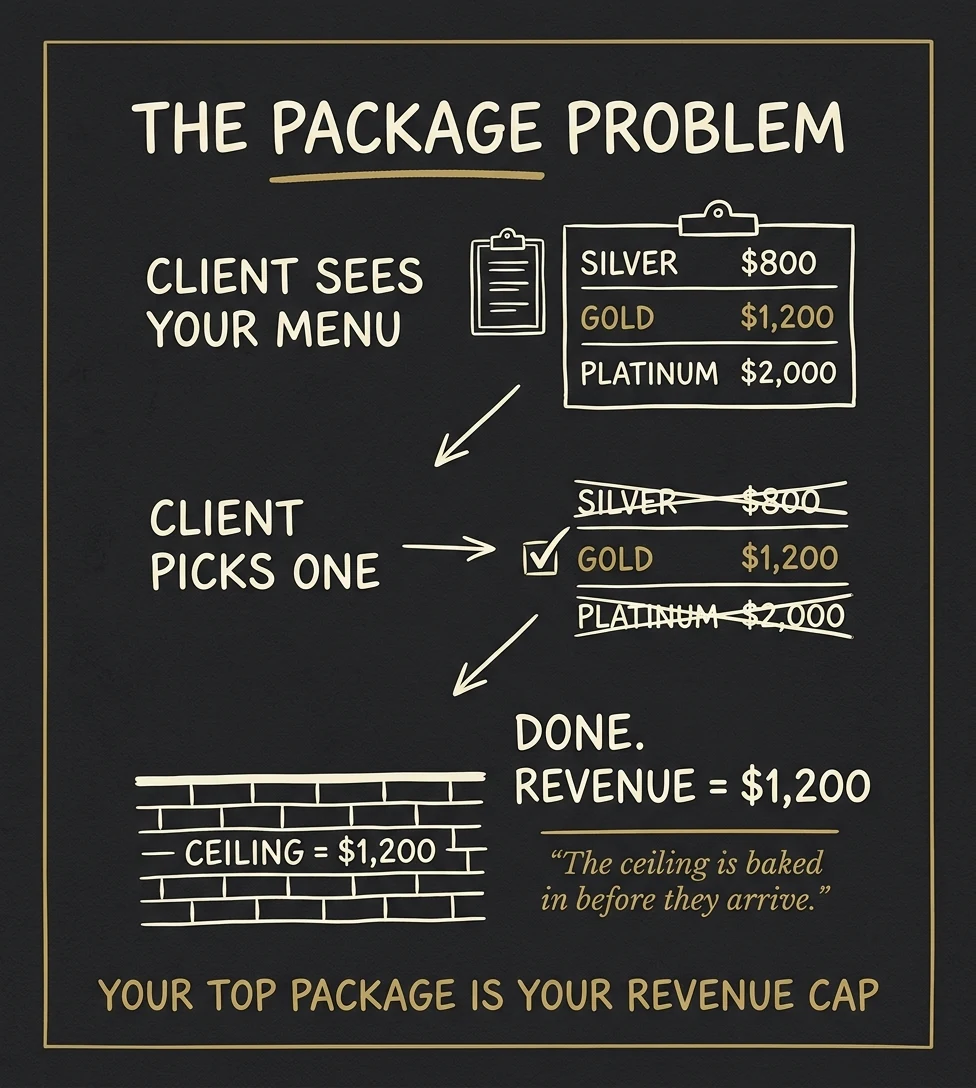
Bundled pricing: a session fee plus a set number of images, sometimes with print credits or digital downloads included. More structure than shoot-and-burn, but still capped at whatever the package costs.
Average per client: $800–$1,500. Better than shoot-and-burn, but the ceiling is built into the package price. Upsells feel awkward because the client already paid for a "complete" experience.
À La Carte
Clients pay per image or per product after the session. There's no ceiling, and when combined with a reveal appointment (rather than a self-serve online gallery), à la carte can match or exceed IPS revenue. The difference is when and how the client sees their images for the first time.
Average per client: $5,000+. When run with a proper in-person reveal, à la carte is effectively the same model as IPS, just structured as individual line items rather than bundled collections. Some studios using à la carte pricing actually outperform fixed-collection IPS studios because there's no bundle cap on total spend.
À La Carte vs. Packages: The Real Difference
À la carte and IPS are structurally almost identical: both involve a reveal appointment, both involve selling physical products in person. The only real difference is the menu.
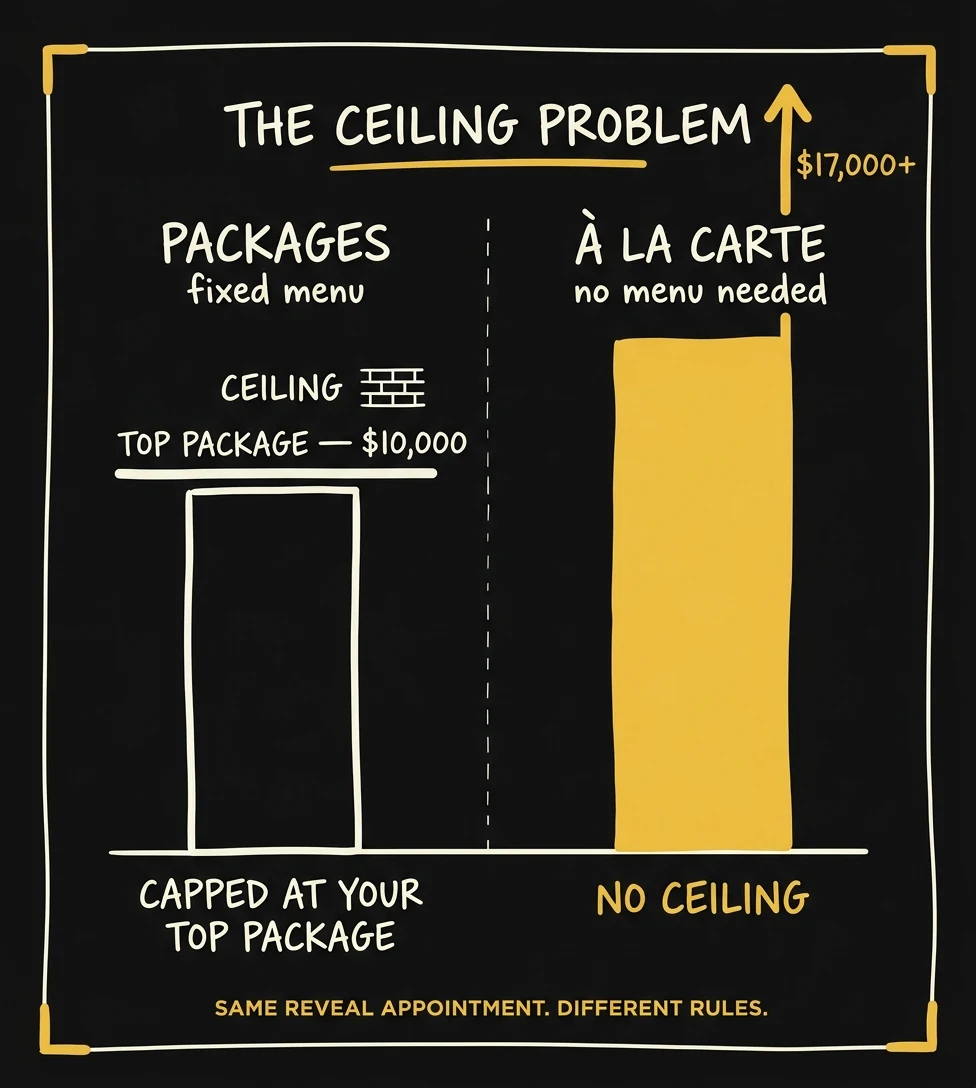
Packages give you guard rails. The top package is the ceiling. If your highest-priced collection is $10,000, that's the most any single session can produce. The menu is clear. The client picks one.
À la carte has no ceiling. A skilled, confident photographer can build a $17,000 sale from a single session: six large framed prints, a full wall gallery, a heirloom album, multiple digital packages. There's no bundle that caps it. The only limit is what the client wants and what the photographer has the confidence to present.
But the absence of guard rails cuts both ways. À la carte requires more skill in the room. There's no price list to fall back on. Package photographers who freeze in silence have a menu to point to. À la carte photographers have to hold the space, read the client, and build the sale in real time.
The photographers who succeed most with à la carte tend to be those who have packages in their head (they know what a "typical" collection looks like) but are willing to go beyond it. That's the real unlock: sell your top package, then keep going. Top package plus extra wall art, plus a second album, plus add-ons. That's à la carte thinking with a package foundation underneath it.
All Inclusive / Hybrid
The client pre-buys a complete package upfront (typically around $1,200) that includes all digital files plus a small product: a mini album, small prints, or a gift box. There's no reveal appointment and no upsell. The appeal is simplicity: clients know exactly what they're getting and what it costs before they book.
Average per client: ~$1,200. Revenue is predictable and the experience is frictionless, but the ceiling is baked in at whatever the package costs. For photographers who don't want to run reveal appointments, this is a cleaner option than shoot-and-burn while still delivering a tangible product.
Mini Sessions
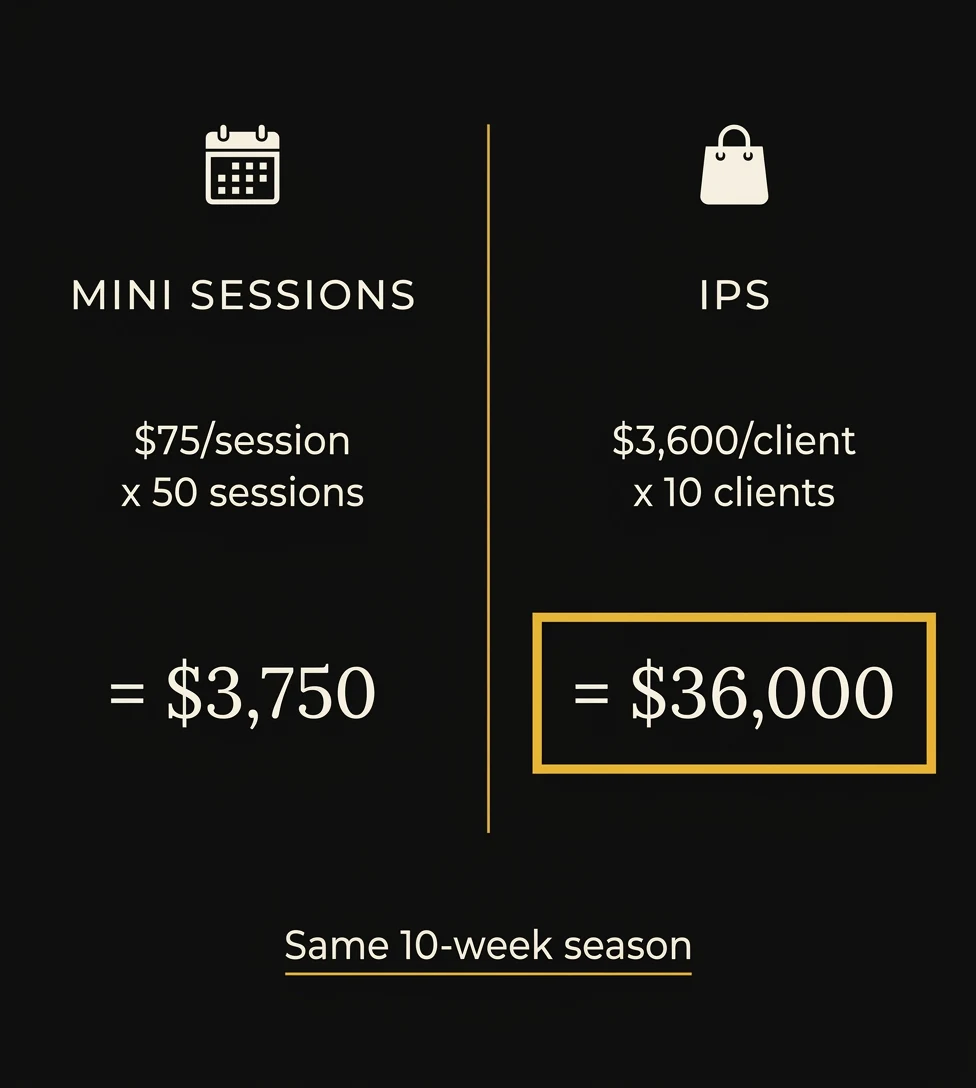
Mini sessions are condensed shoots: 10–30 minutes, $50–$200 flat, usually seasonal (fall portraits, holiday cards, Easter, Valentine's). They're designed for volume: book 20–50 clients in a single day with a simple backdrop swap between families.
Average per client: $75–$200. Done right (one focused event day, tightly executed), they can produce strong single-day revenue. Photographer Meg Marie has documented $13,000+ from a single well-run mini session day. The number is real. The catch is what happens the other 11 months.
Photographers who run minis year-round risk training their market to expect cheap, quick access, which erodes the perceived value of their full sessions too. Coaches like Erin Rose have documented this pattern: photographers stuck in a volume treadmill that's slightly slower than shoot-and-burn but just as exhausting. The photographers who use minis effectively treat them as a funnel, a door that introduces new clients who then book full IPS sessions later.
The verdict: Mini sessions are a tool, not a model. One well-run seasonal event per year, used to build the list and funnel clients into IPS, is smart strategy. Replacing your main revenue stream with them is a burnout trap.

Photo: Brooke Balentine / Unsplash
In-Person Sales (IPS)
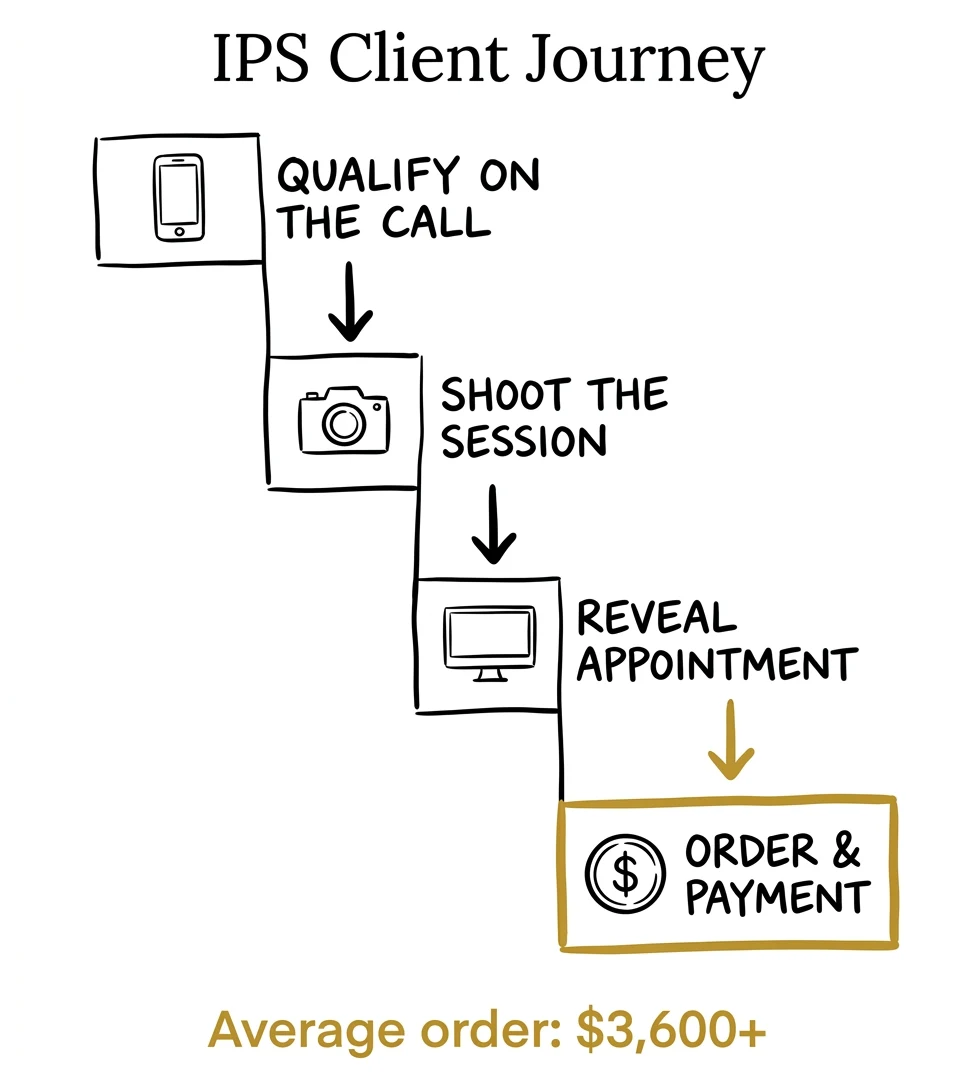
A low or complimentary session fee gets the client in the door. The sale happens afterward at a dedicated reveal appointment, where they see their images for the first time with you present. You present wall art collections, albums, and products in a guided, emotion-led process.
Average per client: $5,000. Studios running IPS with the full P2P system average $5,000 per client. Not per year. Per client.
Want to see exactly how a reveal appointment runs from first image to payment? The full IPS breakdown is in our In-Person Sales guide for photographers.
Why Shoot-and-Burn Keeps You Busy but Broke
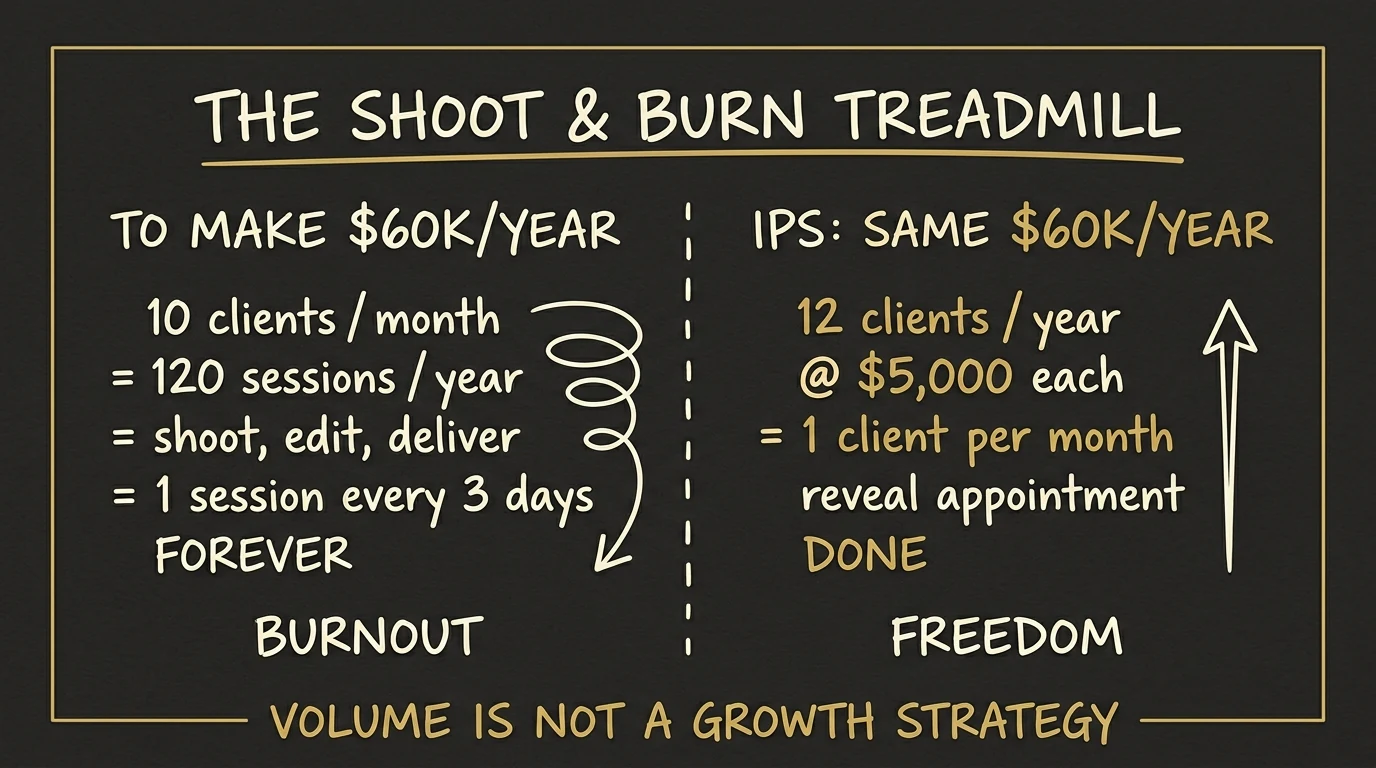
Shoot-and-burn feels safe. You know exactly what you're charging, clients know exactly what they're getting, and there's no awkward sales conversation. The problem is the math.
At $500 per session, you need 10 clients a month to hit $5,000. That's roughly one every three days: shooting, editing, delivering. Then you need 10 more next month. And the month after. It's a treadmill with no exit ramp.
The photographers who thrive on shoot-and-burn are either shooting enormous volume (100+ sessions a year) or subsidizing their income with a day job. Most can't maintain either indefinitely.
The deeper problem: shoot-and-burn trains clients to expect everything for one upfront price. When you try to transition to a product-based or IPS model later, those existing clients push back, because you taught them a different expectation.
How IPS Photographers Consistently Hit $5,000 Per Client
In-person sales isn't a sales tactic. It's a model. The session fee gets the client in the chair. The reveal appointment (where they see their images for the first time, in person, with you) is where the purchase decision happens.
The psychology is straightforward: clients make decisions based on emotion. When they see their images for the first time alone, on a phone screen, the emotional peak has already passed before they've spent anything. When they see them for the first time with you, on a large screen, in a guided appointment, that emotional peak happens in the room where the purchase is being made.
That's not manipulation. It's removing the gap between feeling and deciding.
Studios running IPS consistently report that clients who would have spent $400 online will spend $3,000–$4,000 at a reveal appointment on the same images. The images didn't change. The buying environment did.
If your studio is ready to implement IPS but you want guidance on the reveal process, product pricing, and collections, book a strategy call with the P2P team.
Setting Your Session Fee: The Door-Opener Framework
Here's the shift that changes everything, and I'll give it the name that makes photographers uncomfortable:
Give away the shoot. Keep the money.
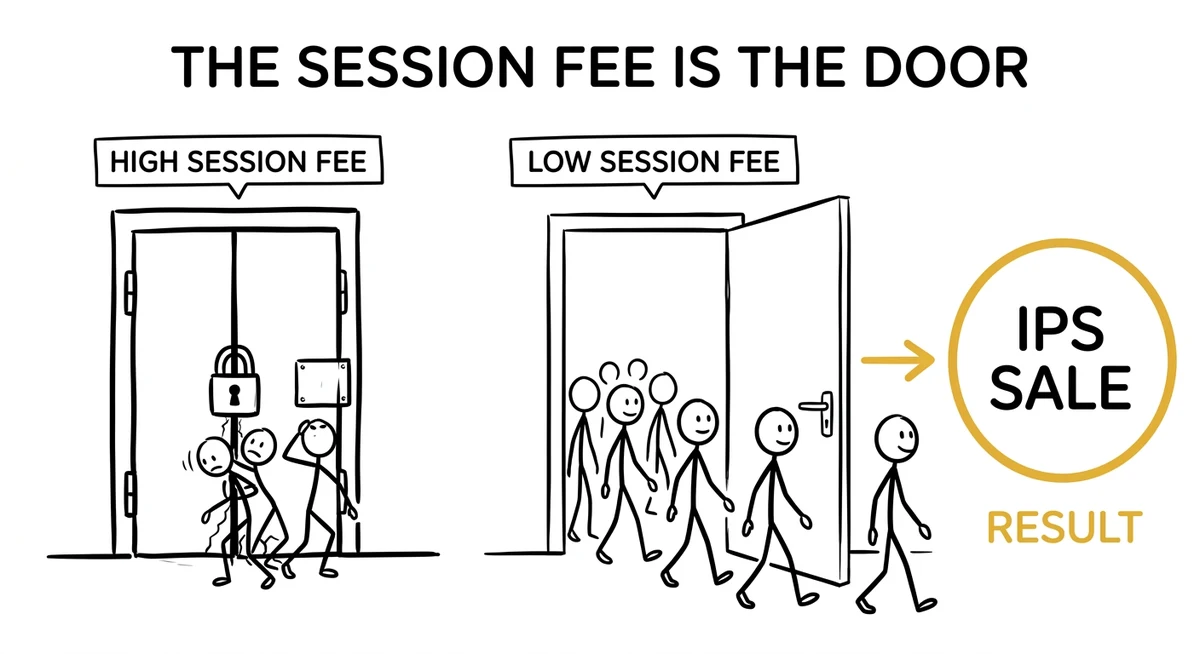
The session is the door, not the sale. A high session fee is a locked door. A low session fee is an open one. Instead of making your money on the way in, you make it on the way out.
The studios I've worked with test their session fee as low as it needs to go to maximize qualified traffic through the door:
- $0 (complimentary session): the lowest barrier possible. Used with strong phone qualification so the session isn't wasted on non-buyers.
- $99, refunded at the appointment: creates commitment without feeling like a purchase. Client feels like they got their money back.
- $99 toward hair and makeup: the fee is working for them before they arrive. Feels generous, not transactional.
- Phone incentive: list $300 on the website, offer $99 if they book on the call. Creates urgency and a "win" for the client.
The key is that the session fee's job is to attract qualified clients, not generate revenue. Qualification happens on the phone call, not in the price tag.
The Math: Why a $99 Session Fee Can Outperform a $1,500 One
This is the part that breaks photographers' brains, and it's the most important thing in this post, so read it carefully.
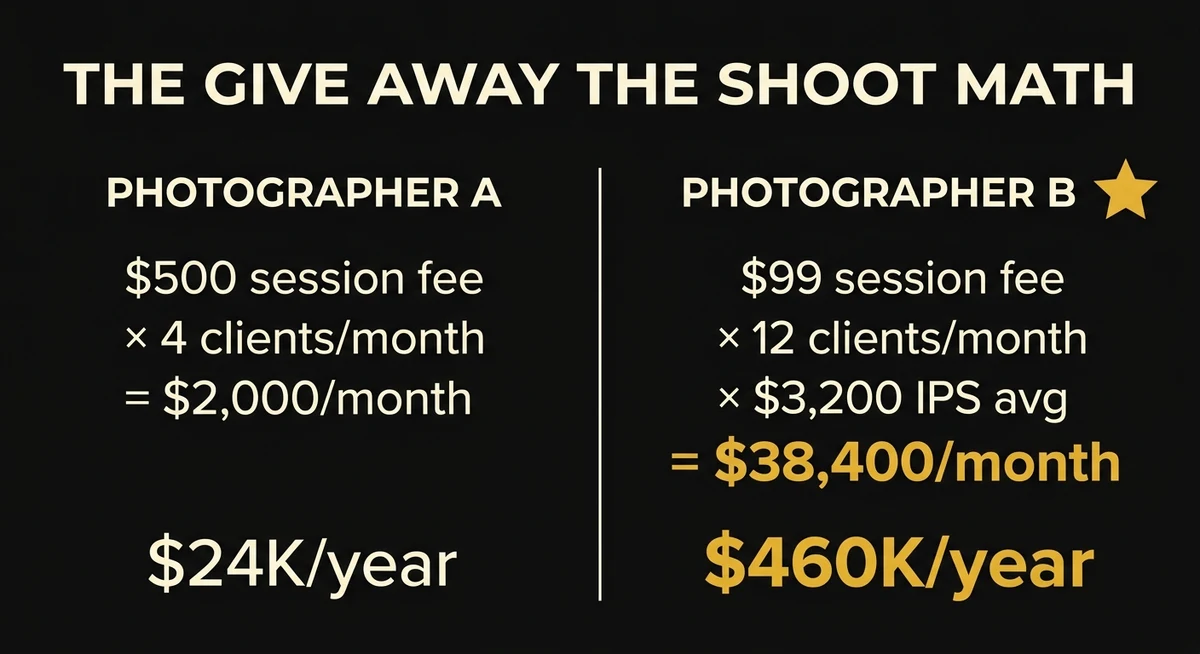
I worked directly with a photographer charging a $1,500 session fee. She posted about it in Facebook groups like a trophy. Everyone praised her for it. Meanwhile, she had three clients in a quarter. Three. Her backend sales were only about $2,000 on top of that fee, because the $1,500 anchored what the experience was "worth" before the reveal even happened. Total per client: $3,500. Three clients at $3,500: $10,500 for the quarter.
One of my other clients was charging $99 session fees. She'd get laughed out of that same Facebook group. She booked about 40 clients per quarter. Her total per client (session fee plus IPS) was close to $5,000. Forty clients at $5,000: $200,000 for the quarter.
The $99 photographer made more per client AND more in total. The high session fee didn't just kill volume. It killed the backend too, because it set the anchor for what the experience cost.
This is the principle behind Chapter 4 of the 7-Figure Studio program, what Humberto calls the "Give Away the Shoot" framework. The full session fee math, IPS collection structure, and reveal script are covered inside. The insight here is directional: back-end revenue at scale always beats front-end revenue at low volume.
Conclusion: Photography Pricing Is a System, Not a Number
The session fee is not your revenue. It's your door. The model (how you structure the client journey from inquiry to purchase) is what determines your income. Photography to Profits, founded by Humberto Garcia, has helped hundreds of portrait, boudoir, and wedding studios shift from shoot-and-burn averages of $300 to IPS averages of $5,000+ per client. Same photographers, same markets, same skill level. The model changed.
If your current revenue per client is under $1,500, the problem almost certainly isn't your talent, your portfolio, or your market. It's the structure of how clients buy from you.
Pick one pricing model. Commit to it. Build the phone qualification, the pre-session communication, and the reveal appointment around it. The session fee is the last thing you should be arguing about.

Photo: Vitaly Gariev / Unsplash