
The Only Marketing Framework That Matters
Before we get into tactics, you need the equation. Every marketing idea in this guide affects one of three numbers:
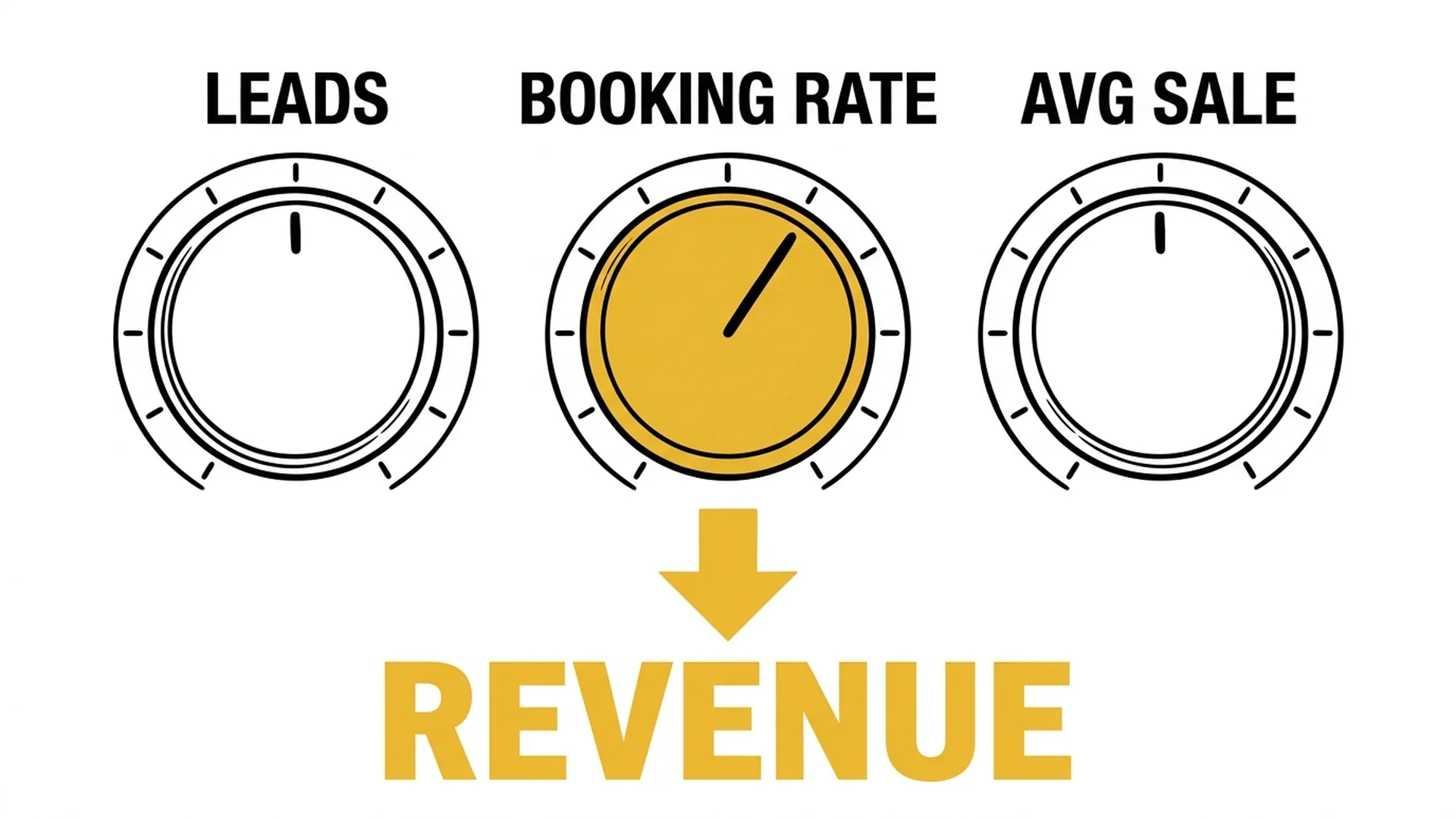
Revenue = Leads × Booking Rate × Average Sale
That's it. Every tactic either brings more people into your world, converts more of them into clients, or increases what each client spends. The studios that scale fast aren't doing more marketing. They're doing the right marketing for their current bottleneck.
Kristin Milito Photography tripled revenue year-over-year not by adding more channels, but by fixing the funnel she already had. SteinArtStudio built a $4,500 average client sale and a fully automated booking system before scaling their ad spend. Jennifer's High Roller Club hit $940K in annual revenue with 6,000+ leads per year not from luck but from a machine that was designed to produce those numbers.
Read this guide with one question in mind: which number is my bottleneck right now? Then go deep on the ideas that fix it.
Key Takeaways
- Every photography marketing idea reduces to one equation: Revenue = Leads × Booking Rate × Average Sale. Diagnose which number is your bottleneck before adding any new marketing channel.
- Humberto Garcia, founder of Photography to Profits, has helped portrait studios hit $360K/year and beyond by focusing on three levers at a time rather than chasing every new platform. Studios that try to do everything typically scale nothing.
- The highest-ROI starting point for most portrait studios is a quiz funnel paired with Google Search Ads. This combination delivers qualified leads at $40–$120 each with built-in segmentation for follow-up sequences.
- Action step: Identify your current bottleneck. If you have fewer than 30 leads/month, prioritize Part 1 (Paid) and Part 6 (Quiz Funnel) from this guide before touching anything else.
Part 1: Paid Advertising Ideas (Fastest Path to New Leads)
1. Run Carousel Ads and Video Testimonial Ads on Meta
The two highest-performing Meta ad formats for photographers aren't complex campaign setups. They're the formats that feel the most human. For a full breakdown of campaign structure and budgeting, see our Facebook Ads for photographers guide. Carousel ads let you show 5–10 portfolio images in a single swipeable ad. Prospects self-select through the gallery and arrive at your landing page already warm. Use carousels to show before/after transformations, a series from one session, or genre variety across one campaign.

Photo: Kenny Eliason / Unsplash
Video testimonial ads are your single most powerful creative asset. A 30–60 second clip of a real client facing the camera, talking about how they felt during the session and when they saw their images, converts at a fraction of the CPL you'd get from a product shot or portfolio image alone. The camera doesn't need to be perfect. The emotion does. Shoot these at the reveal, right when the feeling is fresh. These ads build the trust that makes every other ad in your funnel work harder.
2. Build the Proof-to-Paid Loop
The best paid ads don't look like ads. They look like the content that's already performing on your organic feed. The loop: post proof content organically (testimonials, BTS, objection-killers) → watch for buyer signals (saves, DMs, "pricing?" comments) → turn the winners into paid ads with the same video and a simple CTA overlay. Your organic feed is your creative lab. Paid distribution is what happens when something hits.
This is how Danielle at Evoke Boudoir ($500K revenue, $5,300 average sale) built creative that converts. The ads that perform are the posts that already convinced someone.
3. Start Retargeting Before Anything Else ($3/day)
Warm traffic converts 3–10x better than cold traffic. Retargeting campaigns consistently achieve 6–15x return on ad spend when properly segmented. Build audiences from: 90-day website visitors, Instagram/Facebook engagers, video viewers (50%+), and your email list uploaded as a custom audience. Budget: $1–$3/day. Creative: one video testimonial + one behind-the-scenes clip. Set it up once; it runs forever.
4. Use Google Performance Max for Genre-Specific Searches
Google Performance Max now drives 45% of all Google Ads conversions with substantially improved reporting visibility. When someone types "newborn photographer near me" or "boudoir photographer in [city]," they're not browsing. They're buying. Performance Max serves your assets across Search, Display, YouTube, Gmail, and Maps simultaneously. For photography studios, the asset groups that perform best: client testimonial videos, before/after images, and offer-specific headlines (not "book a session" but "Claim your $100 session credit").
Astrid at Liberation Boudoir scaled to $500K revenue (10x growth in 3 years) with Google Ads as a primary driver. The key: bidding on genre-specific terms like "boudoir photographer [city]" rather than generic "photographer near me."
5. Run Genre-Specific Campaign Structures (Not Generic "Studio" Ads)
One campaign for all your genres is one of the most common and expensive mistakes in photography advertising. If you shoot boudoir, family, and newborn, each needs its own campaign, landing page, and follow-up sequence. A woman clicking a boudoir ad who lands on a page showing family portraits bounces. The ad cost was real. The conversion wasn't.
Congruency rule: if your ad says "30 Over 30", every touchpoint (landing page, images, thank-you page, phone script opening) says "30 Over 30." One mismatch kills the conversion.
6. Build a $100 Model Call Campaign to Fill a Slow Month
Model call campaigns (offering a reduced or free session to targeted prospects in exchange for portfolio usage rights) are the fastest calendar-filling play in this guide. One offer, one genre, one dedicated landing page, 2 weeks of ads. Facebook CPL for these campaigns runs $8–$15 when structured correctly, well below the $25.40 average for standard lead gen campaigns.
The math: at $15 CPL and a 30% booking rate, you need 100 leads to book 30 sessions. At $1,500/month in ad spend, that's 100 leads × 30% booking rate = 30 sessions. At even a $1,500 average ordering appointment (not your full average, model call clients spend less), that's $45,000 in gross revenue from $1,500 in ad spend.
7. Test TikTok for Under-35 Audiences (Wedding + Maternity)
TikTok ads remain worth testing for studios targeting clients under 35, primarily wedding photographers (couples planning 12–18 months out) and maternity studios (first-time parents in their late 20s and early 30s). BTS content and "day in the life" formats outperform polished ads. CPL on TikTok runs lower than Meta for this demographic, but conversion quality requires more follow-up.
8. Use Video Testimonials as Your Primary Ad Creative
Video testimonials are the single highest-converting ad creative type in photography. When a potential client sees your portfolio, she thinks: that model looks amazing. When she sees a real woman (someone who looks like her) talking about her experience? She thinks: that could be me. Profile visit to inquiry conversion from video testimonial ads runs 8–12%. Static portfolio posts run 1–3%.
The edit that matters most: cut the first 10–20 seconds of intro. Start with the most emotional sentence she said. Three questions that produce the exact narrative arc every ad needs: (1) "Why did you decide to do this?" (2) "What was your biggest fear before the session?" (3) "How did it turn out?"
Part 2: Google Business Profile Ideas (Free High-Intent Leads)
9. Treat GBP Like a Second Website
Your Google Business Profile is where high-intent buyers land. "Photographer near me" searches go directly to the map pack, not your website. Studios with fully optimized GBP profiles see 40–60% more profile views within 90 days of consistent optimization. Fill every field. Upload 20+ photos organized by category (exterior, team, portfolio, client experience). Enable the booking link connected to your scheduling tool.
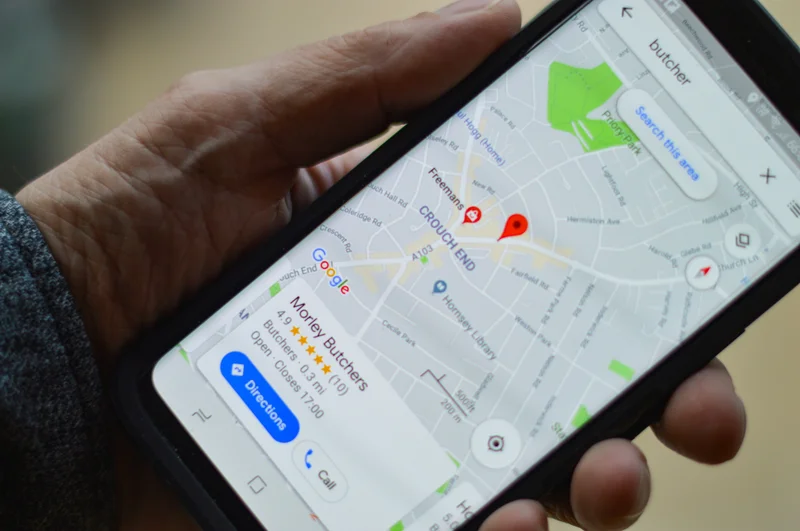
Photo: henry perks / Unsplash
10. Post to GBP 2x Per Week
GBP Posts appear in Google Search and Google Maps. Use the Posts feature to share real client photos with venue tags, session type, and location. Posts with specific venue names (not just "family session") rank for venue-specific searches, reaching couples who've already chosen their venue, one of the highest-intent moments in the planning journey.
11. Proactively Own the Q&A Section
The GBP Q&A section appears directly in search results. Most photographers don't know they can add their own questions and answer them. Add Q&As covering your most common objections: package pricing ranges, turnaround time, what to wear, whether you do in-home sessions, travel fees. This content surfaces before prospects ever reach your website.
12. Target 50+ Reviews Before Anything Else
Studios with 80+ reviews significantly outrank those with 20 in local pack results. The review volume directly correlates with ranking, not just star rating. Build a review request into your post-session workflow: send the direct Google review link (not the search result, the specific review submission URL) 3 days after gallery delivery, framed as helping future clients find someone they can trust. Respond to every review within 24 hours, including negative ones.
13. Upload Venue-Tagged Photos
Photos tagged with specific venues (venue name as photo caption, location tagged) rank in venue-specific Google searches. A couple searching "XYZ Estate wedding photography" before they've even hired photographers is one of the highest-intent prospects you'll ever reach, and venue-tagged photos are how you appear in that search without spending a dollar.
Part 3: Social Media Marketing Ideas
14. Post 4–5 Reels Per Week (Not Portfolio Posts)
Instagram Reels reach non-followers at a rate 6–8x higher than static posts. Reels reach 726 million users globally with 22% higher engagement than Stories. But the content that performs for photography is not polished gallery highlights. It's behind-the-scenes, client reactions, "what it feels like to work with me" content. The studios winning on Reels are the ones that make potential clients feel the experience before they book it.
15. Design Every Reel for the First 3 Seconds
Instagram's algorithm measures completion rate. Users decide within the first 3 seconds whether to scroll past. Sound-on Reels creative outperforms silent ads by 35% in engagement metrics. Start with motion, a direct statement, or a visual contrast. "I was terrified to do this" → cut to the reveal → is more scroll-stopping than any portfolio highlight reel.
16. Use Pinterest as a 24-Month Traffic Machine
A pin posted today will drive traffic for 18–24 months. No other platform in the photography space has this compounding dynamic. Elopement content on Pinterest grew 85% year-over-year in 2026. Destination wedding searches are up 60%. Create boards for every venue you've shot at, named "[Venue Name] Wedding Photography", how engaged couples search. Pin 10–15 images per day using Tailwind. Each pin needs a 150–300 word keyword-rich description linking back to your site.
17. Tag Venues in Every Post
Venue accounts often reshare tagged content, extending your reach to their entire engaged-couple audience with zero additional effort. One reshare from a venue with 20,000 followers is worth more than a week of organic posting. Always tag: the venue, the makeup artist, the florist, the dress shop. Every tag is a potential reshare. Every reshare is warm referral traffic.
18. Build a BTS Content Library
Behind-the-scenes content removes the mystery and anxiety around being photographed. Hair and makeup, laughter during posing, the reveal moment, your lighting setup: all of this reduces friction for the prospect who's on the fence. Collect 2–3 BTS clips per session as a habit, even if you don't post them immediately. These become your best-performing organic content and your best-performing paid ad creative.
19. Use Educational Content for Saves (Algorithm Signal)
Instagram's 2026 algorithm weights saves and shares more heavily than likes and comments. Educational content ("3 things to tell your photographer before the ceremony," "what to wear for a boudoir session," "how to prepare your kids for family photos") gets saved because people want to reference it later. Saves signal the algorithm to distribute further. Build 1–2 educational posts per week into your content calendar.
Part 4: Content Marketing Ideas
20. Write Venue Guides, Not Generic Blog Posts
Generic photography blog posts ("10 tips for better portraits") rank poorly and convert worse. Venue-specific content ("[Venue Name] Wedding Photography: Everything You Need to Know") ranks for venue searches, converts couples who've already chosen the venue, and compounds for years. Every real shoot at a venue is an SEO opportunity. For the full organic search playbook, read our complete SEO guide for photographers. A venue guide with 1,000+ words, 20+ optimized images, and internal links to your main service pages owns that search for years.
Photo: Brad Neathery / Unsplash
21. Structure All Content for Answer Engines (AEO), Not Just Google
AI Overviews, Perplexity, and ChatGPT Search now drive 15–25% of photography website traffic (up from 5–8% in 2024). These AI systems extract content differently than Google. Lead every post with a direct 50-word answer to the target question before expanding. Use H2s in question format ("How much does a family photography session cost?"). Include specific price ranges and data points. AI models extract these to build featured answers. Implement FAQ schema on every service page.
22. Create a YouTube "Real Session" Series
10–15 minute unedited session videos showing your actual process (how you direct, how you handle nervous clients, how the reveal works) convert browsers into believers. Photographers with this content report 8–12% of YouTube viewers visiting the booking page. Long-form content (15+ minutes) is outperforming short-form Reels/Shorts for photography studios because educational value builds more trust than entertainment.
23. Start Weekly Email: Value First, Promotional Rarely
Past client email open rates average 35–45% for photography studios, far above the 20% industry average. One P2P client studio booked 53 sessions from a list of fewer than 100 subscribers, not because of a magic subject line, but because those 100 people received value emails every single week and trusted her completely when she made the ask. Limit major promotional pushes to 3–4 times per year. The other 48 weeks: client stories, tips, behind-the-scenes moments, educational content.
24. Build a "What to Expect" Content Ecosystem
Content that reduces booking anxiety converts 15–25% better than generic portfolio content. "What happens during your [genre] session," "what to wear for your family photos," "how the reveal process works": each piece answers a specific fear that's stopping someone from booking. Photographers who publish this content see 18–22% of inquiries move up a package level after consuming it.
Part 5: Local Marketing Ideas
25. Build a Referral System (Not a Referral Hope)
Established photography studios generate 30–40% of new clients from referrals, but most of those referrals are accidental. A structured referral system makes them intentional. Read the full referral marketing guide for photographers for the gift certificate system, scripts, and automations. The highest-converting incentive structure: offer something experiential (a complimentary mini session, a print credit, an album upgrade) rather than cash. Frame it as exclusive: "I only offer this to past clients I genuinely loved working with." Time the ask at peak emotional satisfaction: 3 days after gallery delivery, in the post-session sequence, when excitement is fresh.
26. Partner with Complementary Vendors (Cross-Referral System)
Every referral partnership should have a documented ROI-tracking system, not just a handshake agreement. For boudoir: makeup artists, hair stylists, lingerie boutiques. For newborn/maternity: OBGYNs, midwives, baby boutiques, pediatric offices. For wedding: venues, florists, caterers, dress shops. Structure it as mutual: you display their cards in your studio, they display yours. Offer a documented referral commission (10–15% of session fee) or a reciprocal booking. Track every referral source in your CRM.
27. Test Nextdoor Ads for Family and Portrait Photography
Nextdoor advertising achieves 12–18% booking conversion rates for family portrait studios, one of the highest of any platform for this genre. The reason: Nextdoor's hyperlocal targeting reaches neighbors who are already in the market for local services and who trust neighborhood recommendations. The ad creative that works: real family photos from local neighborhoods, specific neighborhood name-dropping, and a offer tied to a local seasonal event (back to school, holiday cards, spring portraits).
28. Run Seasonal Campaigns on a Predictable Calendar
60% of annual family portrait revenue concentrates in September–December. The studios that capitalize on this aren't running ads in October. They started in August. Build your seasonal campaign calendar for the full year: Valentine's (boudoir, couples) → Mother's Day (maternity, family, boudoir) → Back to School (family, senior) → Fall Portraits (family) → Holiday Cards (family) → Black Friday (gift certificates, packages). Each campaign needs its own dedicated landing page, not a link to your homepage.
29. Host Pop-Up Events and Styled Shoots
Themed mini-session events (organized around a specific concept, venue, or seasonal moment) create urgency, generate social content, and produce a flood of portfolio images. Styled shoots with 5–7 vendor collaborators create 20–40 pieces of content with each vendor sharing to their audience. The combined reach from vendor shares often outperforms a $500 paid ad campaign.
30. Donate to Charity Auctions Strategically
Silent auction donations at charity events expose your work to high-quality prospects in a trust context. They're already giving to something they care about, and your brand is attached to that goodwill. The key: donate a session experience (with a product credit toward the ordering appointment), not a "free session + digital files." You need them in your studio to show them what's possible.
31. Join Local Business Networking Groups (BNI, Chamber)
Corporate photographers and brand photographers thrive in Chamber and BNI environments. Portrait photographers benefit from the referral relationships. One connection to a local OB/GYN practice or pediatric office can generate consistent monthly referrals at zero ad cost. One P2P client photographer built a single dealership relationship that generated six figures in referral revenue within a year, through the owner's accountant, lawyer, insurance agent, and their networks.
Part 6: The Quiz Funnel (Your Highest-Converting Lead Machine)
32. Install a Quiz on Your Website
A standard contact form converts at under 2% of visitors to inquiries. A quiz that educates prospects, answers their fears, and rewards their curiosity converts at 3–10%. One studio had exactly one inquiry the week before installing a quiz. The following week (same traffic, no new ads), they had nine. SteinArtStudio built a $4,500 average sale and fully automated pipeline using quiz-driven lead capture as their front-door.
Photo: PiggyBank / Unsplash
The quiz structure: hook slide ("Claim your $100 credit. Can you get 4/4 right?") → 3–5 question/answer slides, each addressing one specific fear → offer slide → Fair Enough slide (catches the 30–40% who initially say no to the offer) → name/phone/open question ("What are you celebrating in your life right now?"). The last question gives you gold for the phone call.
33. Put the Quiz Everywhere
The quiz should appear on every page of your website as a popup, be accessible as a standalone URL for ad traffic, and be linked in your main navigation as "Take the Quiz" or "Get Your $100 Credit." When you run a Meta campaign, the ad sends traffic to the quiz, not your homepage. Every lead who completes it enters your CRM automatically with their objections already answered.
Part 7: Client Retention Ideas
34. Follow Up Within 5 Minutes of Every Inquiry
Speed-to-lead is the single most measurable driver of booking rate. Kristin Milito Photography saw this firsthand: when she overhauled her follow-up system and started checking her CRM three times daily, she booked 9 out of 9 consults in the first 11 days. The script for that first text: "Hey [Name], this is [Your Name] from [Studio]. I saw you completed our quiz. Are you free to chat for a few minutes? I'd love to learn about what you're celebrating." That's it.
35. Work the Cheetahs, Hares, and Tortoises
Cheetahs book within 3 days. Hares take 3–90 days. Tortoises take 90 days to 2 years. Most studios only monetize cheetahs. The system that captures all three: automated email sequences for weeks 1–4 (hares), weekly email to the full list indefinitely (tortoises), quarterly reactivation text campaigns ("Hey, it's been a while. We have openings this month. Are you still interested?"). Jennifer's High Roller Club reached $940K with 6,000+ leads/year not just from ad volume, but from a follow-up system that converted hares and tortoises that other studios threw away.
36. Run a Quarterly Reactivation Campaign
Every 90 days, pull all unbooked leads from the last 6 months. Send a short, human text: "Hey [Name], we have some openings this month. Are you still interested?" No links in the first message. Call anyone who responds. At the same time, send a broadcast email to your full list tied to a seasonal offer. A Texas studio near a military base sent one patriotic-themed email on a Friday. By Sunday: 14 sessions booked from leads already in the system. Zero new ad spend.
37. Send the Session Anniversary Email
"One year ago today, you [did their session type]." Pull the session date from your CRM. This email has the highest reply rate of any automated sequence because it's unexpected, personal, and triggers nostalgia at the exact moment someone might be thinking about doing it again. Light CTA: "Want to see how much has changed?" Include a referral ask for friends who're planning weddings, expecting babies, or wanting to celebrate something.
38. Build an In-Person Sales System Around Your Ordering Appointment
The ordering appointment, or reveal session, or IPS (in-person sales), is where Danielle at Evoke Boudoir achieves a $5,300 average client sale. Corey at Corey Brandon Photography maintains a $6,700 average. Jennifer's High Roller Club runs $940K/year. None of these numbers are achievable from a digital gallery link. The in-person reveal creates an emotional decision environment that digital delivery cannot replicate. If you're delivering galleries online and accepting whatever a client orders from their kitchen table, you're leaving the majority of your potential revenue on the table.
Part 8: AI-Powered Marketing Ideas (2026)
39. Use AI for Email Draft Speed, Not Email Voice
The highest-ROI use of AI for photography marketing: use ChatGPT or Claude to draft 5–8 email variations from a brief you write, then personally rewrite 20–40% of each. Studios doing this report 60% time savings with identical open rates and click rates to fully manual emails. The key: write the first paragraph yourself to set the tone. AI completes; you edit.
40. Build AI-Assisted Blog Content at Scale
Photographers using Claude or ChatGPT for blog content are producing 4–5 SEO-optimized posts per month vs. 1–2 previously, with top pages jumping from position 15 to position 5. The workflow: photographer writes the outline and first section manually (establishes voice), AI drafts supporting sections from provided before/afters and details, photographer rewrites conclusion. Final piece: 70% human, 30% AI-assisted, but feels 100% authentic.
41. Automate Client Communication with AI-Powered CRM Workflows
GoHighLevel AI Agents can respond to inquiry texts in your voice within 2 minutes, 24/7, including weekends when most photographers are shooting. Studios using AI-first response see 8–12% higher conversion rates simply from faster, more consistent initial contact. The AI qualifies the lead, books the consultation on your calendar, and sends the pre-call nurture sequence, before you know the inquiry came in.
42. Use AI Retouching Tools to Reclaim 10+ Hours Per Week
Evoto AI processes batch retouching in minutes that previously took hours: skin smoothing, frequency separation, exposure leveling across 100+ images simultaneously. Adobe Photoshop's AI tools (Generative Fill, Remove tool, Sky Replacement) handle complex edits that previously required custom masking. Time saved in post-processing is time available for marketing, follow-up, and consultations.
Part 9: Photography Marketing Ideas by Genre
43. Boudoir: The "30 Over 30 / 40 Over 40" Campaign
Age-specific themed campaigns create instant audience identification and urgency. "We're looking for 10 women over 40 to participate in our 40 Over 40 campaign" is more compelling than "book a boudoir session." Every touchpoint matches the campaign (ad, landing page, follow-up emails, phone script) for maximum congruency. Lorie at Boudoir By Lorie consistently books 50+ qualified leads per month using themed campaign structures exactly like this.
44. Wedding: Build a Venue Guide for Every Major Venue You've Shot
Wedding venue guides rank for venue-specific searches that capture couples who've already made the venue decision, the highest-intent moment in the wedding planning journey. A 1,500-word guide for "[Venue Name] Wedding Photography" with 20+ images, specific venue logistics (lighting conditions, timeline considerations, hidden photo spots), and an FAQ section will rank and convert for years.
45. Newborn/Maternity: Partner with OB Offices and Birthing Centers
The referral window for newborn photography is narrow: 6–8 weeks before birth. An OB/GYN office that hands your card to every patient at their 20-week appointment is providing qualified referrals at zero ad cost. Offer the practice something useful: a framed photo for their waiting room, a gift certificate for a staff member, or a quarterly donation to a cause they care about. SteinArtStudio Photography built consistent monthly bookings through exactly this referral infrastructure.
46. Family: The Annual Portrait System
Pitch annual portrait sessions as a subscription-style relationship: "Here's what families who document every year say about it." Families who book annually spend more, refer more, and cancel less. The marketing message: "Your kids are only this age once. Here's what our families do every year to capture it." The anniversary re-booking email (sent on the one-year mark of their last session) is the most effective re-engagement tool for this genre.
47. Senior/Commercial: LinkedIn + Business Community Marketing
Corporate and senior photographers find their highest-value clients through professional networks and business associations. LinkedIn is increasingly important for B2B photography. A presence in local chambers of commerce, business networking groups, and professional associations produces referral relationships that convert at high average sale values. Corey Brandon Photography maintains a $6,700 average client sale through exactly this positioning.
Your 90-Day Priority Plan
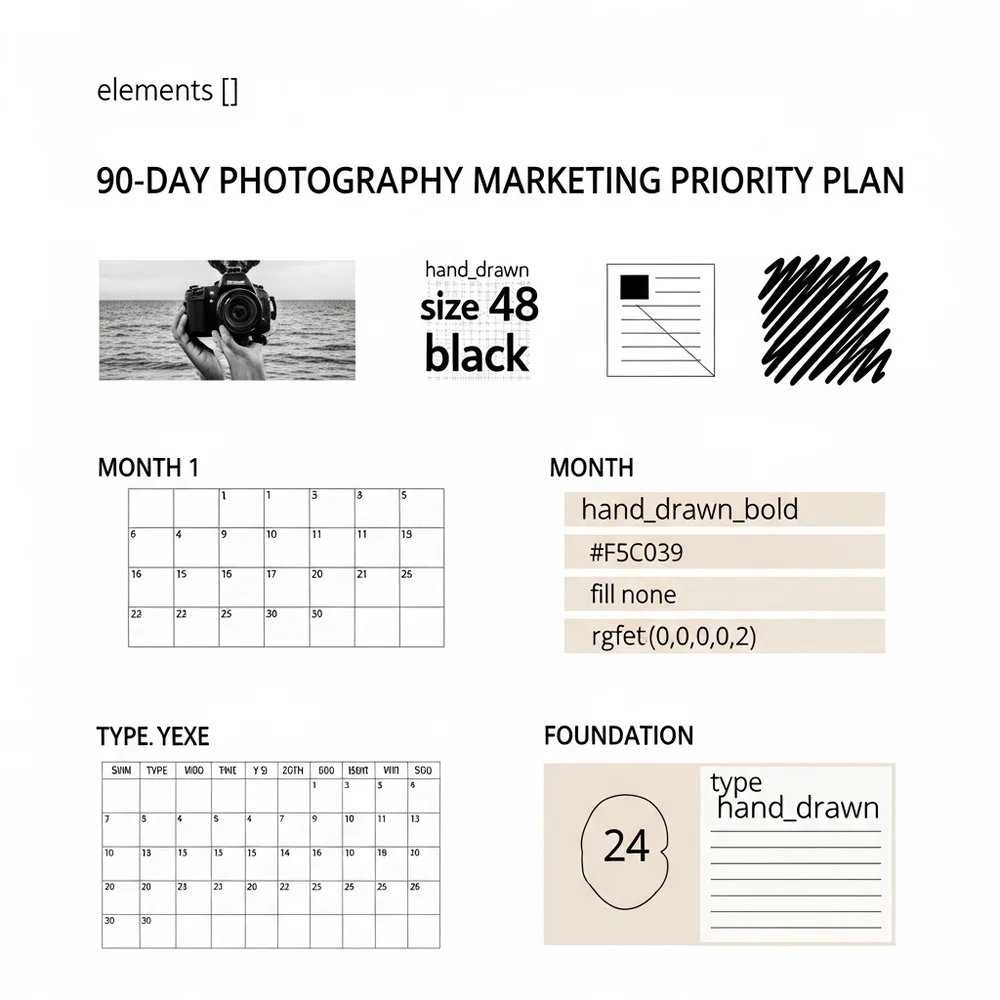
You don't implement 47 things. You implement the three that fix your biggest bottleneck right now.
| Bottleneck | Top 3 Ideas to Fix It | Expected Timeline |
|---|---|---|
| Not enough leads | Retargeting (#3) + GBP optimization (#9-10) + Model call campaign (#6) | 2–4 weeks |
| Low booking rate | Quiz funnel (#32) + 5-minute follow-up (#34) + Cheetah/Hare/Tortoise system (#35) | 1–2 weeks setup |
| Low average sale | In-person ordering system (#38) + Client education content (#24) + Package restructure | Immediate |
| Feast/famine cycles | Quarterly reactivation (#36) + Seasonal campaign calendar (#28) + Weekly email (#23) | 30 days to first results |
Conclusion: The Right Marketing Idea Is the One That Fixes Your Bottleneck
Forty-seven ideas is not a to-do list. It's a menu. The studios that scale fast pick two or three ideas that directly address their current bottleneck, execute them with discipline, and measure the results before adding anything else. Jennifer's High Roller Club hit $940K in annual revenue not by doing everything but by engineering a quiz funnel, dialing in Google Ads, and building a referral machine, then scaling what worked.
Photography to Profits exists to help portrait studios build that kind of machine. We don't work with every photographer. We work exclusively with portrait studio owners who are ready to treat marketing as a system, not a series of experiments. If you're at that stage, start with the quiz funnel and Google Ads combination from this guide. Those two alone can add $5K–$15K in monthly revenue within 90 days when built correctly. The rest of the ideas will be there when you're ready to scale further.
Frequently Asked Questions
What's the fastest photography marketing idea that actually works?
Retargeting at $1–3/day. It takes an afternoon to set up, requires no new creative (use your best existing video testimonial), and targets people who already know you. Warm traffic converts 3–10x better than cold traffic. This single change has produced immediate booking increases for studios across every genre.
How do I market my photography business with no budget?
Three free channels work immediately: (1) Google Business Profile optimization: fill every field, post 2x per week, ask 3 past clients for Google reviews this week. (2) Vendor partnerships: identify 5 complementary businesses and propose a mutual referral arrangement. (3) Reactivation texts: text every past client and unbooked inquiry from the last 12 months: "Hey, are you still interested in doing a session?" The studios that implement all three see bookings within 2 weeks.
What's the most underrated photography marketing idea in 2026?
The quiz funnel. Most photographers have a contact form converting at 1–2%. The quiz, which walks prospects through their top objections before capturing their info, converts at 20–35%. Same traffic. 10–20x more leads. SteinArtStudio, Liberation Boudoir, and High Roller Club all use quiz-driven lead capture as their primary front door.
How many leads do I need per month to hit six figures?
Work the Revenue Formula backward: 100 leads/month × 15% conversion × $4,000 average sale = $60,000/month = $720,000/year. That's the benchmark for a high-performing portrait studio. Getting to $360K/year? 50 leads × 15% × $4,000. The levers are leads, conversion rate, and average sale. Every marketing idea in this guide moves one of them. Each number has its own lever. Fix them one at a time.
Should I hire a marketing agency for my photography studio?
Only after your offer is proven and your follow-up is built. An agency running ads to a funnel that leaks leads is expensive waste. Build the machine first (quiz, follow-up sequence, ordering system), then hire to scale what's already converting. Photography to Profits works exclusively with portrait photography studios because the nuances of the genre, the client psychology, and the sales process require marketing built specifically for this business, not adapted from generic small business strategy.